

Reported by: Oahimire Omone Precious | Edited by: Gabriel Osa
In a development that could reshape Nigeria’s maritime infrastructure and bolster economic growth across the West African sub-region, the Federal Executive Council (FEC) has approved the revalidation of Ondo State’s deep sea port licence, reigniting momentum for one of the most ambitious infrastructure projects in the southwestern part of the country. The announcement was made by Ondo State Governor Dr. Lucky Orimisan Aiyedatiwa following the formal endorsement of the licence by federal authorities, a milestone he described as pivotal for national and regional trade expansion.
The deep sea port, slated for development in Erona, Ilaje Local Government Area—a coastal community endowed with Ondo State’s longest shoreline—had previously encountered delays due to technical errors in its initial approval documents. The discrepancy involved misnaming the prospective investor in the original business case, which precluded proper licencing under the intended corporate entity. Following a comprehensive review and resubmission of an updated business case, the Federal Executive Council moved to revalidate the port licence, clearing the path for project implementation.
Governor Aiyedatiwa hailed the revalidation as a significant step toward unlocking the state’s maritime potential and addressing long-standing logistical bottlenecks that have constrained Nigeria’s participation in global shipping and trade. Speaking at an event in Akure, he emphasised that the deep sea port is designed to accommodate very large vessels, with a natural draught that surpasses that of existing facilities, including those in Lagos. Such capacity would allow larger ships to berth directly, reducing dependence on trans-shipment and enhancing efficiency in cargo handling for exporters and importers alike.
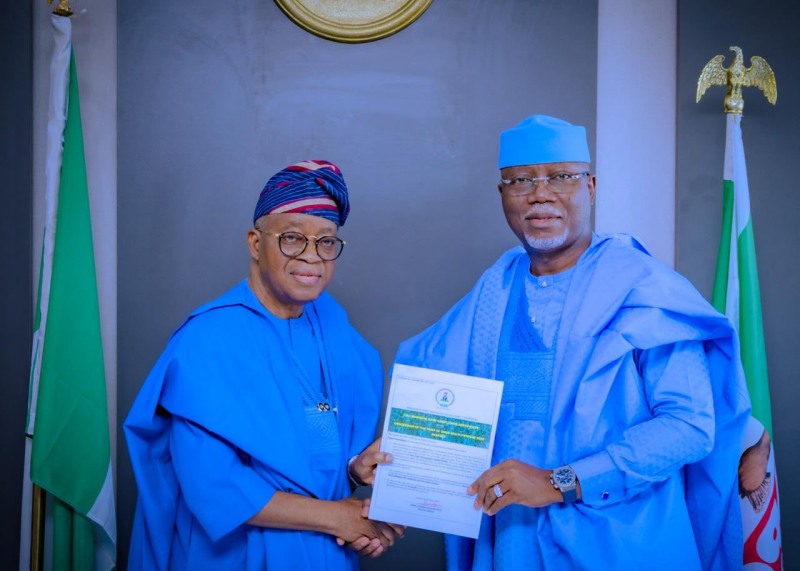
“We are ready to get this project started,” Aiyedatiwa said in Abuja during the presentation of the revalidated licence by the Minister of Marine and Blue Economy, Chief Adegboyega Oyetola. He described the deep sea port as more than a state asset, asserting that it will serve Nigeria and neighbouring West African countries, positioning Ondo as a strategic hub for international trade and commerce.
The governor’s remarks reflect a broader vision of regional economic integration. By enabling larger freight carriers to dock closer to production hubs in the southwest, the port is expected to reduce logistics costs, attract foreign direct investment, and stimulate industrialisation. Analysts believe that such infrastructure could help Nigeria capture a greater share of cargo traffic currently diverted to ports in neighbouring countries due to capacity constraints.
Beyond port operations, the project is part of a larger blueprint to transform Ondo’s coastline into an integrated economic corridor. According to Aiyedatiwa, accompanying developments include plans for industrial zones, chemical and fertiliser plants, petroleum processing facilities and a modular refinery, all intended to leverage the port’s connectivity and create employment opportunities for thousands of residents.
Economic stakeholders have welcomed the licencing breakthrough, noting that the deep sea port could help diversify Nigeria’s economy by strengthening logistics and export infrastructure. The facility is expected to support the movement of agricultural produce, solid minerals, manufactured goods and import cargo, aligning with national objectives to expand non-oil exports and enhance competitiveness in global markets.
Experts also point to potential spillover benefits for the broader West African region. A fully operational deep sea port in Ondo could serve as a gateway for hinterland countries, including Niger, Chad, Burkina Faso and Mali, which currently depend on coastal ports for external trade. By improving access and reducing transit times, the initiative may foster deeper economic linkages and stimulate cross-border commerce.
The revalidation aligns with federal policy efforts to expand maritime infrastructure through public-private partnerships. Recent approvals by the Federal Executive Council have included other major port projects, with the aim of positioning Nigeria as a logistics hub in Africa. The Ondo deep sea port, valued at over $1 billion, is among several strategic investments designed to modernise the country’s port capacity and decongest existing facilities.
However, observers caution that successful realisation will depend on addressing ancillary infrastructure needs, such as access roads, rail links, power supply and security arrangements. Robust integration with national transport networks will be crucial for enabling the port to operate efficiently and for maximising its economic impact.
Governor Aiyedatiwa’s administration has reiterated its commitment to fast-tracking preparatory works, including land allocation, environmental assessments and stakeholder engagement. With the licence now in hand, attention is turning to securing financing, finalising engineering designs and commencing construction activities that could transform the coastal landscape and generate long-term socioeconomic benefits.
As the deep sea port project progresses from planning to execution, it represents a bold signal of Nigeria’s ambition to reposition itself within global maritime trade. Officials and investors alike view the initiative as a catalyst for economic diversification, industrial growth and regional integration—objectives that, if realised, could reshape trade flows and enhance the nation’s infrastructure footprint on the African continent.
📩 Stone Reporters News | 🌍 stonereportersnews.com
✉️ info@stonereportersnews.com | 📘 Facebook: Stone Reporters | 🐦 X (Twitter): @StoneReportNew | 📸 Instagram: @stonereportersnews
Add comment
Comments