

Reported by: Ijeoma G | Edited by: Gabriel Osa
Abuja, Nigeria — In a dramatic maritime rescue operation on Monday, the Nigerian Navy successfully saved 20 crew members from a vessel that erupted in flames along the Oron–Calabar waterways in Cross River State, underscoring both the persistent hazards of commercial navigation in the Gulf of Guinea and the navy’s readiness to respond to emergencies at sea.
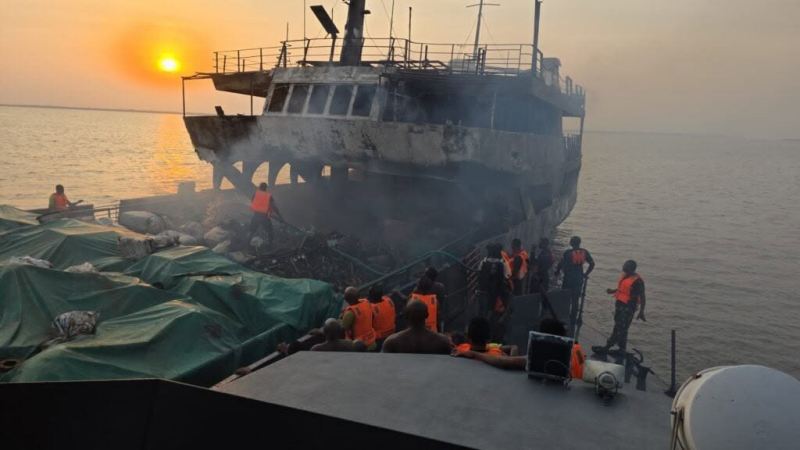
The distress call came at around 1:00 p.m. local time on December 22, 2025, from the Motor Vessel MV Chimba Express, which was en route from Gabon to Calabar carrying scrap materials and assorted logistics when a fire broke out onboard near the Calabar Channel entrance. Smoke was reported billowing heavily from the midship and aft sections of the vessel, triggering an urgent request for assistance.
Responding swiftly, personnel aboard the Nigerian Navy Ship (NNS) OSE, then on routine patrol in the region, vectored towards the scene within approximately 25 to 30 minutes of receiving the distress signal. The naval team immediately commenced search and rescue operations upon visual confirmation of the blaze, deploying life buoys and other emergency equipment to evacuate crew members who had either abandoned ship or were stranded on deck.
In all, 20 of the estimated 21 crew members — 14 Nigerians and seven Cameroonians — were pulled to safety and administered first aid by naval medical teams. The Chief Engineer of the vessel reportedly jumped into the water in a bid to escape the fire, fearful of a potential explosion, and remains unaccounted for with search efforts ongoing.
The rescue mission drew on the cooperation of several units and local stakeholders. In addition to the NNS OSE crew, personnel from the Forward Operating Base Ibaka, Naval Security Station 030 Houseboat, and nearby local fishermen played critical roles in ensuring the operation’s success. Portable pumps were also employed to assist in limiting the spread of the fire as far as feasible, though the blaze had already significantly damaged key sections of the vessel.
Naval officials lauded the collaborative effort as a testament to the Nigerian Navy’s commitment to safeguarding lives and maritime assets within the nation’s territorial waters. “The swift and coordinated response to this distress call demonstrates our unwavering dedication to maritime safety and the protection of all seafarers, no matter the challenge,” a naval spokesperson said, reiterating directives from the Chief of the Naval Staff on prioritising emergency responsiveness.
The Calabar stretch of the Oron–Calabar waterway — a busy artery connecting Nigeria’s southeastern maritime routes — has been the site of numerous security and safety incidents, ranging from piracy and armed robbery to ferry mishaps and hostile attacks on commercial vessels. In recent months, the Nigerian Navy has stepped up patrols and emergency readiness in the area, responding to a range of distress calls and threats, including the rescue of kidnapped passengers on the same route earlier in the year.
The Oron–Calabar channel serves as a vital link for coastal and inland water transport, supporting cross‑border commerce and the movement of goods and passengers. However, the waterways’ strategic importance has also made them vulnerable to non‑state threats and navigational hazards, prompting intensified cooperation among maritime agencies, local fishing communities, and naval forces to improve security and safety outcomes.
Maritime safety experts have cautioned that the combination of ageing vessels, inadequate maintenance standards, and unpredictable weather conditions can heighten the risk of fire and mechanical failures at sea. They underscore that regular inspections, adherence to international safety protocols, and enhanced emergency preparedness are essential to preventing future incidents and ensuring seafarer welfare.
The ongoing search for the missing Chief Engineer has mobilised additional resources, with naval units maintaining a security posture in the vicinity of the last known location. Authorities are also coordinating with the Nigerian Ports Authority and other stakeholders to support the rescued crew members and facilitate reunification with their families following medical evaluations and debriefings.
This incident adds to a series of maritime emergencies in Nigerian waters that have tested the capacity of the nation’s response agencies. The robust handling of the MV Chimba Express fire points to growing proficiency in joint search and rescue operations and highlights the central role of the navy in ensuring maritime safety across the Gulf of Guinea — a region where shipping traffic and associated risks continue to rise.
As investigations into the cause of the fire continue, preliminary assessments suggest that an electrical fault in the engine room may have triggered the blaze, though definitive findings are pending further inquiry. Maritime authorities have reiterated the importance of vessel safety standards and compliance with international maritime regulations to avert similar disasters.
The Nigerian Navy has reaffirmed its strategic commitment to protecting national waters and supporting the well‑being of seafarers and maritime communities. In recent months, naval deployments have responded not only to emergencies like fires and distress calls but also to threats involving piracy, kidnapping, and illegal maritime activities, reflecting a comprehensive approach to enhancing security in the Gulf of Guinea.
📩 Stone Reporters News | 🌍 stonereportersnews.com
✉️ info@stonereportersnews.com | 📘 Facebook: Stone Reporters | 🐦 X (Twitter): @StoneReportNew | 📸 Instagram: @stonereportersnews
Add comment
Comments