

Reported by: Ijeoma G | Edited by: Gabriel Osa
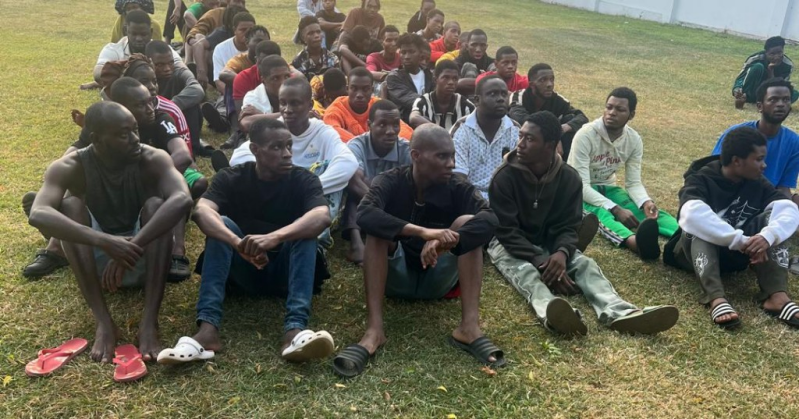
Accra, Ghana — In a sweeping intelligence-led crackdown on organised online crime, Ghanaian authorities have detained 48 individuals suspected of operating sophisticated cybercrime networks in the Dawhenya area of the Ningo-Prampram Constituency, officials announced Wednesday, December 24, 2025. The coordinated operation reflects intensifying efforts by Ghana’s security apparatus to clamp down on digital fraud and protect the integrity of the nation’s rapidly expanding online economy.
The arrests were made during a late-night raid carried out by the Cyber Security Authority (CSA) in collaboration with the Ghana Police Service and National Security. According to Samuel Nartey George, Ghana’s Minister for Communication, Digital Technology and Innovation, the operation targeted an entrenched syndicate believed to be involved in a wide range of illicit cyber-enabled activities.
Preliminary investigations suggest that the 48 suspects, comprising 46 men and two women, are Nigerian nationals. They are alleged to have engaged in multiple forms of cybercrime, including romance scams, online investment fraud, identity impersonation schemes and illegal online gold trading, authorities said. Interrogations are ongoing, but investigators believe the group used a network of digital devices and internet infrastructure to orchestrate their illicit activities.
Items seized during the operation included 54 laptops, 39 mobile phones, one Starlink internet antenna and eight MTN TurboNet routers, which officials say were integral to the syndicate’s online operations. Law enforcement personnel are now analysing the seized equipment for evidence to support prosecution and uncover broader links to organised cybercrime rings.
Mr. George, speaking in Accra after the operation, emphasised the government’s commitment to combating cybercrime and safeguarding the country’s digital ecosystem. “We are committed to carrying out intelligence-led surgical strikes against these crime syndicates to ensure that we rid our cyber ecosystem of these criminals,” he said, underlining that Ghana welcomes legitimate enterprise but will remain an inhospitable environment for those who seek to exploit online platforms for criminal profit.
The minister acknowledged the professionalism and dedication of the security personnel involved. “I commend the operatives who carried out this operation with the professionalism for which our security services are globally recognised,” he added, noting that such operations are crucial to reinforcing public trust in digital transactions and services.
Cybercrime has emerged as a persistent challenge across West Africa, with Ghana increasingly positioned as both a target and a transit point for illicit online activity. Criminal networks frequently exploit the openness of digital platforms and the anonymity of the internet to deceive victims domestically and abroad, often resulting in significant financial losses for individuals and businesses.
Analysts say that the prevalence of these schemes has grown alongside expanding internet access and mobile connectivity. In recent years, Ghana’s security agencies have reported a surge in reports of online fraud, including deception through social media, fraudulent investment platforms, and manipulations of e-commerce ecosystems. These trends have prompted sustained efforts to bolster cyber defence capabilities and increase public awareness of digital threats.
The CSA, established to lead national efforts against cyber threats, has been at the forefront of these initiatives, working closely with the Ghana Police Service’s Cyber Crime Unit and National Security to identify and disrupt criminal operations. The agency also collaborates with international partners to trace cross-border cybercrime networks and facilitate information sharing on emerging threats.
While the Dawhenya arrests represent one of the largest single busts in recent months, they are part of a broader pattern of enforcement actions aimed at dismantling cybercrime hubs across the country. Earlier this year, coordinated raids in other regions led to the detention of additional suspects and the seizure of digital tools used in fraudulent activities, highlighting the expansive nature of the challenge.
Cybersecurity experts have welcomed the government’s assertive approach but caution that the underlying causes of cybercrime—such as economic disparities, lack of digital literacy, and organised transnational networks—require long-term strategic responses. They argue that alongside law enforcement operations, sustained investment in public education, regulatory frameworks and cross-border cooperation is essential to meaningfully curb the growth of online crime. (MyJoyOnline)
Victims of cybercrime often suffer not only financial loss but also emotional and reputational harm. Romance scams, for example, exploit personal relationships cultivated over social media and messaging apps, leading victims to transfer funds under false pretences. Illicit investment platforms may promise high returns, only to disappear with invested capital. These schemes have prompted consumer protection agencies to issue frequent advisories on safe internet practices, urging vigilance when engaging in digital financial activities.
In response to the escalating threat, the Ghanaian government has also taken steps to strengthen legal frameworks governing cybercrime. Existing laws provide for substantial penalties for digital fraud, including imprisonment and heavy fines, but enforcement has historically been uneven due to challenges in detection and prosecution. Recent legislative efforts aim to align national statutes with international best practices and equip law enforcement with clearer mandates to pursue these crimes effectively.
The Dawhenya arrests come at a time when global concerns about cybercrime are mounting, with international law enforcement agencies reporting significant upticks in fraud, extortion and ransomware attacks. Collaborative operations involving multiple countries have resulted in hundreds of arrests worldwide this year, underscoring the transnational nature of digital crime and the necessity of coordinated strategies to address it.
For Ghana, the success of the Dawhenya operation sends a strong message about the state’s resolve to confront cybercrime head-on. As authorities continue to process and investigate the suspects, questions remain about potential connections to larger networks and the extent to which cybercriminal operations are embedded within communities.
Officials have urged the public to report any suspicious digital activity or leads that may assist in ongoing investigations. They also reiterated that the fight against cybercrime is a collective responsibility that extends beyond law enforcement to include individuals, businesses and civil society in strengthening the resilience of Ghana’s digital space.
📩 Stone Reporters News | 🌍 stonereportersnews.com
✉️ info@stonereportersnews.com | 📘 Facebook: Stone Reporters | 🐦 X (Twitter): @StoneReportNew | 📸 Instagram: @stonereportersnews
Add comment
Comments