

Reported by: Ijeoma G | Edited by: Gabriel Osa
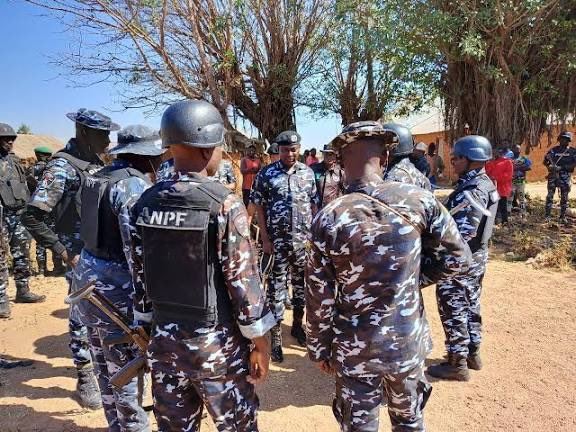
In a development that has drawn sharp attention to internal security protocols within Nigeria’s police force, a serving Police Inspector and his girlfriend have been detained by the Taraba State Police Command following the disappearance of a service rifle in the state. The incident, which unfolded over the Christmas period, has triggered a formal investigation by police authorities amid broader concerns about the accountability of firearms issued to law enforcement personnel.
The inspector at the centre of the controversy has been identified as Inspector Joshua Charles, a 45-year-old officer attached to the Safer Highway Patrol team operating in the Wukari-Jootar Federal Highway corridor of Taraba State. Reports indicate that on December 25, 2025, Charles left his designated duty post around mid-afternoon to travel to Wukari town, leaving three of his colleagues — Inspectors Haruna Galadima, Isah Waziri, and Umar Mohammed — to maintain the checkpoint.
The firearm in question is described as a Type 06 assault rifle, reportedly loaded with 25 rounds of live ammunition, which Charles had claimed to have secured inside his room prior to departing the duty post. Later that evening, around 8:30 p.m., his partner, identified as Ruth Alphancis, returned from a trip to Jootar village in neighbouring Benue State. Alphancis, who has been living with the inspector since August 2025, purportedly told authorities that she observed signs of a break-in at their residence, stating she saw an unidentified person leaving the premises shortly before her arrival.
Upon returning from Wukari later that night, Charles — reportedly in an intoxicated state — discovered that his service rifle was missing. Alarmed by the disappearance of a state-issued firearm, he reported the matter to superior officers, prompting the Taraba State Police Command to detain both Charles and Alphancis as part of the ongoing investigation.
Authorities have since launched a concerted effort to track down the missing rifle, with security operatives combing surrounding areas along the Wukari–Jootar Federal Highway. In addition to formal police searches, local residents and community hunters have been mobilised to assist in the search operation, highlighting the seriousness with which the loss of the weapon is being treated by law enforcement and civic stakeholders.
The detentions have raised pressing questions about police firearms management, especially given the broader context of arms proliferation and insecurity in parts of northern and northeastern Nigeria. Incidents involving lost or unaccounted service weapons can have far-reaching implications, particularly when such firearms fall into the hands of criminal or militant groups involved in kidnapping, armed robbery, and banditry — challenges that have plagued Taraba and neighbouring states in recent years.
While official statements from the Taraba State Police Command remain limited, a post by security analyst Zagazola Makama on social media was among the first accounts to bring the matter to public attention, outlining the sequence of events and identifying both Charles and Alphancis as persons of interest in the investigation. Police spokespeople have reiterated that the detentions are procedural and designed to aid law enforcement’s inquiries rather than to signal guilt, underscoring the importance of a thorough and evidence-based probe.
The loss of a loaded assault rifle also underscores ongoing concerns about alcohol and duty discipline within parts of the security services. Unverified reports emerging alongside the official narrative suggest that the inspector may have been under the influence of alcohol when the disappearance was discovered, though this aspect remains subject to verification as investigators piece together the facts.
In Taraba State, where security dynamics are already complex due to its geographical positioning and history of criminal activity, the misplacement of an official firearm has ignited debate among civil society groups and security watchers about the need for stronger internal controls and accountability mechanisms within the police. The state has witnessed a variety of armed security challenges over recent years, from kidnappings and communal clashes to gunrunning and banditry, making the secure management of weapons issued to law enforcement personnel a matter of urgent public interest.
For residents and local leaders in Jalingo, Wukari, and surrounding communities, the episode has also reignited discussions on community safety and cooperation with formal security agencies. Traditional rulers, youth groups, and neighbourhood watch associations have all been urged to remain vigilant and to report any suspicious activities to the police, particularly in rural and highway areas where missing or illicit firearms can pose a direct threat to civilian life and commerce.
Legal experts following the case note that the detainment of the inspector and his girlfriend does not equate to formal charges and that due process must be followed. Nigeria’s Criminal Code and Police Act outline clear procedures for handling state property and firearm management, and should the investigation reveal negligence, criminal misconduct, or collusion, implications could range from disciplinary action to criminal prosecution. For Alphancis, as a civilian partner, her legal status and potential culpability hinge on whether evidence supports any direct involvement in the firearm’s disappearance or mishandling.
Meanwhile, police leadership at both the state and national levels face a broader imperative: to reinforce policies that ensure service weapons are strictly controlled and that any lapses are swiftly addressed with transparency. The Nigeria Police Force has in recent times highlighted successes in arms recovery operations across the country, but isolated incidents such as the current one in Taraba underscore ongoing vulnerabilities in internal discipline and asset management.
As investigations continue, residents and observers alike are watching closely for outcomes that might either reassure the public about the robustness of police oversight or reveal deeper cracks in procedures governing the security architecture in Taraba State. For now, both Inspector Charles and Alphancis remain in custody while law enforcement agencies pursue leads on the missing rifle and work to establish a clear account of how a state-issued weapon came to be unaccounted for on one of the region’s busiest transit corridors.
📩 Stone Reporters News | 🌍 stonereportersnews.com
✉️ info@stonereportersnews.com | 📘 Facebook: Stone Reporters | 🐦 X (Twitter): @StoneReportNew | 📸 Instagram: @stonereportersnews
Add comment
Comments