

Reported by: Oahimire Omone Precious | Edited by: Gabriel Osa
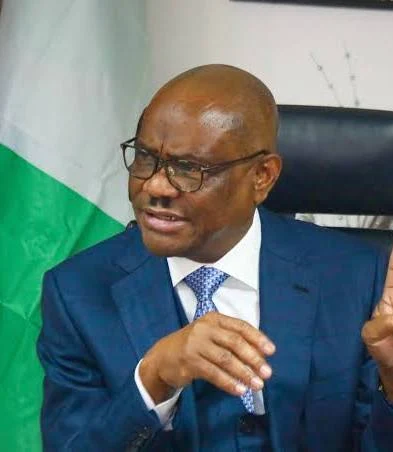
Abuja — Federal Capital Territory (FCT) Minister Nyesom Wike has publicly pushed back against Oyo State Governor Seyi Makinde, accusing him of peddling falsehoods and exhibiting political frustration amid ongoing tensions within the Peoples Democratic Party (PDP). The exchange highlights deepening rifts among senior figures in Nigeria’s largest opposition party as internal disputes intensify in the run‑up to the 2027 general elections.
At the centre of the unfolding political drama is a bitter dispute that emerged following remarks by Gov. Makinde during a recent media engagement. Makinde, who has become an outspoken critic of certain party dynamics, recounted a meeting involving President Bola Ahmed Tinubu, Wike and other leaders — and suggested that Wike claimed he would “hold the PDP” for Tinubu despite party differences. Makinde emphasised that such a pledge was his personal position and not representative of the PDP as a whole, stressing the need for individual autonomy in political choices. (
Wike’s response, delivered through close aides and public statements, was swift and uncompromising. He accused Makinde of spreading misinformation and using political commentary to mask frustration over party developments. Wike’s camp argued that Makinde’s narrative misrepresented the facts, going so far as to suggest that the governor’s comments were driven by a broader agenda of destabilising party unity rather than a commitment to transparent discourse.
While the specifics of Wike’s rebuttal have not been outlined in a single formal release, insiders close to the FCT minister’s office described his position as one rooted in both political principle and personal vindication. According to these sources, Wike views Makinde’s accusations as symptomatic of a larger struggle over control and influence within the PDP — an internal contest marked by competing ambitions, regional considerations and contrasting approaches to strategy.
The tension between Wike and Makinde is not new. It reflects months of friction within the PDP over leadership, zoning, reconciliation and the direction of the party after its defeat in the 2023 general elections. Wike had earlier pulled out of key reconciliation agreements, accusing Makinde and others of reneging on previously arranged terms for striking internal peace and restoring trust within the party hierarchy. He lamented what he described as a “virus of dishonesty and treachery” that had hindered progress and trust among prominent members.
Makinde’s camp, for its part, has responded to criticism with its own strong rebuttals. In recent days, the governor has publicly dismissed external allegations — including unrelated claims about federal funds — as politically motivated and lacking credible evidence. His media team has characterised such assertions as “false, misleading and driven by desperation,” and has sought to frame Makinde’s stance as grounded in performance, transparency and public trust.
Observers say that the exchange between Wike and Makinde underscores deeper ideological and strategic fractures in the PDP. Amid manoeuvring for influence over critical party organs, upcoming conventions and the nomination process ahead of the 2027 election cycle, personalities and power dynamics have taken centre stage alongside policy debates.
Political analysts suggest that the feud reflects broader anxieties within Nigeria’s major political parties as they recalibrate ahead of high‑stakes contests. The PDP, once Nigeria’s dominant political force, has struggled to present a unified front in the face of internal divisions and defections, with leaders such as Wike and Makinde representing competing visions for the party’s future.
For many Nigerians watching the PDP’s internal struggles unfold, the feud between Wike and Makinde has crystallised longstanding questions about unity, leadership culture and the ability of opposition parties to coalesce around coherent strategies. Some civil society stakeholders have expressed concern that such disputes may detract from broader efforts to address pressing national issues, including security, economic performance and governance reform — areas that are likely to dominate public debate in the months ahead.
As Wike and Makinde continue to trade barbs, the PDP’s ability to manage internal disagreements while positioning itself as a credible alternative in the 2027 polls remains uncertain. Whether the party’s leadership can reconcile divergent factions or whether these divisions will deepen further is a central question confronting Nigeria’s opposition landscape.
In the meantime, both sides are signalling firmness in their respective positions, with Wike decrying what he describes as a campaign of falsehood and Makinde insisting on a fact‑based rebuttal to criticism, reflecting a turbulent moment in the nation’s evolving political narrative.
📩 Stone Reporters News | 🌍 stonereportersnews.com
✉️ info@stonereportersnews.com | 📘 Facebook: Stone Reporters | 🐦 X (Twitter): @StoneReportNew | 📸 Instagram: @stonereportersnews
Add comment
Comments