

Reported by: Oahimire Omone Precious | Edited by: Gabriel Osa
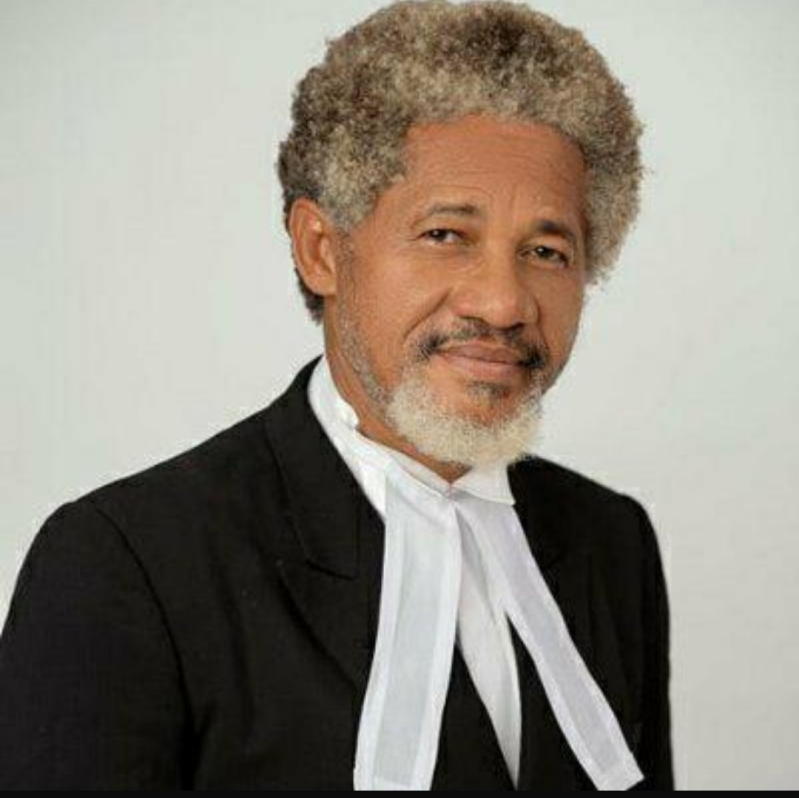
A widely shared political commentary by Chief Malcolm Emokiniovo Omirhobo has struck a nerve in Abia State’s increasingly tense political climate, as old political forces coalesce to challenge the leadership of Governor Alex Otti ahead of the 2027 general elections. In a commentary titled “Abia Is Not a Private Estate,” Omirhobo criticised what he describes as the morally bankrupt mobilisation of former officeholders and power brokers rallying against the sitting governor, warning that such manoeuvres betray democratic principles, public trust, and the rule of law.
The backdrop to Omirhobo’s remarks is a series of political meetings involving Senator Orji Uzor Kalu, a former governor of Abia State and current senator for Abia North, along with former governor Theodore Orji and other political figures. The gatherings — part of an emerging coalition referred to by participants as “The Team” — are aimed at uniting political actors who previously held power in Abia between 2009 and 2023 to oppose Governor Otti’s administration and • in their view • “reclaim political relevance” as well as secure victory in the 2027 elections.
During one recent meeting in Umuahia, Kalu urged participants to remain focused on ousting Otti at the polls, describing leadership as a “relay race” and emphasising the contributions of past administrations to the state’s development. The platform has been portrayed by supporters as bipartisan and open to leaders across party lines, though critics argue it is little more than a vehicle for old political elites to reassert influence.
In his commentary, Omirhobo sharply criticised the meeting and its rhetoric — especially the chant of “on your mandate we shall stand” — pointing out that such language lacks grounding in constitutional authority, democratic legitimacy, or the clearly expressed will of Abia’s electorate. He wrote that what is on display, rather than principled political engagement, is “blind loyalty to a man, elevated above institutions and democratic norms.”
“Omirhobo argued that democracy cannot survive where individuals are worshipped and the rule of law is treated as optional,” his commentary states, adding that Abia deserves governance anchored in law, accountability, and ideas, not what he called “cabal politics” centred on personalities rather than public good.
His remarks resonated with critics who see the mobilisation of former governors and political figures primarily as a power play that undermines institutional integrity and shifts focus away from governance issues that matter to ordinary citizens.
The coalition’s emergence has not occurred in a vacuum. Governor Otti’s administration has faced a series of political challenges and criticisms since it took office in 2023. Notably, opponents have questioned his governance style and performance, including allegations that he has been governing from his private residence rather than the Government House — a point opponents have highlighted as evidence of disconnect from established norms of office — though defenders argue it was a practical decision tied to infrastructure realities left by previous administrations.
Further polarisation followed comments by political figures like Senator Benjamin Kalu (not to be confused with Orji Uzor Kalu), the Deputy Speaker of the Federal House of Representatives, who has publicly criticised the Otti administration’s record and expressed confidence that the opposition — notably the All Progressives Congress (APC) — is positioned to take over leadership in Abia State.
Governors and political elites from across Nigeria have also weighed into the political discourse, with some urging unity and admonishing politicians against actions they say could destabilise the state; others, particularly in opposition ranks, pushing harder for political change. The result has been a mixture of public debate, partisan mobilisation, and media attention that has kept Abia at the centre of national political commentary.
Analysts say the rhetoric surrounding “Abia Is Not a Private Estate” highlights deeper concerns about how political power is contested and exercised in Nigeria’s evolving democratic environment. While political competition is a normal feature of democratic life, Omirhobo and others argue that when the struggle becomes personalised — anchored in personalities rather than institutional checks, clear legal frameworks, or the electorate’s will — it can erode public trust and weaken democratic norms.
Critics of the coalition effort contend that the focus on removing a sitting governor well before the next electoral cycle reflects not a genuine democratic battle but a battle for influence among political elites, with ordinary citizens’ interests taking a backseat. Supporters of the coalition, conversely, say their actions are part of legitimate political strategy and mobilisation ahead of competitive elections, which are a recognised aspect of democratic contestation.
Civil society organisations and community leaders have urged all parties to channel their energies toward constructive dialogue and transparent electoral processes rather than polarising rhetoric. Some residents and commentators have said that the brewing political tussle could distract from urgent developmental needs in Abia State — from infrastructure and employment to education and healthcare — if the focus remains fixated on personality politics. Others argue that robust competition and debates about performance and accountability are essential to a vibrant democracy.
As the 2027 general elections draw closer, the brewing confrontation between established political figures and the sitting governor is likely to intensify, testing the resilience of democratic institutions and norms in Abia State. Commentators such as Omirhobo emphasise that the ultimate test for Nigerian democracy lies not in the rhetoric of political elites but in the extent to which governance remains grounded in law, accountability, and respect for the electorate’s voice.
📩 Stone Reporters News | 🌍 stonereportersnews.com
✉️ info@stonereportersnews.com | 📘 Facebook: Stone Reporters | 🐦 X (Twitter): @StoneReportNew | 📸 Instagram: @stonereportersnews
Add comment
Comments