

Reported by: Ijeoma G | Edited by: Gabriel Osa
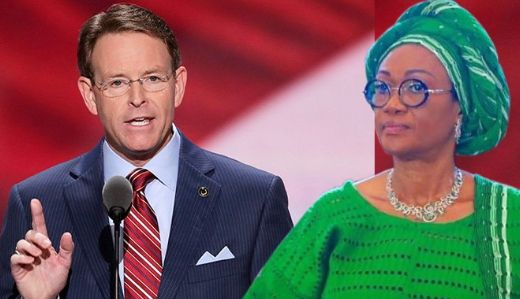
WASHINGTON, D.C. — A prominent American broadcast journalist and conservative commentator has revealed that he turned down an engagement request from Nigeria’s First Lady, Senator Oluremi Tinubu, explaining that he did not want his media platform to be used in a way that glosses over or “cover up” serious issues facing Nigeria.
Tony Perkins, president of the Family Research Council and host of the Washington Watch programme, disclosed the encounter during a discussion on February 4 with U.S. lawmaker Chris Smith, in which religious freedom in Nigeria was a key topic of conversation. According to Perkins, Mrs. Tinubu’s representatives approached him with an invitation to discuss the state of religious freedom in the country, but he declined the offer.
Perkins said he was uncomfortable with the notion of providing a platform that could be interpreted as lending favourable or sanitised coverage of Nigeria’s internal challenges, particularly amid ongoing international scrutiny over reports of persecution and violence against religious minorities. “The First Lady of Nigeria was here this week, and in fact, they wanted to come on the programme to talk about religious freedom, and I said, ‘I’m not gonna meet with them or have a meeting with anybody.’ I’m not gonna give them a platform to cover up what they’re doing in Nigeria,” he told viewers.
The First Lady’s visit to the United States coincided with high-profile diplomatic events, including her attendance at the National Prayer Breakfast, where she was formally acknowledged by U.S. President Donald Trump. Supporters of the Nigerian government portrayed that recognition as a diplomatic success amid pressure from American officials over Nigeria’s human rights record.
Perkins’s remarks reflect broader international tensions surrounding Nigeria’s governance and human rights environment. The U.S. government has repeatedly flagged concerns about religiously motivated violence and the protection of minority communities. In late 2025, Nigeria was designated a “Country of Particular Concern” by the U.S. State Department due to alleged state inaction on widespread killings of civilians, particularly Christians, by armed groups.
Perkins’s refusal came against the backdrop of reported efforts by the Nigerian government to engage foreign audiences and shape international perceptions. Critics of the administration have argued that such outreach, which has included millions spent on hiring foreign lobbyists, has been aimed at burnishing Nigeria’s image abroad rather than addressing systemic challenges at home.
Despite the broadcaster’s public disclosure, no official response has yet been issued by the Office of the First Lady. Observers say the incident underscores the difficulty governments face in balancing international image management with candid engagement on contentious domestic issues.
Perkins, widely known in U.S. conservative circles for his commentary on social and religious issues, framed his refusal as a matter of principle. He emphasised that media platforms should not be used to obscure realities on the ground, and that discussions about human rights and governance must be grounded in open critique rather than public relations narratives.
The disclosure has drawn attention in both Nigerian and international media, adding another layer to ongoing debates about Nigeria’s political leadership, human rights record and the role of foreign media in shaping perceptions of African governance.
📩 Stone Reporters News | 🌍 stonereportersnews.com
✉️ info@stonereportersnews.com | 📘 Facebook: Stone Reporters | 🐦 X (Twitter): @StoneReportNew | 📸 Instagram: @stonereportersnews
Add comment
Comments