

Reported By Mary Udezue | Edited by: Gabriel Osa
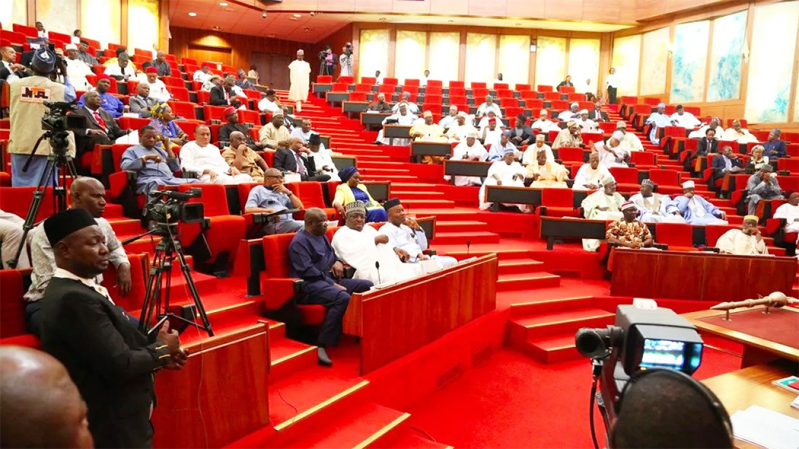
ABUJA — Nigeria’s Senate on Tuesday reconvened for an emergency plenary session and dissolved into the Committee of the Whole to consider a motion for the rescission and re-committal of the Electoral Act, 2022 (Repeal and Re-enactment) Bill, 2026, in a move aimed at enabling the Independent National Electoral Commission to adjust its election timetable.
The unusual mid-recess sitting underscored the urgency attached to the proposed legislative correction, which lawmakers said was necessary to address technical and procedural gaps identified after the bill’s passage. The bill seeks to repeal and re-enact the existing Electoral Act 2022 to refine provisions governing the conduct of elections, timelines for party primaries, candidate substitution, and other administrative processes ahead of the next general election cycle.
Presiding over the session, Senate President Godswill Akpabio emphasized that the chamber’s action was procedural and designed to ensure that the final legislation aligns with operational realities communicated by the electoral management body. He stated that the Senate’s decision to dissolve into the Committee of the Whole was consistent with parliamentary rules, allowing members to revisit specific clauses and effect necessary amendments before final passage.
The Independent National Electoral Commission, commonly known as Independent National Electoral Commission, had reportedly raised concerns over certain timelines contained in the re-enactment bill. Electoral officials indicated that some provisions, as currently framed, could constrain the commission’s ability to finalize preparations, particularly regarding party primaries and the submission of candidate lists.
While the Senate did not publicly disclose all specific clauses targeted for review, lawmakers familiar with the deliberations suggested that adjustments may involve clarifying deadlines for political party primaries and resolving ambiguities that could trigger legal disputes. In Nigeria’s electoral history, conflicting timelines and procedural inconsistencies have often resulted in protracted court cases, occasionally leading to the disqualification of candidates or the nullification of primaries.
The Electoral Act 2022 was originally enacted to introduce reforms aimed at strengthening transparency and technological integration in elections, including the use of electronic transmission of results. However, as the political calendar advances toward the next electoral cycle, stakeholders have argued that evolving operational realities necessitate further refinement of the law.
The Senate’s action effectively reopens deliberations on the 2026 re-enactment bill before it proceeds to concurrence with the House of Representatives. Under legislative procedure, rescission allows lawmakers to revisit a previous decision, while recommittal returns the bill to the committee stage for reconsideration of specific provisions.
Observers note that such a move, though rare, is not unprecedented in Nigeria’s parliamentary practice. It is typically invoked when drafting errors, constitutional concerns, or implementation challenges are identified after passage but before presidential assent. By acting preemptively, senators appear intent on preventing potential conflicts between statutory requirements and administrative capacity.
INEC has repeatedly stressed the importance of clarity in electoral timelines. The commission operates under strict constitutional and statutory deadlines, including the mandatory notice period for elections and the window for political parties to conduct primaries. Any misalignment between the law and practical timelines can compress preparations, affecting logistics, procurement, voter education, and training of ad hoc staff.
Analysts argue that the Senate’s decision reflects a recognition of the critical role played by legal certainty in safeguarding electoral integrity. Electoral laws form the backbone of democratic governance, and ambiguities can undermine public confidence, particularly in a country where elections are frequently contested in court.
Civil society organizations monitoring the legislative process have called for transparency in the amendment process, urging lawmakers to ensure that any revisions enhance inclusivity and accountability. Some groups have cautioned against introducing last-minute changes that could advantage particular political actors, emphasizing the need for broad consultation.
Political parties are also closely watching developments. The timetable for party primaries often shapes internal party dynamics, coalition-building efforts, and campaign strategies. A compressed or altered schedule can significantly influence candidate emergence and electoral readiness.
Within the chamber, debate reportedly focused on technical alignment rather than substantive policy shifts. Senators across party lines expressed support for granting INEC the operational flexibility required to conduct credible elections. The consensus tone of the session suggested an effort to project institutional stability and responsiveness.
Constitutional experts say that ensuring harmony between the Electoral Act and constitutional provisions is essential. Nigeria’s Constitution prescribes certain electoral milestones, and statutory amendments must conform to those benchmarks. Any discrepancy could invite judicial scrutiny and potentially delay the electoral process.
The National Assembly complex in Abuja has in recent years become a focal point of intense legislative activity around electoral reform. Successive amendments to the Electoral Act have sought to address lessons learned from previous polls, including issues related to electronic accreditation, result transmission, and dispute resolution.
As the recommitted bill returns to committee-level scrutiny, attention will turn to the speed with which lawmakers can finalize adjustments. Given the proximity of preparatory activities for upcoming elections, delays could have cascading effects on the broader political calendar.
For INEC, the priority remains the establishment of a clear, legally sound timetable that affords sufficient time for procurement, training, and stakeholder engagement. Electoral logistics in Nigeria involve the coordination of tens of thousands of polling units across diverse and sometimes challenging terrains, making adherence to timelines critical.
The Senate’s emergency intervention signals a willingness to recalibrate legislative decisions in response to institutional feedback. Whether the revised bill will comprehensively address INEC’s concerns will become clearer once the amended provisions are made public and subjected to further debate.
In the interim, stakeholders across Nigeria’s political spectrum are likely to intensify engagement with lawmakers to ensure that the final text reflects both operational feasibility and democratic principles. As Africa’s most populous democracy prepares for another electoral cycle, the integrity of its legal framework remains central to public trust and political stability.
📩 Stone Reporters News | 🌍 stonereportersnews.com
✉️ info@stonereportersnews.com | 📘 Facebook: Stone Reporters | 🐦 X (Twitter): @StoneReportNew | 📸 Instagram: @stonereportersnews
Add comment
Comments