

Reported by: Oahimire Omone Precious | Edited by: Carmen Diego
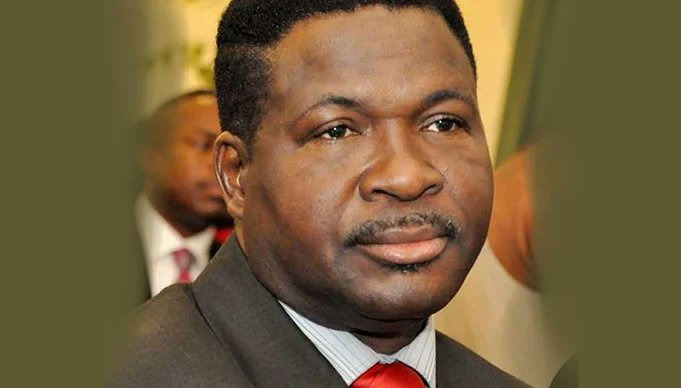
In a significant development that closes a contentious chapter in one of Nigeria’s most closely watched legal battles involving a senior lawyer, the federal government has formally withdrawn the criminal charge of alleged forgery brought against Mike Ozekhome, a prominent constitutional lawyer and Senior Advocate of Nigeria (SAN). The charge was struck out on Tuesday at the Federal Capital Territory (FCT) High Court in Maitama, Abuja, after the Attorney-General of the Federation instructed prosecutors to discontinue the case. The court’s action effectively brings the matter to an end unless new evidence justifies a fresh filing.
The initial prosecution was filed on January 16, 2026, by the Independent Corrupt Practices and Other Related Offences Commission (ICPC) on behalf of the Attorney General of the Federation. It included a three-count charge alleging that Ozekhome knowingly presented forged documents in connection with a disputed property located at 79 Randall Avenue, London NW2 7SX during proceedings before the UK’s First-Tier Tribunal (Property Chamber).
Prosecutors maintained that the allegations included claiming ownership of the London property and using a purportedly falsified Nigerian international passport to bolster that claim, which they argued amounted to forgery, use of false documents and giving false information—offences under Nigerian law. The case captured attention because the alleged acts dated back to 2021 but involved both Nigerian and UK legal dimensions, intertwining international property dispute issues with domestic criminal allegations.
The matter was initially taken over by the Office of the Office of the Attorney General of the Federation, reflecting prosecutorial precedence under the constitution to manage high-profile or complex criminal cases. Counsel to the Attorney-General, Rotimi Oyedepo, SAN, told the court at the resumed hearing that the government had decided to withdraw the charges in order to conduct a comprehensive review of the case and consolidate issues that cut across different investigating agencies. The decision was made under Section 108 of the Administration of Criminal Justice Act (ACJA) 2015, which allows prosecutors to discontinue criminal proceedings in the public interest.
The defence team, led by Paul Erokoro, SAN and supported by a team of senior lawyers, did not oppose the withdrawal application. Following the prosecution’s application, Justice Peter Kekemeke struck out the case and ordered that the charge be dismissed. The court’s action means that Ozekhome is no longer facing criminal prosecution in relation to the alleged forgery, at least under the current filing.
The withdrawal came amid broader scrutiny of the legal and factual underpinnings of the case. Some legal observers interpreted the government’s move as a reflection of the complexities inherent in cases that involve alleged misconduct overseas and contended that the prosecution may have faced challenges tying documentary evidence to domestic criminal offences. Others suggested the review was intended to ensure that any future prosecution would meet rigorous standards of due process and evidentiary sufficiency.
The genesis of the controversy dates back to a London property dispute involving Ozekhome and parties claiming rights over the same asset. The UK juridical process had already examined facets of the ownership claim, and a tribunal ruling cited questions over the documentation presented in support of Ozekhome’s asserted interest. Although that outcome did not directly translate into Nigerian criminal liability, it formed part of the context for the domestic charge.
The charge’s withdrawal has sparked mixed reactions in legal and civic circles. Supporters of Ozekhome welcomed the development, viewing it as vindication of his position and a necessary correction where prosecution may have lacked firm grounds. Critics of the original filing had argued that the prosecution of a leading legal figure required careful calibration to avoid appearing politically motivated or premature.
Human rights and legal advocacy groups have long emphasised that allegations of document falsification and fraud—particularly those involving international transactions—must be handled with strict adherence to constitutional protections and evidentiary burdens. They assert that the credibility of the justice system depends not just on enforcement but on fairness, transparency and respect for due process.
The judge’s decision to strike out the matter does not preclude the government from revisiting the charges if fresh evidence emerges that meets the statutory requirements for prosecution. However, as it stands, Ozekhome now exits the current legal process unencumbered by the forgery allegation, and the dismissal is likely to be cited in future legal and academic discussions about prosecutorial discretion and high-profile criminal filings in Nigeria.
Observers say the outcome may also influence how anti-corruption and prosecuting agencies coordinate on complex cross-border issues, particularly when documentary authenticity and international property rights intersect with domestic criminal law. It underscores ongoing tensions between the imperatives of accountability and the safeguards of fair trial rights.
📩 Stone Reporters News | 🌍 stonereportersnews.com
✉️ info@stonereportersnews.com | 📘 Facebook: Stone Reporters | 🐦 X (Twitter): @StoneReportNew | 📸 Instagram: @stonereportersnews
Add comment
Comments