

Reported by: Ijeoma G | Edited by: Carmen Diego
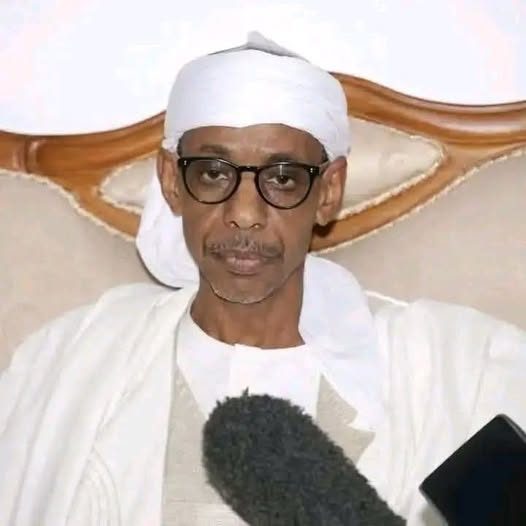
Former presidential adviser and senior political commentator Dr. Hakeem Baba-Ahmed has emerged as one of the most outspoken critics of President Bola Ahmed Tinubu’s administration and its prospects in the 2027 presidential election, warning that Nigerians could suffer “immense hardship and lifelong regret” if the incumbent pursues and wins a second term. While his exact quoted phrase has not appeared verbatim in major published reports, Baba-Ahmed’s recent public interventions and interviews outline a sustained argument against Tinubu’s re-election bid, grounded in economic, political and governance concerns that have animated national debate.
Baba-Ahmed — a former Special Adviser on Political Matters in the Office of the Vice President and ex-spokesperson for the Northern Elders Forum — made his position clear during media engagements and interviews with national outlets. In these appearances, he stressed that Tinubu should not seek a second term, urging the president to consider transitioning power to a new generation of leaders rather than remaining on the ballot in 2027. He noted that Tinubu had already fulfilled his long-held political ambition by attaining the presidency and, in his view, had not demonstrated the urgency or effectiveness needed to tackle Nigeria’s deep-seated challenges.
Speaking on national television, Baba-Ahmed articulated his concern that the administration’s economic management and policy outcomes have fallen short of public expectations. Critics like him link the removal of fuel subsidies, forex liberalisation and other macroeconomic reforms to rising inflation and cost-of-living pressures that have weighed heavily on ordinary Nigerians since 2023, even as government officials argue these steps are necessary for long-term fiscal stability. Although specific figures vary, independent data and analysis have shown that inflationary pressures persisted through much of 2024 and 2025, intensifying public scrutiny of economic reform impacts.
In a 2026 interview on Channels Television, for example, Baba-Ahmed assessed that the qualities of strategic leadership generally associated with Tinubu did not translate into effective governance outcomes. He suggested that this disconnect had undermined confidence in the administration’s capacity to deliver improvements across critical sectors, including the economy and security. He cautioned that such performance vulnerabilities could become electoral liabilities, potentially setting the stage for widespread regret if voters returned the incumbent without meaningful progress on lived realities.
Beyond economic critique, Baba-Ahmed has also addressed the political dynamics shaping the 2027 race. In another media appearance, he warned that elite political manoeuvring — such as relying on defections or consolidation within the ruling All Progressives Congress (APC) — would not by itself ensure electoral success. He argued that ordinary Nigerians were increasingly focused on tangible governance results, and that rejection of performance-based politics could undermine the APC’s re-election prospects if underlying frustrations persist.
His commentary has often been framed as part of broader concern about the quality of political alternatives available in Nigeria. While critical of Tinubu, Baba-Ahmed has also expressed scepticism about the nascent opposition coalitions, arguing that they currently lack the vision and cohesive strategy to mount a convincing challenge in 2027. This dual critique underscores his emphasis on performance-oriented politics rather than mere partisan contestation.
Baba-Ahmed’s evolution from a political insider to an outspoken critic mirrors the trajectory of many public voices who served within or adjacent to the Tinubu administration but later distanced themselves over unmet expectations. He resigned from his advisory role in April 2025, signalling his disillusionment with the pace and direction of policy implementation, particularly around political reform and national cohesion.
While his predictions about lifelong suffering reflect a subjective interpretation of political risk rather than a concrete forecast, they nonetheless tap into wider public anxiety about economic hardship, unemployment, insecurity and governance shortfalls. Opinion polling and independent economic reporting suggest that Nigerians remain deeply concerned about inflation, job prospects, and basic service delivery — issues that could shape voter sentiment in the run-up to the next election. Though formal 2027 polling on approval ratings is limited, social media sentiment and grassroots commentary echo pervasive discomfort with current conditions.
At the same time, supporters of Tinubu counter that his administration’s reforms — particularly fiscal restructuring and anti-corruption initiatives — are creating foundations for future growth and stability. Senior ruling party figures have pointed to declining inflation rates, infrastructure investments, and security allocations as evidence that the policy trajectory, while painful, could eventually yield positive outcomes. These pro–Tinubu voices argue that electing the incumbent offers continuity and a chance to complete ongoing reforms.
The contested narrative around Nigeria’s political future reflects the polarised environment shaping the 2027 electoral landscape, where economic hardship, security concerns and institutional trust are central themes. Baba-Ahmed’s warning underscores the stakes of this contest and highlights the way influential voices are framing electoral choice as a referendum on governance performance rather than purely partisan alignment.
As Nigeria prepares for another critical election cycle, the debate over whether continuity or change best serves the nation’s interests is likely to intensify, with figures like Hakeem Baba-Ahmed playing a prominent role in that public conversation.
📩 Stone Reporters News | 🌍 stonereportersnews.com
✉️ info@stonereportersnews.com | 📘 Facebook: Stone Reporters | 🐦 X (Twitter): @StoneReportNew | 📸 Instagram: @stonereportersnews
Add comment
Comments