

Reported By Mary Udezue | Edited by: Pierre Antoine
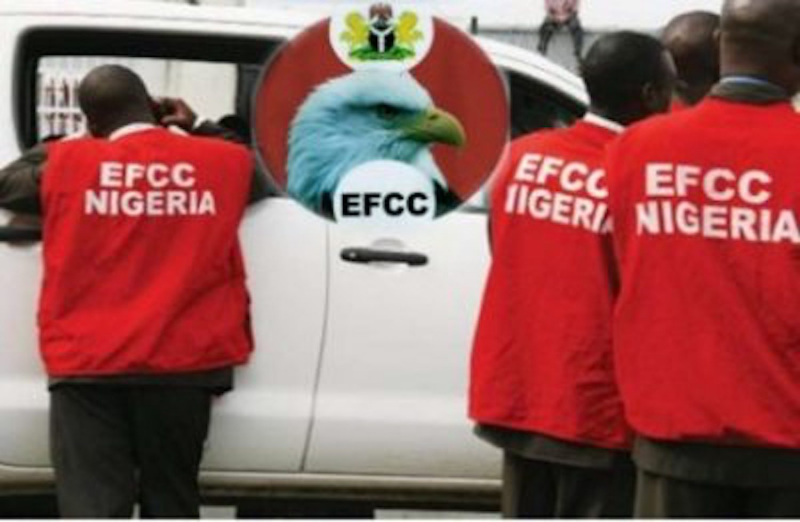
The Economic and Financial Crimes Commission has intensified its legal actions against alleged financial misconduct within the Nigerian Railway Corporation, arraigning three senior officials and a former managing director before the Lagos State High Court on charges totaling in excess of ₦2.04 billion, alongside related accusations of money laundering and unlawful enrichment. The proceedings, conducted this week at the Special Offences Court in Ikeja, represent a significant escalation in anti-corruption enforcement involving state-owned enterprises.
On Wednesday, 25 February 2026, the EFCC formally arraigned three current and former senior NRC directors on separate indictments related to alleged abuse of office, corruption, and money laundering linked to procurement and contract awards. The defendants — Felix Njoku, former Director of Finance; Benjamin Chinwuba Iloanusi, Director of Procurement; and Oche Jerry Ogbole-Inalegwu, Director of Mechanical Services — each pleaded not guilty to the charges brought against them.
Njoku appeared before Justice Olubunmi Abike-Fadipe on a 17-count charge alleging the fraudulent diversion of approximately ₦736.3 million. The prosecution contends that between 2 January and 3 December 2024, he received at least ₦240.94 million from contractors engaged by the NRC through a commercial account linked to “FC Njoku and Company,” allegedly in connection with contracts awarded while he held office. The EFCC asserts these payments constituted unlawful enrichment and money laundering under the Criminal Law of Lagos State, 2011. Following his arraignment, the judge granted Njoku temporary release on health grounds, requiring him to surrender his international passport and report regularly to the EFCC’s Lagos office. The matter was adjourned to 10 March 2026 for further hearings on his bail application, with trial dates set for May.
Iloanusi was arraigned before Justice Ismail Ijelu on a 10-count indictment alleging that during his tenure as Director of Procurement between 4 January and 30 December 2022, he received N160.93 million from contractors through Polaris Bank accounts. The prosecution asserts these transfers were improperly connected to contract awards and lacked legitimate justification. Justice Ijelu ordered Iloanusi remanded in a correctional facility pending a bail hearing scheduled for 3 March 2026, with the commencement of trial to follow.
The third defendant, Ogbole-Inalegwu, faced a nine-count charge before Justice Mojisola Dada alleging that while serving as Railway District Manager in 2019 and transacting as “Altech Engineering Services,” he received ₦11.39 million from the China Civil Engineering Construction Company (CCECC), an NRC contractor, through an Access Bank account in relation to work performed under NRC contracts. He also pleaded not guilty and was permitted to continue on administrative bail previously granted by the EFCC. His case was adjourned to 23 April 2026 for further hearing.
All three cases are predicated on provisions of the Criminal Law of Lagos State, 2011, including Sections 332 (abuse of office), 73 (corruption), and 82 (unlawful enrichment). The EFCC, represented by senior counsel Abba Muhammad, SAN, argued for remand and substantive trial dates, asserting that the scale of alleged financial misconduct necessitates rigorous judicial scrutiny. Defendants’ counsel, led by Mordecai Adejo, countered with bail applications and maintained that their clients have cooperated with investigations.
In a related development, the EFCC on Tuesday, 24 February 2026, arraigned Fidet Okhiria Edetanle, a former Managing Director of the NRC, on a separate seven-count charge alleging a combined fraud of $385,000 and ₦165,438,000 dating from his time in office and immediately after. Prosecutors allege that between May 29 and September 11, 2024, Okhiria transferred at least $205,000 from his domiciliary account at Access Bank, Lagos, to an account in the Netherlands held by an individual identified as Ehimen Richard Okhiria. The EFCC further alleges that additional transfers totalling $40,000 occurred later in 2024, constituting money laundering and breach of public trust. Okhiria pleaded not guilty to all counts, and Justice Rahman Oshodi remanded him in a correctional facility ahead of trial dates set for May 13-15, 2026.
The EFCC’s strategy in these cases underscores its broadened focus on accountability in public financial management, particularly within institutions entrusted with major infrastructure projects such as rail transportation. Analysts note that prosecuting senior officials sends a critical signal about the government’s willingness to address corruption in sectors pivotal to economic development. Rail projects in Nigeria have attracted significant federal investment aimed at modernizing transport infrastructure and stimulating commerce across regions. However, concerns about transparency and fiscal oversight have shadowed these efforts, making observed anti-graft measures an important barometer of institutional reform.
Legal observers stress that arraignment and charges do not equate to guilt; defendants retain the presumption of innocence as trials proceed. The prosecution must demonstrate beyond reasonable doubt that funds were misappropriated, laundered, or otherwise diverted for personal gain. Defence teams are expected to challenge evidentiary claims and technical assertions regarding bank transactions, contract approvals, and compliance with statutory procedures.
Civil society actors and anti-corruption advocates have expressed cautious support for the EFCC’s actions while urging comprehensive judicial processes that uphold due process. They note that public confidence in governance hinges not only on the initiation of prosecutions but also on transparent, fair adjudication and, where appropriate, recovery of misused public funds.
As the cases unfold in the Lagos Special Offences Court, stakeholders will closely monitor bail determinations, the scope of documentary evidence presented, and the timeline for substantive trials later in the year. The outcomes may have broader implications for institutional integrity within Nigeria’s public service and contribute to ongoing debates about the efficacy of anti-corruption mechanisms in the country.
📩 Stone Reporters News | 🌍 stonereportersnews.com
✉️ info@stonereportersnews.com | 📘 Facebook: Stone Reporters | 🐦 X (Twitter): @StoneReportNew | 📸 Instagram: @stonereportersnews
Add comment
Comments