

Reported by: Oahimire Omone Precious | Edited by: Pierre Antoine
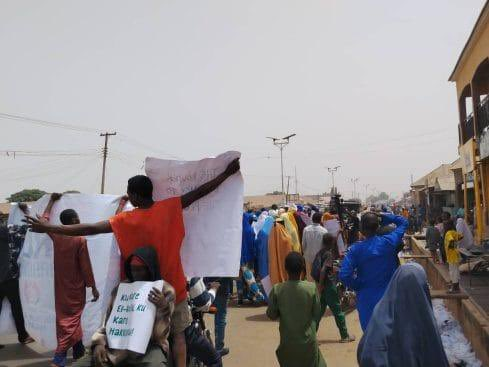
Youths in Kaduna State staged street demonstrations on Tuesday, calling for the continued detention of former governor Nasir El-Rufai amid ongoing investigations and renewed demands for accountability over his tenure in office. The protest, which unfolded in parts of Kaduna, drew scores of demonstrators carrying placards and chanting slogans urging authorities to pursue legal processes without political interference.
Protesters gathered near major road corridors and converged toward strategic government locations, including routes leading to the Kaduna State Government House. Participants said their action was motivated by concerns about transparency and governance, insisting that public officials must be held accountable for their stewardship in office. While organisers described the demonstration as peaceful, security personnel were visibly deployed across key intersections to prevent disruptions and ensure public order.
The demonstration follows reports of investigations linked to decisions and policies implemented during El-Rufai’s two-term administration from 2015 to 2023. Although official details of the investigations have not been fully disclosed by authorities, civic groups within the state have intensified calls for scrutiny of public expenditure, infrastructure contracts and administrative reforms undertaken during that period. Protesters argued that accountability mechanisms must be allowed to run their course without undue influence.
El-Rufai, a prominent political figure and former Minister of the Federal Capital Territory, has remained a central personality in Nigeria’s political landscape even after leaving office. His tenure as governor of Kaduna State was marked by ambitious urban renewal programmes, public sector restructuring and controversial security and religious policy reforms. Supporters credit him with infrastructural expansion and fiscal reforms, while critics have questioned aspects of governance, debt management and handling of communal tensions.
During the protest, several youth leaders addressed crowds, stating that their demonstration was not driven by partisan loyalty but by a broader demand for institutional accountability. They emphasised that the credibility of Nigeria’s anti-corruption framework depends on equal treatment under the law, regardless of political stature. Placards displayed messages advocating justice, transparency and adherence to due process.
Security agencies maintained a presence throughout the demonstration, monitoring the procession and redirecting traffic in affected areas. There were no immediate reports of violence or clashes between protesters and law enforcement officers. Officials urged demonstrators to remain peaceful and warned against actions capable of disrupting public safety or commercial activities.
Political analysts observing developments in Kaduna noted that public protests centred on accountability reflect evolving civic engagement among Nigerian youths. In recent years, youth-led movements across the country have increasingly mobilised around governance issues, anti-corruption advocacy and demands for institutional reform. However, analysts also cautioned that highly polarised political environments can heighten tensions if investigative processes are perceived as politically motivated.
At the time of reporting, neither El-Rufai nor his representatives had issued a formal response to the protest action. It remains unclear whether legal proceedings have advanced to the stage of formal charges or whether investigations are still in preliminary phases. Authorities have not publicly detailed the scope, timeline or specific allegations under review.
The protest highlights broader national conversations about accountability and governance in Nigeria, particularly concerning former public office holders. Legal experts argue that transparent investigative processes, clear communication from authorities and adherence to constitutional safeguards are essential to maintaining public confidence. They stress that any detention or legal action must conform strictly to due process and established judicial standards.
Community leaders in Kaduna have called for calm and responsible civic expression, urging all parties to respect the rule of law. They emphasised that while peaceful protest remains a constitutional right, investigative outcomes must ultimately be determined by competent judicial authorities.
As developments continue, attention will remain focused on the progress of investigations and the response of law enforcement and judicial institutions. The unfolding situation in Kaduna underscores the complex intersection of politics, public accountability and civic activism in Nigeria’s evolving democratic landscape.
📩 Stone Reporters News | 🌍 stonereportersnews.com
✉️ info@stonereportersnews.com | 📘 Facebook: Stone Reporters | 🐦 X (Twitter): @StoneReportNew | 📸 Instagram: @stonereportersnews
Add comment
Comments