

Reported by: Ijeoma G | Edited by: Pierre Antoine
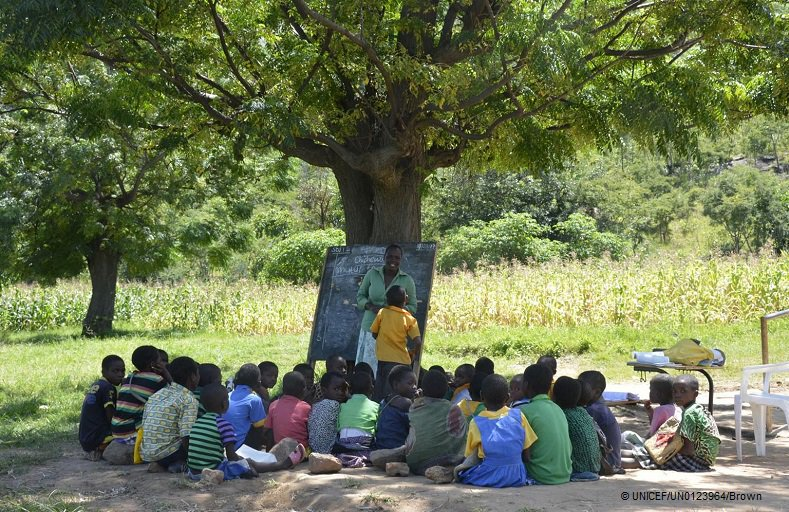
The National Commission for Almajiri and Out-of-School Children Education (NCAOOSCE) has disclosed that a comprehensive nationwide mapping exercise has identified and documented approximately 700,000 out-of-school children across Nigeria, underscoring the magnitude of the country’s ongoing educational exclusion challenge. The figure was revealed during the Benue Basic Education Summit, a high-level meeting of education stakeholders held in Makurdi aimed at galvanising coordinated action to tackle the problem.
The summit was convened by the Benue State Universal Basic Education Board (SUBEB) in collaboration with the Universal Basic Education Commission (UBEC), NCAOOSCE, and educational partners. The theme, “Innovative Strategies for Addressing the Menace of Out-of-School Children: Enhancing Enrolment and Retention of Children in Basic Schools,” reflected broad recognition that the education access gap requires both policy focus and practical interventions.
Dr. Muhammad Idris, Executive Secretary of NCAOOSCE, said the data collection exercise covered communities nationwide and was intended to provide a verified and actionable database on children who are not enrolled in formal basic schooling. It followed earlier efforts by the commission to conduct field surveys, collaborate with state governments and local education authorities, and systematically document individual cases, including basic demographic information and reasons for non-attendance. The process is seen as a foundational step toward reintegration into formal education.
Officials at the summit stressed that the 700,000 figure represents only those children confirmed through the commission’s mapping exercise and not necessarily the full scope of the out-of-school population in Nigeria. Other independent estimates and international assessments have previously placed the broader figure of out-of-school children — including those not yet documented through systematic efforts — in the millions.
Participants at the summit identified poverty, lack of access to school infrastructure, cost barriers, cultural practices, and regional insecurity as major drivers keeping children out of school. Analysts and education advocates emphasised that while school buildings may exist, indirect costs — such as uniforms, levies and transportation — coupled with household economic pressures often force parents to prioritise immediate survival needs over long-term educational investment.
A prominent response strategy discussed at the summit was the “Brace Up Project,” launched by Hyacinth Alia, Governor of Benue State, which aims to accelerate school enrolment and monitor out-of-school youth at the local level. The initiative includes deploying student marshals across local government areas to help identify and track children who are not in school, provide community-level support for reintegration, and facilitate access to basic school supplies.
Governor Alia reiterated his administration’s commitment to free and compulsory basic education for every child in the state and announced logistical support for the project, including the donation of vehicles to assist monitoring efforts. He also praised collaborative engagement among federal and state agencies, teachers, traditional leaders and civil society representatives attending the summit.
In addition to state-level commitments, representatives from UBEC highlighted that ongoing education reforms and expanded resources — including funding designated for basic education infrastructure — are intended to strengthen enrolment and retention. UBEC’s Executive Secretary affirmed the commission’s support for collaborative state programmes that target systemic barriers to education access.
Religious and traditional leaders at the summit acknowledged that community attitudes toward education play a significant role in ensuring children stay in school. Speakers called for deeper engagement with families and local institutions to promote cultural ownership of educational outcomes and to help reduce dropout rates, particularly among historically marginalised groups.
Civil society voices at the event underscored that documenting out-of-school children is only the first step. They stressed that long-term solutions require expanded teacher training, additional classrooms, responsive curricula and social protection measures that address the socioeconomic root causes keeping children out of school.
The NCAOOSCE data has been handed over to state governments, including Benue, to support reintegration efforts; in some cases, school supplies and initial support were already being provided to children newly registered in the system. Summit organisers expressed hope that sustained collaboration between federal agencies, state governments, international partners, teacher unions and community organisations can reduce — and eventually eliminate — the number of out-of-school children in Nigeria.
The documentation of 700,000 out-of-school children illustrates both the scale of the education access challenge in Nigeria and the commitment among some government and civil society actors to reduce barriers and expand opportunities for all children to attend school.
📩 Stone Reporters News | 🌍 stonereportersnews.com
✉️ info@stonereportersnews.com | 📘 Facebook: Stone Reporters | 🐦 X (Twitter): @StoneReportNew | 📸 Instagram: @stonereportersnews
Add comment
Comments