

Reported by: Ijeoma G | Edited by: Pierre Antoine
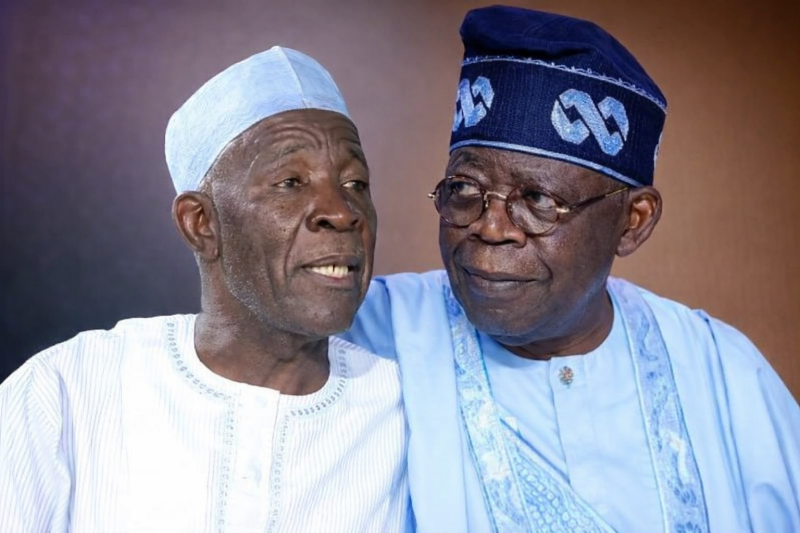
Abuja — A senior opposition figure has escalated political tensions in Nigeria by issuing what he termed a stern democratic warning to the ruling government, arguing that the current administration risks electoral repudiation if ongoing insecurity and economic hardship persist. The comments from Buba Galadima, a chieftain of the New Nigeria Peoples Party (NNPP), were delivered on Thursday during an appearance on the political current-affairs programme Politics Today on Channels Television, where he drew parallels between the political fate of a past administration and the potential trajectory of the current government.
Galadima cited the 2015 general election as a benchmark for voter accountability. He reminded the audience that then-President Goodluck Jonathan was voted out amid widespread criticism over his handling of the Boko Haram insurgency in the North-East, a crisis that dominated national discourse at the time and fuelled public dissatisfaction. Drawing a historical comparison, Galadima warned that if Nigerians were prepared to remove a sitting president over perceived security failures then, they might be even more unforgiving now if current trends in insecurity and economic distress are left unresolved. “If you can remove Jonathan’s government for a simple insecurity in the North-East, what would you be doing to the APC government? I think we have to cut them into pieces,” he said, using the phrase metaphorically to describe a decisive civic response at the ballot box.
The tensions he described are rooted in widespread concerns among Nigerians about safety and livelihoods. Across multiple regions, security challenges have expanded well beyond the North-East insurgency that defined the previous decade. Banditry and kidnappings have surged in the North-West, herder-farmer conflicts have destabilised parts of the North-Central states, and secessionist-linked violence has disrupted daily life in the South-East. Kidnappings for ransom, attacks on travellers, and criminal violence have proliferated to such an extent that perceptions of insecurity have become a central political grievance. Concurrently, oil-related crimes such as pipeline vandalism and theft continue to erode public revenue and undermine economic stability.
Economic frustration is similarly pervasive. Since President Bola Tinubu assumed office in 2023, his government has implemented a series of far-reaching economic reforms, including the removal of decades-long fuel subsidies and the liberalisation of the foreign-exchange regime. The administration argues these policies were necessary to stabilise Nigeria’s finances, attract investment and lay foundations for sustainable growth. However, the short-term impact has been an explosion in the cost of fuel and transport, sharp increases in food prices, and significant weakening of the naira’s purchasing power. These conditions have translated into a tangible decline in living standards for many Nigerians, particularly among lower-income households already vulnerable to economic shocks.
In his interview, Galadima framed these economic adjustments as active policies that have disenfranchised core segments of the population, particularly farmers, who constitute roughly three-quarters of the national workforce in rural areas. He criticised import-oriented food policies and rising agricultural input costs — including fertiliser prices reportedly ranging between ₦60,000 and ₦70,000 per bag — as factors discouraging domestic production and undermining food security. Galadima contended that such trends jeopardise both economic stability and national self-sufficiency, further compounding public discontent.
Beyond social and economic conditions, Galadima also highlighted an increased intolerance of dissent. He said that young Nigerians who voice criticism in public forums, including radio discussions, have been arrested and detained, a development he views as symptomatic of a government that underestimates public sentiment and suppresses legitimate debate. Such observations underscore broader tensions between state authority and civic freedoms in Nigeria’s contemporary political climate.
The ruling All Progressives Congress (APC) and government spokespersons have defended their record, acknowledging the severity of national challenges while insisting that reforms and security operations are underway. The presidency maintains that economic realignment, though painful, is a necessary precursor to long-term prosperity, and that security strategies are being adapted to evolving threats. Government officials have also emphasised efforts such as enhanced military deployments, inter-agency coordination, targeted development programmes and social-safety-net expansions aimed at alleviating hardship for vulnerable citizens. However, critics remain sceptical, arguing that persistent insecurity and economic strain are eroding public trust.
Political analysts say Galadima’s remarks also reflect early positioning ahead of the 2027 general elections, which are already stimulating debate across Nigeria’s complex political landscape. The upcoming electoral cycle is shaping up as a referendum on governance performance, with opposition parties mobilising narratives of accountability while the ruling party seeks to defend its reform agenda and highlight longer-term structural goals.
Civil society groups have responded cautiously to the heightened rhetoric. While affirming the legitimacy of citizen concern over insecurity and economic hardship, several organisations have called for measured public discourse that encourages constructive engagement rather than polarising language. Nigeria’s history of ethnic and regional divisions, combined with its experience of election-related unrest, makes the framing of political grievances particularly consequential.
Independent observers emphasise that addressing the twin challenges of security and poverty requires not only political will but sustained policy coherence and institutional capacity. They argue that while macroeconomic reforms are necessary, their success depends on complementary measures to protect vulnerable populations, create jobs, strengthen food systems and improve public safety. Moreover, any effective security strategy must integrate community-level resilience, intelligence-led operations and legal accountability for perpetrators of violence.
In parallel to Galadima’s intervention, former opposition figures are also reflecting on recent political history. Atiku Abubakar, former vice president and presidential candidate, recently said he regrets his role in shifting political power in 2015, suggesting that the subsequent trajectory of governance has deepened rather than alleviated national challenges. This illustrates the evolving debate within Nigeria’s political class over strategies for national reform and the balance between democratic change and effective governance.
Stone Reporters note that Nigeria’s current political discourse encapsulates broader national frustrations that extend beyond partisan narratives. As citizens weigh their lived experiences of insecurity, inflation, unemployment and public services, political accountability and governance performance are likely to remain central themes in public deliberation ahead of the next elections. The interplay of security, economics and democratic expectations will shape Nigeria’s political landscape in the months and years to come.
📩 Stone Reporters News | 🌍 stonereportersnews.com
✉️ info@stonereportersnews.com | 📘 Facebook: Stone Reporters | 🐦 X (Twitter): @StoneReportNew | 📸 Instagram: @stonereportersnews
Add comment
Comments