

Reported by: Ijeoma G | Edited by: Pierre Antoine
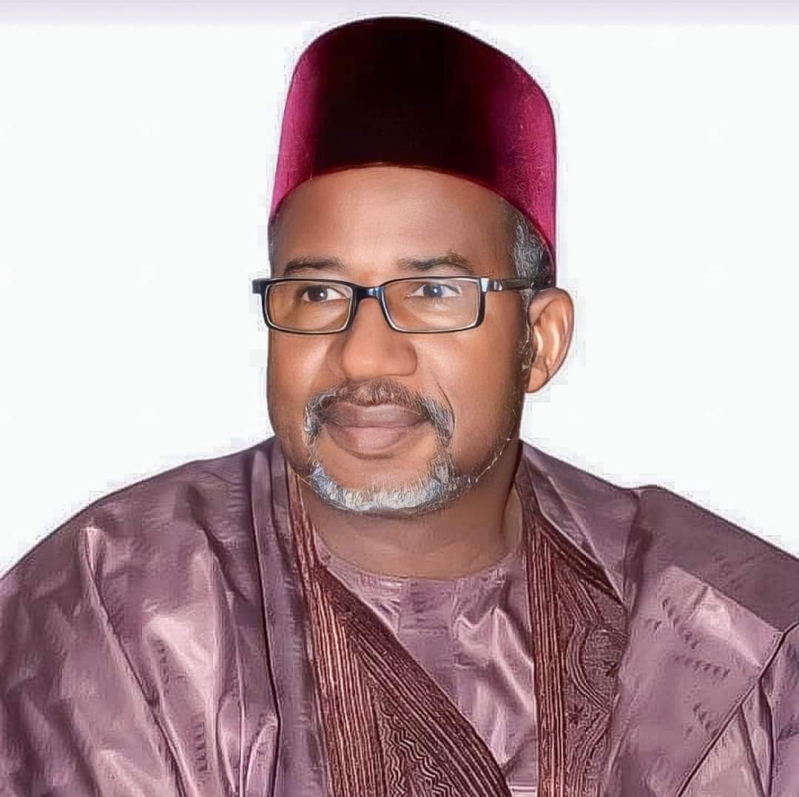
In Abuja on Friday, the Governor of Bala Mohammed of Bauchi State categorically rejected media and social-media speculation that he intends to defect from the opposition Peoples Democratic Party (PDP) to the ruling All Progressives Congress (APC). The clarification came after a closed-door consultation with President Bola Tinubu at the Presidential Villa, which the governor said was driven exclusively by a deteriorating security situation in his state and a desire for cooperative governance, not political realignment.
Mohammed’s remarks were delivered to journalists in the State House shortly after the meeting, where he described the defection rumours as “baseless.” “I am a PDP man,” he said, stressing that his visit to the Presidency was for governance and partnership in confronting mounting insecurity — not a step toward switching parties. He emphasised that he was not at the Villa for “politics or defection” but to seek federal support in tackling complex security challenges facing Bauchi.
The governor’s intervention came amid reports of increased banditry and other violent activity in parts of Bauchi State, particularly in Alkaleri Local Government Area near ungoverned forest spaces around the Dajima (or Daji) Dam corridor. Officials say armed groups have exploited the dense terrain to launch attacks on civilians and security operatives, forcibly displacing residents and overwhelming local security structures. Mohammed presented the President with a detailed briefing on the crisis, including recent incidents such as coordinated assaults against security posts, loss of lives and abductions in communities such as Gwana, Kafin Duguri, Mansur, Yalau, Futuk and Digare, according to multiple accounts of the meeting’s content.
The governor described the crisis as severe, warning that “bandits have taken over ungoverned spaces” and that the state’s security architecture has struggled to contain the violence on its own. Local populations have reportedly fled their communities in the face of the attacks, foreshadowing what he termed a potential “humanitarian crisis” if the situation remains unchecked. “I came on behalf of the people and government of Bauchi State,” Mohammed said, “to seek support, and he [the President] has responded positively.”
President Tinubu responded to the briefing by directing federal security agencies to intensify operations against the banditry and criminal networks in Bauchi and beyond. Federal directives, according to post-meeting communications, emphasised a coordinated approach to securing ungoverned spaces and reinforcing the capacity of joint task forces operating in troubled areas across the North-West and North-Central regions.
In his remarks, Mohammed reiterated his long-standing advocacy for state police, a controversial security-reform proposal that would allow individual states to establish and manage their own policing institutions. While acknowledging the financial burden of such an initiative, he argued that state police would reduce dependence on federal security forces and increase governors’ accountability for localized security outcomes. The governor noted that Bauchi and other states affected by insecurity would benefit from a more responsive subnational security structure.
Beyond security, Mohammed also sought to reassure political stakeholders and the public regarding his commitment to the PDP, even as the party grapples with defections and internal strains ahead of the 2027 general elections. Recent months have seen several high-profile governors exit the PDP for the APC or other platforms, intensifying pressure on the once-dominant opposition party as it prepares for future electoral contests. Critics of the PDP argue that its organisational challenges have weakened its national appeal, while supporters maintain that defections reflect individual political calculation rather than the party’s foundational strength.
In response to questions about his political future, Mohammed affirmed his allegiance to the PDP and stressed the continued relevance of grassroots mobilisation. He said that electoral victories are won at the local level — through polling units and community engagement — rather than through elite negotiations in Abuja. “Elections are won at polling units, not nationally,” he declared, emphasising the centrality of party grassroots structures to political success.
Responding to the defection rumours, Mohammed described them as part of a broader environment in which opposition figures are under pressure to align with the ruling party. He said that while governors are free to choose their political affiliations, his own loyalty remains with the PDP. “This is time for governance,” he emphasised, calling for cooperation across party lines to address urgent national challenges.
The governor also cited the recent council election results in the Federal Capital Territory as evidence of the PDP’s resilience, noting that the party secured a council chairmanship and multiple councillor positions, a performance he characterised as superior to that of a coalition of opposition parties. He said the results underscored the PDP’s continued presence in communities across the country, despite defections and political setbacks.
Political analysts note that Mohammed’s clarification and engagement with the federal government reflect the delicate balancing act faced by opposition governors who must address pressing governance concerns while preserving party identity amid an evolving political landscape. For opposition figures in states affected by insecurity and economic hardship, collaboration with federal authorities on specific issues has become part of a pragmatic governance strategy, even as competition for influence and credibility unfolds ahead of pivotal national elections.
Stone Reporters note that Governor Mohammed’s meeting with President Tinubu, and his forthright rebuttal of defection speculations, highlight the intersection of governance imperatives and partisan politics in contemporary Nigeria. The episode underscores the pressure on political leaders to manage both immediate security challenges and longer-term strategic calculations as the nation navigates a turbulent pre-election period.
📩 Stone Reporters News | 🌍 stonereportersnews.com
✉️ info@stonereportersnews.com | 📘 Facebook: Stone Reporters | 🐦 X (Twitter): @StoneReportNew | 📸 Instagram: @stonereportersnews
Add comment
Comments