

Reported By Mary Udezue | Edited by: Jevaun Rhashan
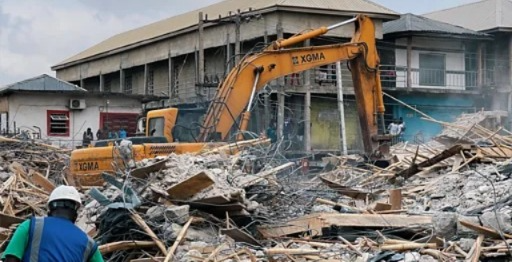
Efforts by the Onitsha North Local Government Council to remove illegal structures at key sections of Onitsha Main Market — including Park 1, Park 2 and Park 3 — have become the centre of a broader legal, economic and political confrontation as enforcement actions unfold following the expiration of a compliance deadline. Distinct developments over recent days reflect mounting tension between authorities pursuing market reorganisation and traders asserting their rights and livelihoods amid concerns over potential displacement and financial loss.
Authorities began preparatory actions after issuing traders a 14-day ultimatum to remove unauthorised structures that encroach on designated pathways, drainage channels and access routes within the market. The council extended a grace period beyond the initial notice in an effort to secure voluntary compliance, warning that failure to vacate would result in demolition of those structures deemed illegal and unsafe.
Proponents of the enforcement programme argue that unregulated expansion of stalls and push-out constructions in the main market has blocked internal roads, undermined sanitation, endangered public safety and hindered emergency access. The sprawling market, one of Nigeria’s largest commercial hubs, has a long history of informal growth and encroachment beyond its planned layout — conditions authorities say require corrective action to restore order and facilitate safer, more efficient commercial activity.
However, traders and market stakeholders swiftly mobilised legal resistance to the demolition plan. Last week, affected shop owners and associations from Human Fence Zone One Line — representing a substantial cross-section of Park and line traders — filed a suit at the High Court of Anambra State, arguing that forced demolition would inflict severe hardship, disrupt established livelihoods and violate procedural fairness given ongoing negotiations.
In a ruling delivered by Justice Joseph Ifeanyi Nweze, the court granted an interim injunction requiring all parties to maintain the status quo ante while the substantive suit is pending. That order explicitly restrained the governor, Attorney-General, Commissioner for Justice, Commissioner of Police and Commissioner for Trade and Commerce from taking further demolition action until the case returns for substantive hearing on March 16, 2026.
Traders welcomed the judicial decision, describing it as a victory for the rule of law and protection of their economic rights. Market leaders and community elders — including representatives of the United Igbo Elders Council — urged authorities to pursue alternative adjustments rather than wholesale destruction of shops. They proposed measures such as constructing extension markets or relocating certain sections to adjacent lands in order to relieve congestion without displacing entrenched commercial activity.
Voices from the trading community emphasised the economic stakes involved. They noted that each shop in the market supports not only the immediate owner but extended families and dependents, and that demolition could trigger significant socioeconomic fallout at a time when markets across the region are already strained. Traders also framed the legal action as protection against arbitrary governance and a reaffirmation of civil liberties, with some critics accusing the governor of using redevelopment rhetoric to justify actions they believe may benefit politically connected interests.
Despite the court’s order, there are indications from local discussions that some authorities may be preparing to proceed with enforcement, fuelling friction and allegations of disregard for judicial restraint. Online commentary and on-the-ground reporting suggest that notices circulated by municipal actors hint at renewed demolition activity, even as legal proceedings continue, raising concerns about respect for institutional processes and the potential for confrontation.
The broader context of this dispute includes long-standing challenges faced by Onitsha’s commerce infrastructure. Historically, Onitsha Main Market has struggled with overcrowding, frequent fire outbreaks, and infrastructural deficits that have prompted calls for periodic upgrading and safety reforms. Traders point out that decades of informal expansion were, in part, a response to the growing population of merchants and customers, complicating efforts to restore historical master-plan layouts without harming livelihoods.
Market observers say the clash reflects deeper tensions in urban governance: the imperative to modernise infrastructure, enforce planning codes and safeguard public safety on one hand, and the legitimate economic interests and rights of traders on the other. The involvement of civil society organisations, legal advocates and traditional leadership networks underscores how market restructuring debates in Nigeria often intersect with broader questions of governance, economic justice and community participation in decision-making processes.
As the March 16 hearing approaches, expectations are mounting for a judicial determination that could define the limits of executive authority in market regulation and outline frameworks for negotiated compliance that preserve economic stability. Stakeholders on both sides are preparing legal and policy arguments, with traders promising continued advocacy and authorities indicating commitment to improving the market environment — albeit through contested means.
The outcome of this dispute is widely viewed as significant not only for Onitsha but as a potential precedent for how Nigerian states manage urban commercial spaces under pressure from population growth, informal expansion and competing claims over land use rights.
📩 Stone Reporters News | 🌍 stonereportersnews.com
✉️ info@stonereportersnews.com | 📘 Facebook: Stone Reporters | 🐦 X (Twitter): @StoneReportNew | 📸 Instagram: @stonereportersnews
Add comment
Comments