

Reported by: Ijeoma G | Edited by: Oravbiere Osayomore Promise.
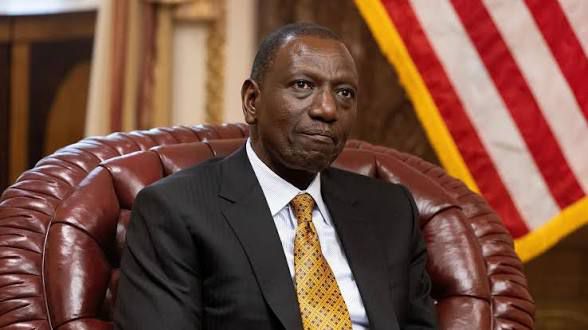
Kenyan President William Ruto has issued a sweeping and controversial directive ordering all foreign nationals operating small shops and hawking businesses to shut down their operations effective Monday, September 7, 2026. The announcement, made during a meeting with Micro, Small and Medium Enterprise traders at State House in Nairobi on Wednesday, September 2, marks a significant escalation in the government's efforts to protect local traders from what it describes as unfair competition from foreign nationals.
Speaking to a cheering crowd of MSME traders, Ruto drew a firm line between attracting genuine foreign investment and allowing foreigners to engage in petty trade. "There are traders from foreign nations, let me not mention the countries, who have come here and started hawking or engaging in small businesses, selling things like duvets and others," Ruto told the traders. He added, with unmistakable finality: "From next week, all traders doing those small businesses should close them". The president justified the move by arguing that Kenya's economic reforms were never intended to open the door to foreign petty traders. "We have made efforts to improve the economy, we have not improved investor confidence for hawkers to come to Kenya". He further declared: "It cannot be that a person comes from China or elsewhere to be a hawker or open a small shop".
The directive specifically targets hawking and small retail outlets, which Ruto argued should be reserved exclusively for Kenyan citizens. He warned foreign traders that enforcement would commence on September 7, telling them to close down or face the consequences. The crackdown will be led by Trade Cabinet Secretary Lee Kinyanjui, who Ruto directed to begin enforcement upon his return from Addis Ababa. "From next week when Lee returns from Addis, Monday begin that crackdown," the President said.
The announcement comes alongside a push to reshape Kenya's legal framework governing local economic participation. Ruto called on Parliament to fast-track the Local Content Bill, 2025, which proposes to legally reserve certain businesses and economic activities exclusively for Kenyan citizens. The bill, currently before Parliament, would require foreign companies to employ Kenyans as at least 80% of their workforce and source at least 60% of specified goods and services locally. It also proposes that companies using agricultural produce for manufacturing source it entirely from Kenyan farmers. Ruto directed National Assembly Majority Leader Kimani Ichung'wah and Trade Cabinet Secretary Lee Kinyanjui to accelerate the legislation.
However, the directive has raised serious concerns about xenophobia and the rule of law. The announcement comes amid wider concern about anti-foreigner sentiment in parts of Africa, particularly South Africa, where xenophobic campaigns have targeted migrants and foreign-owned businesses. In South Africa, anti-immigration groups have this year targeted foreign traders and migrants, including through campaigns to close foreign-owned businesses and restrict access to some public services. While Kenya has not experienced anti-migrant violence on the scale seen in South Africa, tensions surfaced recently after a Burundian street vendor was confronted in Nairobi and accused of taking business opportunities from Kenyans.
Legal observers have also questioned the legal basis of the order. Until the Local Content Bill passes, the order rests on presidential directive rather than statute. Ruto acknowledged this by stating that administrative action would begin even before Parliament concludes consideration of the proposed law. He directed Industry Principal Secretary Juma Mukhwana to engage traders and other stakeholders to fine-tune the Bill before it is passed, saying the government wanted to close loopholes that could be exploited to continue allowing foreigners into small-scale businesses.
The political timing of the announcement is impossible to ignore. Kenya is scheduled to hold its next general elections on August 10, 2027, and although the polls are still nearly a year away, informal campaigning is already well underway. Ruto, facing a restless electorate and a fractured coalition, made a direct appeal to the small trader, the jua kali artisan and the market woman, telling them that the president was on their side. The directive is also the first major policy announcement since the death of opposition leader Raila Odinga in October 2025, which has redrawn the electoral map and created internal divisions within opposition parties.
Ruto maintained that Kenya remained open to foreign investment but would not allow foreigners to take over businesses that could be undertaken by Kenyan traders. He challenged local traders to move beyond buying and selling and venture into manufacturing, saying Kenya needed to strengthen domestic production. "We have not built investor confidence so that hawkers can come to Kenya," he said. "The investor confidence we have built is for investors to come to Kenya, not hawkers and traders. People should not confuse us".
As the September 7 deadline approaches, the directive leaves serious questions about how the crackdown will be implemented, how authorities will identify affected traders and what legal framework will govern enforcement. For now, foreign nationals operating small shops and hawking businesses across Kenya have been put on notice: their time is up, and the government is coming.
📩 Stone Reporters News | 🌍 stonereportersnews.com
✉️ info@stonereportersnews.com | 📘 Facebook: Stone Reporters News | 🐦 X (Twitter): @StoneReportNew | 📸 Instagram: @stonereportersnews
Add comment
Comments