

Published by Osasere Edomwonyi Ikpoba
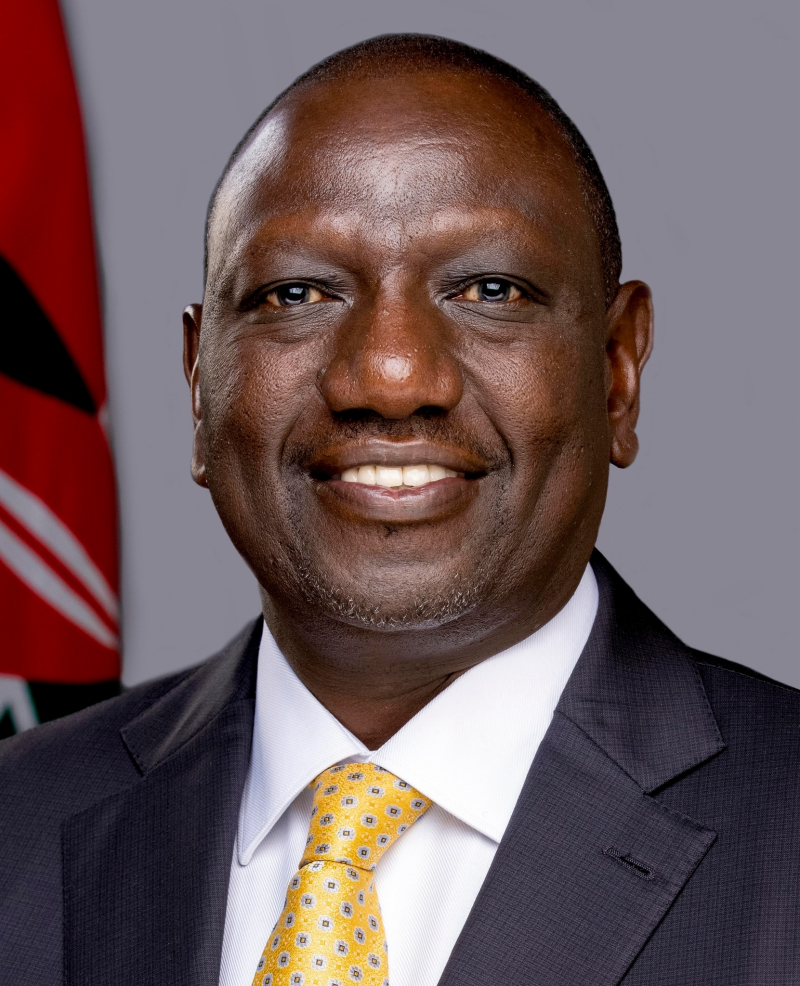
Kenyan President William Ruto has ordered an immediate crackdown on foreign nationals operating small-scale businesses across the country, directing that all foreign-owned hawking and retail enterprises be shut down from Monday, September 7, in a dramatic policy shift that has sparked accusations of hypocrisy and a bitter continental debate over the treatment of African migrants. Ruto made the announcement on Wednesday during a meeting with Micro, Small and Medium Enterprises traders at State House in Nairobi, declaring that the space for petty trade must be reserved exclusively for Kenyans.
"From next week, all foreign traders doing those small businesses should close them," Ruto declared, adding that his government would fast-track legislation to legally bar foreigners from certain sectors of trade. The president specifically singled out Chinese traders, questioning why foreign nationals would travel to Kenya to operate as hawkers or open small shops. "It cannot be that a person comes from China or elsewhere to be a hawker or open a small shop," Ruto said, arguing that foreign investors should focus on creating jobs and expanding production rather than competing with Kenyans in the informal economy.
The directive has raised several unanswered questions, including how many foreign nationals are currently engaged in small-scale trading across Kenya and how enforcement would work in practice. The scale of the crackdown remains unclear, but Ruto has directed Trade Cabinet Secretary Lee Kinyanjui to launch enforcement action upon his return from Addis Ababa, with the president insisting that administrative measures would begin even before Parliament passes the proposed legislation. The Local Content Bill, currently before Parliament, proposes that foreign companies employ Kenyans as at least 80 per cent of their workforce and source at least 60 per cent of specified goods and services locally.
Ruto's announcement comes at a time of heightened sensitivity over the treatment of African migrants across the continent, following months of deadly xenophobic violence in South Africa that has forced tens of thousands of foreign nationals to flee. At least 148 migrants have been killed in attacks in South Africa since 2022, making 2026 the deadliest year yet for xenophobic violence in the country. The South African government has repatriated approximately 180,000 Africans this year following attacks and violent protests between April and May that targeted foreign nationals and their businesses.
The irony of Ruto's directive has not been lost on observers, with many pointing out that what is being called "protectionism" in Kenya would be labelled "xenophobia" if it occurred in South Africa. One social media user noted: "When it's South Africa it's xenophobia. President Ruto orders crackdown on FOREIGNERS operating small shops and hawking". The debate has exposed a troubling double standard in how African nations respond to the presence of foreign nationals within their borders, with some leaders condemning South Africa's violence while simultaneously pursuing exclusionary policies at home.
Kenya hosts one of Africa's largest refugee populations, with government figures showing that approximately 857,000 registered refugees and asylum seekers were living in the country by the end of June, with close to 14 per cent of them based in urban areas rather than designated camps. Many of those in towns and cities engage in trade and other informal work to support themselves. Kenyan law allows refugees to work and operate businesses if they obtain the required documentation and special permits, but Ruto's directive could effectively render those permits meaningless.
The announcement follows growing tensions in Kenya's informal economy, where foreign nationals from across the region have increasingly participated in small-scale commerce. In July, a video showing a Kenyan man confronting a Burundian trader in Nairobi and accusing him of taking opportunities from locals sparked widespread criticism and prompted calls for the protection of Burundian citizens living in Kenya. Kenya's foreign ministry subsequently sought to reassure Burundians and other East Africans living in the country, but Ruto's latest directive could unravel those efforts.
The East African Community's relatively free movement framework has facilitated migration within the eight-member regional bloc, with citizens of neighbouring countries moving to Kenya for economic opportunities. However, the increasing participation of foreign nationals in small businesses has generated tensions with local traders and workers who argue that migrants are competing for limited jobs, customers, and commercial opportunities. Ruto's directive could therefore create tensions between Kenya's efforts to protect domestic traders and its position as a regional economic hub.
Ruto, who is expected to seek a second term in next year's election, framed the directive as a measure to protect ordinary Kenyans who depend on petty trade for their livelihoods. He said Kenya remained open to foreign investment but argued that foreign investors should contribute to the economy through larger businesses, job creation, and increased production rather than compete with Kenyans in small-scale trading. "We have made efforts to improve the economy; we have not improved investor confidence for hawkers to come to Kenya," Ruto said. "The investor confidence we have built is for investors to come to Kenya, not hawkers and traders".
The policy is expected to remain controversial as the government moves to translate Ruto's directive into legislation and define which categories of trade will be restricted to Kenyan citizens. For now, the directive has sparked widespread debate across the continent, with many questioning whether Kenya is adopting the same exclusionary policies it has long condemned in South Africa. As one commentator noted, the challenge for Kenya will be balancing protection of local businesses with its reputation as an open regional market, particularly as restrictions on foreign participation in small-scale trade could affect businesses operated by nationals from neighbouring countries. For the thousands of foreign nationals who have built their lives and livelihoods in Kenya's informal economy, the directive represents an existential threat—and a stark reminder that in Africa, as elsewhere, the welcome extended to migrants is often conditional, contingent, and fragile.
📩 Stone Reporters News | 🌍 stonereportersnews.com
✉️ info@stonereportersnews.com | 📘 Facebook: Stone Reporters News | 🐦 X (Twitter): @StoneReportNew | 📸 Instagram: @stonereportersnews
Add comment
Comments