

Published by Osasere Edomwonyi Ikpoba
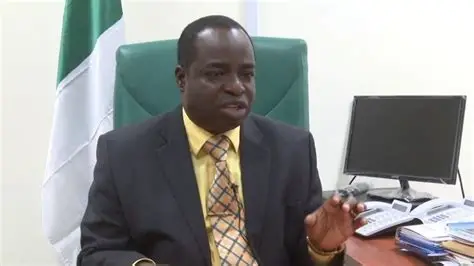
A former member of the House of Representatives and United States-based attorney, Kayode Oladele, has fired a sharp warning at Nigeria's opposition leaders, urging them to abandon their relentless pursuit of legal remedies in American courtrooms and instead challenge President Bola Ahmed Tinubu on substantive policy issues before Nigerian voters. Oladele, who served as Chairman of the House Committee on Financial Crimes, described the opposition's recurring attempts to use US courts to disqualify Tinubu as "legal tourism" and a "wild goose chase" that risks turning its proponents into laughingstocks.
In a statement issued on Friday, September 4, 2026, Oladele directly addressed former Vice President Atiku Abubakar and former Anambra State Governor Peter Obi, urging them to redirect their political energy toward the economy, security, employment, infrastructure, and education—the issues that truly confront Nigerians. "Campaigns should be issue-oriented rather than reduced to mudslinging over nothing," Oladele declared. "Atiku and Obi have every constitutional right to challenge President Tinubu, but let that challenge be based on competing ideas and programmes. If they believe they can govern Nigeria better, let them tell Nigerians how. Let them challenge Tinubu on his policies, programmes and performance and allow the electorate to decide".
Oladele's intervention comes at a critical moment in Nigeria's political calendar, with the 2027 presidential election looming and the opposition coalition intensifying its efforts to unseat Tinubu. Central to the opposition's strategy has been the ongoing Freedom of Information Act (FOIA) litigation in the United States District Court for the District of Columbia, where Aaron Greenspan—a researcher the Presidency has linked to Atiku Abubakar and journalist David Hundeyin—has sought the release of FBI and DEA records relating to Tinubu. The records stem from a 1993 civil forfeiture proceeding in Chicago involving approximately $460,000 connected to Tinubu, which opponents have sought to portray as evidence of criminal drug trafficking.
But Oladele, drawing on his credentials as a federal lawyer practising in the United States, dismissed these efforts as legally baseless. "As a federal lawyer practising in the United States, I have examined available federal court records and have not found any court record showing that President Tinubu was ever criminally charged, prosecuted or convicted of any offence in the United States," he stated emphatically. He stressed that the 1993 case repeatedly cited by Tinubu's opponents was a civil forfeiture proceeding against property—an in rem civil action—and not a criminal prosecution or conviction of the President.
The distinction, Oladele argued, is fundamental and cannot be erased by political rhetoric. "Where is the indictment? Where is the criminal charge? Where was Tinubu arraigned? Where is the judgment convicting him of drug trafficking or any other criminal offence? There is none," he challenged. "An allegation is not a conviction. An investigation is not a conviction. A civil forfeiture proceeding is not, by itself, a criminal conviction. These are elementary distinctions in law". He further warned against the casual use of terms such as "criminal," "convict," and "conviction," noting that such descriptions carry serious legal and reputational consequences.
Oladele also invoked the constitutional principle of presumption of innocence, citing the US Supreme Court's decision in Coffin v. United States and the corresponding protection under the Nigerian Constitution. He drew a parallel with the case involving former US Congressman William Jefferson, whose criminal prosecution and conviction became linked politically to Atiku Abubakar. "If allegations examined during an investigation involving Atiku cannot be converted into a criminal conviction against Atiku, an in rem civil forfeiture proceeding cannot logically be converted into a criminal conviction against Tinubu," he argued. "The law must mean the same thing regardless of whose name appears on the political banner".
The former lawmaker described the opposition's repeated forays into American courts as an embarrassing spectacle that diminishes Nigeria's standing. "Every election cycle, we seem to return to the same journey to America in search of an imaginary criminal conviction against Tinubu. At some point, this becomes embarrassing and risks turning those behind it into laughingstocks," he said. "American courts cannot manufacture a criminal conviction for the convenience of Nigerian politics. If there was no criminal trial and no conviction, no amount of document hunting can retrospectively create one".
Oladele's position has found resonance among other political figures. Philip Agbese, Deputy Spokesperson of the House of Representatives, has also criticised the opposition's US-focused strategy, warning that it damages the image of all Nigerians abroad. "When desperate politicians begin to export their political battles and package Nigeria as a country whose leadership is allegedly built around criminality, they are not hurting President Tinubu alone," Agbese said. "They are damaging the image of every Nigerian who travels, studies, works, does business or seeks opportunities abroad".
The Presidency has also weighed in, clarifying that the FOIA litigation is a civil records-disclosure dispute and not a criminal case against Tinubu. In a statement issued on Thursday, September 3, Special Adviser on Information and Strategy, Bayo Onanuga, stressed that the court has neither charged nor convicted Tinubu of any criminal offence. The Presidency further disclosed that Greenspan has until September 11, 2026, to file his opposition and reply to the submissions made by the defendants and Tinubu as intervenor.
As Nigeria hurtles toward the 2027 elections, the opposition's legal strategy in the United States appears to be hitting a wall of legal and political resistance. Oladele's message was unambiguous: the path to Aso Rock runs through the Nigerian electorate, not through American courthouses. "If you allege that a man was convicted, produce the judgment of conviction. If you say he was criminally prosecuted, produce the indictment, the charge and the record of the criminal proceedings. You cannot substitute allegations or civil proceedings for a criminal judgment," he declared. The opposition, he insisted, must prepare for the political contest of 2027 on Nigerian soil, where voters—not foreign courts—will ultimately decide the nation's future.
📩 Stone Reporters News | 🌍 stonereportersnews.com
✉️ info@stonereportersnews.com | 📘 Facebook: Stone Reporters News | 🐦 X (Twitter): @StoneReportNew | 📸 Instagram: @stonereportersnews
Add comment
Comments