

Reported by: Ijeoma G | Edited by: Oravbiere Osayomore Promise.
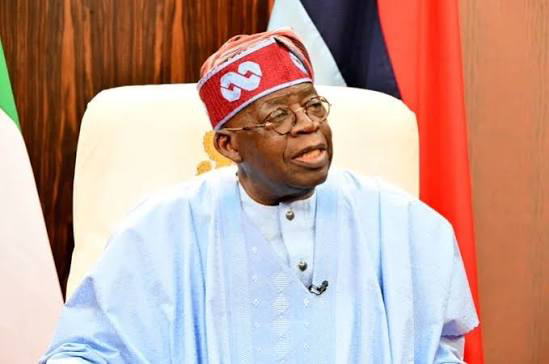
President Bola Tinubu has formally asked a United States federal court to block the further release of records held by the Federal Bureau of Investigation and the Drug Enforcement Administration, arguing that the documents relate to his private life as a student before he entered politics and are protected by privacy laws. The request was contained in a 16-page filing dated August 28, 2026, submitted by his legal team in the case of Greenspan v. Executive Office for U.S. Attorneys before the U.S. District Court for the District of Columbia.
Tinubu, who joined the case as an intervenor, is urging the court to dismiss a motion for summary judgment filed by American transparency activist Aaron Greenspan, which seeks to lift redactions and compel the release of additional records. Greenspan, who operates the website PlainSite, has been pursuing Freedom of Information Act requests since 2022 and 2023, seeking the FBI's entire file on Tinubu, FBI Form 302 interview records from 1992 and 1993, and materials connected to a 1993 civil forfeiture of approximately $460,000 linked to a Chicago heroin trafficking investigation. The agencies have already released hundreds of pages of documents, some with redactions, alongside a Vaughn index explaining the withholdings. Greenspan argues that the redactions should be lifted in the public interest, particularly given Tinubu's status as a sitting president.
Tinubu's lawyers, Christopher W. Carmichael, Victor P. Henderson, and Oluwole O. Afolabi, have constructed a multi-layered legal argument anchored on FOIA Exemption 7(C) and the US Privacy Act. Exemption 7(C) permits agencies to withhold law enforcement records where disclosure could reasonably be expected to constitute an unwarranted invasion of personal privacy. The Privacy Act provides an independent statutory basis for protecting personal information contained in government records. The lawyers argue that holding public office does not mean an individual forfeits their personal privacy for FOIA purposes, and that the passage of three decades has not extinguished the privacy interests at stake.
The core of Tinubu's argument is temporal and personal. The filing states unequivocally: "Regardless, Intervenor should retain his full privacy interests because he was not a public official in 1993." It describes the records as "three decades old records pertaining to events that occurred when Intervenor was a student." The lawyers contend that Tinubu's subsequent election to public office in Nigeria does not automatically erase privacy protections for information about his earlier private life. They argue that the information sought concerns law enforcement records about him as a private citizen and "reveals little or nothing about an agency's own conduct," which is the central purpose of FOIA under US law.
The filing also challenges Greenspan's reliance on the public domain doctrine. Greenspan has argued that because some information about Tinubu appeared in a 1993 civil forfeiture proceeding, the privacy protections over the broader investigative file have been waived. Tinubu's lawyers reject this, citing the US Supreme Court's decision in Department of Justice v. Reporters Committee for Freedom of the Press, which held that an individual retains a privacy interest in an entire file even where scattered disclosures have occurred. They argue that the earlier forfeiture documents established only the existence of a forfeiture proceeding and did not disclose the details or outcome of any possible criminal investigation. "While some information may appear in portions of public records, an individual still retains a privacy interest in the details that remain undisclosed," the filing states.
The lawyers further argued that there is no FOIA-recognised public interest in Tinubu's criminal history or in influencing politics in a foreign nation. They rejected Greenspan's assertion that Nigerians have a right to know about their president's background, stating that "the asserted 'public interest in Tinubu's own fitness for office' is not an interest FOIA recognises or one that needs to be balanced." They described Greenspan's requests as being primarily aimed at obtaining personal information rather than examining how US agencies carried out their official duties, and dismissed claims of a government cover-up as "unsubstantiated allegations."
The case has been pending since 2023 and has already produced significant developments. In April 2025, US District Judge Beryl Howell ruled that the FBI and DEA had improperly refused to confirm or deny whether they held records relating to Tinubu, a practice known as a Glomar response. The judge ordered the agencies to search for and process non-exempt documents. The agencies subsequently released 399 pages of records, with portions redacted. The court's 2025 ruling, however, did not find that Tinubu committed a drug trafficking offense, nor did it amount to a criminal charge or conviction against him. It concerned the agencies' obligations under FOIA, not the underlying allegations.
The legal battle has drawn significant political attention in Nigeria, particularly as the 2027 presidential election approaches. A US lobbying firm, Von Batten-Montague-York, which has been retained by former Vice President Atiku Abubakar, has been actively pushing for the release of the records. In August 2026, the firm alleged that Tinubu had spent millions of dollars to block the release of the files, a claim the Presidency has dismissed. The Presidency has consistently clarified that the US case is a civil FOIA matter, not a criminal proceeding, and that the FBI has found no criminal arrest records or warrants for Tinubu. It has accused the opposition of politicising a legal process to score cheap political points.
Tinubu's filing places him directly at the centre of a dispute over whether records concerning investigations from the early 1990s should become public. The court is expected to determine whether the FBI and DEA may retain their redactions and withholdings or whether further records sought by Greenspan must be released. The outcome will have implications not only for Tinubu's legal standing but also for the broader debate about the transparency of public officials and the limits of privacy protections for pre-political life.
For the Tinubu administration, the filing is a necessary legal manoeuvre to protect the President's privacy and prevent the weaponisation of decades-old records for political purposes. For the opposition and transparency advocates, it is further evidence of an attempt to conceal information that they believe the Nigerian public has a right to know. The court's decision will ultimately rest on a careful balancing of privacy interests against public interest under US law. Until then, the records remain sealed, the legal arguments are filed, and the political battle continues on both sides of the Atlantic.
📩 Stone Reporters News | 🌍 stonereportersnews.com
✉️ info@stonereportersnews.com | 📘 Facebook: Stone Reporters News | 🐦 X (Twitter): @StoneReportNew | 📸 Instagram: @stonereportersnews
Add comment
Comments