

Reported by Ariajegbe Sylvia Esezobor
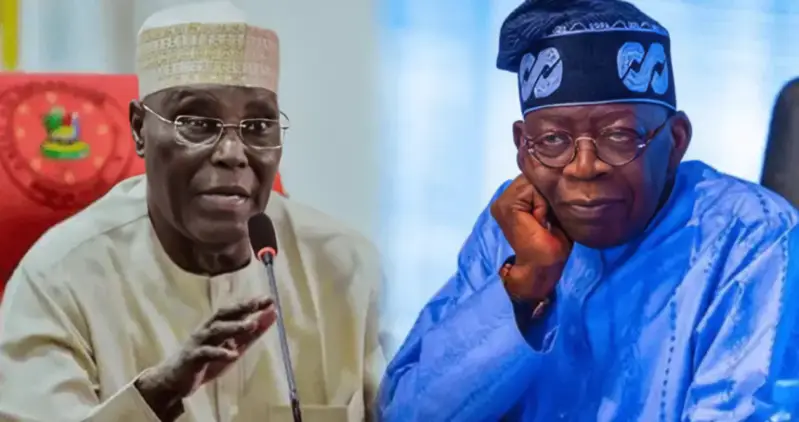
Former Vice President and 2023 presidential candidate Atiku Abubakar has delivered a sharp assessment of President Bola Ahmed Tinubu’s Independence Day address, accusing the administration of offering empty rhetoric and deferred hope while millions of citizens suffer under severe economic hardship. In a detailed counter-statement released on Thursday to mark Nigeria’s sixty-sixth independence anniversary, Atiku stated that the President’s speech was overwhelmingly dominated by future commitments rather than verifiable accomplishments after more than three years in power. The opposition leader argued that a government facing public discontent cannot continuously ask citizens to wait for tomorrow while basic living costs continue to climb beyond the reach of average families.
The political clash erupted shortly after President Tinubu delivered his national broadcast, in which the Nigerian leader declared that his administration’s tough economic emergency phase had concluded. In his address, the President defended key structural reforms, specifically the removal of fuel subsidies and currency market unification, framing them as essential procedures that rescued the national economy from structural collapse. Likening the economic situation to a patient choosing necessary treatment over pain-dulling morphine, the President insisted that the foundations for long-term national prosperity have been laid. The President pointed to rebuilding foreign reserves, stabilizing public finances, and expanding agricultural initiatives as signs that the country had safely crossed its economic trials and was moving toward shared prosperity.
However, Atiku rejected the administration’s narrative, characterizing the speech as a collection of repetitive pledges that fail to reflect the daily realities of ordinary households. Highlighting the President’s repeated use of future-tense commitments regarding food production, power supply, and job creation, Atiku argued that after more than three years in office, Nigerians deserve an accounting of completed projects rather than another list of expectations. He noted that market realities tell a vastly different story from official government projections, citing steep increases in the price of basic staples such as bread, eggs, and domestic fuel that continue to erode household purchasing power across rural and urban centers alike.
A central point of contention in Atiku’s critique targeted the administration’s public commitments regarding transportation subsidies and cost-of-living relief. Atiku directly questioned the status of government promises to lower transport fares for commuters, asking whether those pledges had missed their deadline while key route details and implementation data remain undisclosed to the public. He argued that public communications from Aso Rock have consistently lacked transparency regarding operational details, leave-behind metrics, or verifiable data that ordinary workers can observe in their daily commutes. According to the former Vice President, economic policy cannot be declared a success through official speeches while the average citizen finds it increasingly difficult to meet daily expenses.
Addressing the President’s medical metaphor regarding economic reforms, Atiku dismissed the idea that public demands for relief reflect an unhealthy reliance on government subsidies. He emphasized that citizens seeking lower energy costs and affordable transport are asking for practical economic stability rather than unviable government hand-outs. Reaffirming his own proposed policy framework, Atiku advocated for targeted domestic fuel interventions paired with independent audits and administrative cost reductions to lower pump prices while bolstering domestic refining capacity. He insisted that protecting consumers from extreme price shocks is a standard duty of governance, asserting that high energy costs ripple through the entire domestic economy to drive up food prices and operational overheads for small businesses.
Security concerns and institutional management were also central to the opposition’s assessment of the administration’s performance. Atiku pointed out that persistent insecurity across major farming belts continues to prevent rural agricultural producers from accessing their fields, rendering theoretical promises of lower food costs ineffective. He further criticized the fiscal administration of the country, highlighting overlapping budget operations that he argued create uncertainty for business investors and public planning. In his view, a government that struggles to secure agrarian communities or maintain clear fiscal timelines cannot realistically expect its long-term economic promises to materialize without immediate, structural policy shifts.
Reactions to the political exchange have highlighted the growing debate surrounding Nigeria’s economic trajectory as the country moves closer to the next electoral cycle. Supporters of the administration contend that structural economic changes require time to yield broad benefits, arguing that premature policy reversals would undo early fiscal stabilization. Government defenders emphasize that systemic reform inherently involves a transitional period before macroeconomic gains reach individual households. Conversely, civil society representatives and trade union leaders have voiced sentiments similar to those raised by opposition figures, stressing that working families are facing severe pressure from inflation and reduced real income.
As the national debate continues following the independence day addresses, the contrast between the government’s outlook and the opposition’s assessment underscores the ongoing challenges facing the nation. While the administration asks for continued patience to allow its structural policies to take full effect, critics maintain that immediate policy corrections are required to reduce basic living expenses. The exchange highlights a broader national discussion regarding how economic progress should be measured—whether through top-level macroeconomic indicators or through visible improvements in the daily lives, security, and purchasing power of ordinary citizens.
📩 Stone Reporters News | 🌍 stonereportersnews.com
✉️ info@stonereportersnews.com | 📘 Facebook: Stone Reporters News | 🐦 X (Twitter): @StoneReportNew | 📸 Instagram: @ston
ereportersnews
Add comment
Comments