

Reported by: Ijeoma G | Edited by: Oravbiere Osayomore Promise.
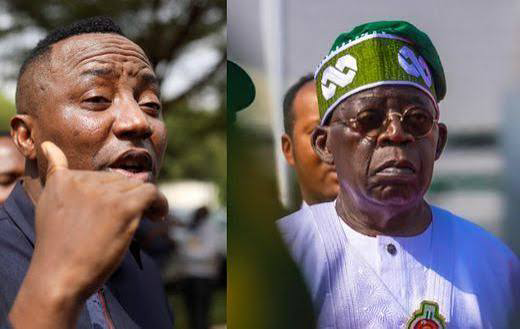
The presidential candidate of the African Action Congress, Omoyele Sowore, has accused the administration of President Bola Tinubu of using a pending cyberbullying case to stop him from campaigning across Nigeria ahead of the 2027 general election, alleging that the government reversed its earlier decision to suspend the trial because it expected him to stop criticising the President. Sowore made the accusation on Monday, September 28, 2026, shortly after returning to Nigeria from the United States, as his trial resumed before Justice Mohammed Umar of the Federal High Court in Abuja.
The Department of State Services had on August 30, 2026, directed its prosecuting counsel, Akinlolu Kehinde, SAN, to seek an adjournment of the case until after the 2027 presidential election. Sources familiar with the matter said the DSS Director-General, Oluwatosin Ajayi, met with senior lawyers and officers of the legal directorate on August 20, shortly after the Independent National Electoral Commission lifted the ban on campaigns, and told them it would be fair to pause the court case to enable Sowore to participate fully in the electioneering process. The DSS also directed its legal team to review similar cases involving candidates contesting other elective positions. At the time, the agency maintained that the case was intended to obtain a judicial interpretation on the propriety of describing the President as a criminal, rather than to restrict Sowore's political activities.
But the DSS reversed its position a month later, directing Kehinde to continue with the prosecution. Sources told SaharaReporters that the decision to resume the case followed concerns within the agency over Sowore's continued criticism of President Tinubu and his administration. The sources alleged that Ajayi had initially hoped postponing the trial would allow Sowore to participate in the election while reducing tensions around the case, but the agency later became dissatisfied with what it described as Sowore's continued intransigence and his public criticism of the President. The sources said Sowore's political activities and statements against the administration contributed to the decision to abandon the proposed lengthy adjournment.
Sowore, who appeared in court on Monday alongside his lead counsel, Adeyinka Olumide-Fusika, SAN, learnt from the prosecution that the DSS would no longer pursue its earlier plan to request a lengthy adjournment. The activist, who has consistently described the prosecution as politically motivated, accused the government of attempting to use the case to stop him from campaigning across the country. He said the government had expected that the earlier proposed suspension would buy his silence, and when he continued to criticise the President, the DSS resumed the prosecution.
The charges against Sowore stem from posts he published on X and Facebook on August 25, 2025, in which he described President Tinubu as a criminal and accused him of misrepresenting the level of corruption in the country. The DSS issued him a seven-day ultimatum to remove the posts, and when he refused, the agency approached the Federal High Court on September 16, 2025, seeking a judicial determination on whether it was lawful for an individual to publicly describe the President as a criminal. The agency initially joined X and Meta as defendants, but the court struck out the two technology companies, leaving Sowore as the sole defendant. He pleaded not guilty to the amended charges brought under the Cybercrimes Act 2024.
The trial has been marked by procedural disputes. On May 8, 2026, Justice Umar dismissed Sowore's no-case submission, ruling that the DSS had established a prima facie case against him and ordering him to enter his defence. On July 13, 2026, the court turned down Sowore's request for a long adjournment. On July 22, 2026, Sowore asked the court to summon the DSS Director-General and Bayo Onanuga, the Special Adviser to the President on Information and Strategy, to testify in his defence. On September 28, 2026, the prosecution faulted Sowore's insistence that Ajayi must personally appear in court to testify as a defence witness, arguing that it was wrong for the defence to insist on the personal appearance of the Director-General where another appropriate official could represent him. Kehinde cited the Supreme Court decision in Ishaq v. Soniyi, where the court held that where a subpoena is directed to a named public officer, it would be absurd to insist that only the named officer is to appear. The prosecution said a DSS official had been designated and was present in court, ready to testify. Olumide-Fusika argued that the prosecution had repudiated the understanding reached by the parties by failing to produce the designated official on the previous adjourned date, and maintained that since the subpoena was issued in the name of the Director-General, he was required to appear in person. Justice Umar adjourned the matter until October 6, 2026, for a ruling on whether the DSS Director-General can be compelled to personally appear and testify.
Sowore's accusation that the government is using the case to stop him from campaigning has drawn support from opposition figures and civil society organisations. The African Action Congress had earlier rejected the reported suspension of the case, describing it as an attempt to gag its presidential candidate. The Socio-Economic Rights and Accountability Project and Sowore's lead counsel had demanded that the DSS withdraw the charges entirely or transfer the prosecution to the Attorney-General of the Federation. The National Association of Nigerian Students, however, backed the suspension, saying it was a commitment to democracy and a level playing field for all candidates.
The DSS has not issued an official statement on its decision to resume the prosecution, and the Presidency has not commented on Sowore's allegation. The case continues on October 6, when the court will rule on the subpoena application and the trial will proceed. For Sowore, the prosecution is not just a legal battle but a political one, and he has made it clear that he will not be silenced. For the government, the case raises uncomfortable questions about the use of state institutions to suppress dissent ahead of the 2027 elections. The coming weeks will determine whether the trial proceeds to its conclusion or whether the political pressure forces another reversal.
📩 Stone Reporters News | 🌍 stonereportersnews.com
✉️ info@stonereportersnews.com | 📘 Facebook: Stone Reporters News | 🐦 X (Twitter): @StoneReportNew | 📸 Instagram: @stonereportersnews
Add comment
Comments