

Reported by: Oahimire Omone Precious | Edited by: Oravbiere Osayomore Promise.
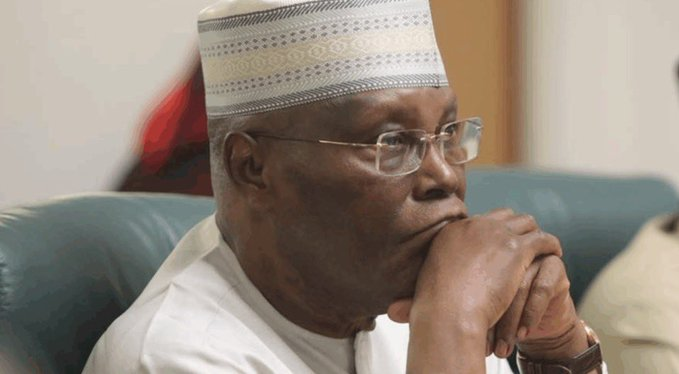
ABUJA, Nigeria — Former Vice-President Atiku Abubakar has accused Nigeria’s Independent National Electoral Commission (INEC) of bias in its handling of the leadership dispute within the African Democratic Congress (ADC), intensifying political tensions around the opposition party’s internal crisis and raising fresh questions about the neutrality of the country’s electoral umpire.
Atiku made the allegation while reacting to INEC’s recent position on the factional leadership tussle involving the ADC, particularly the camp associated with former Senate President David Mark and another group led by Nafiu Bala, the party’s former national deputy chairman. The dispute has been subject to ongoing litigation, with competing claims over legitimate control of the party’s national structure.
The controversy stems from INEC’s announcement on April 1 that it would no longer recognise the leadership structure presented by the David Mark-led faction, as well as the rival faction associated with Nafiu Bala. The commission referenced a Court of Appeal directive which ordered all parties involved in the dispute to maintain the “status quo ante bellum,” meaning the situation as it existed before the matter was brought before the Federal High Court.
However, Atiku has now challenged INEC’s interpretation and application of the court’s directive, arguing that the electoral body has overstepped its administrative role and ventured into legal interpretation, which he insists is beyond its constitutional mandate.
According to the former vice-president, INEC’s decision reflects both misinterpretation of judicial pronouncements and alleged partiality in a politically sensitive matter. He claimed the commission’s actions suggest a broader pattern of institutional bias that could have implications for Nigeria’s democratic process and party politics ahead of future elections.
Atiku further alleged that the commission’s handling of the ADC leadership dispute may be influenced by political considerations, suggesting that such actions could ultimately serve to maintain the current administration’s hold on power. While he did not provide specific evidence to support this claim, his comments have added to a growing chorus of political criticism directed at electoral authorities.
The ADC leadership crisis itself has evolved into a complex legal and political battle, with multiple factions laying claim to the party’s national structure. Court orders have alternated between maintaining existing arrangements and restraining further administrative changes pending the resolution of substantive suits, leading to what analysts describe as a legally ambiguous environment.
INEC’s role in internal party disputes has long been a subject of contention in Nigeria’s political system. While the commission is constitutionally empowered to regulate political parties and monitor compliance with electoral guidelines, its authority to intervene in intra-party leadership conflicts is often limited to recognition based on valid court judgments and compliance with statutory requirements.
Legal experts note that the principle of “status quo ante bellum” frequently used by appellate courts in political disputes is intended to preserve stability while substantive issues are being determined. However, its interpretation by administrative bodies such as INEC has in some instances led to conflicting actions, especially when multiple court orders appear to overlap or lack clear enforcement direction.
The current dispute highlights ongoing tensions between political actors, the judiciary, and electoral institutions in Nigeria, particularly in cases involving party leadership and recognition. Such disputes have historically played a significant role in shaping party structures, electoral outcomes, and coalition-building efforts ahead of national elections.
Atiku’s comments come at a time of heightened political realignment discussions in Nigeria, with opposition figures increasingly engaging in public criticism of electoral institutions and governance structures ahead of the 2027 general elections. Analysts suggest that disputes such as the ADC case may influence broader coalition strategies among opposition parties seeking to challenge the ruling government.
INEC has not issued a direct response to Atiku’s latest remarks, but the commission has in previous statements maintained that it acts strictly within the boundaries of the law and in accordance with court decisions when dealing with party recognition issues.
The ADC has itself been embroiled in internal divisions that have seen competing leadership claims, parallel meetings, and conflicting communications issued by rival factions. These developments have contributed to uncertainty over the party’s official representation in dealings with electoral authorities.
Observers note that such internal crises are not uncommon among political parties in Nigeria, where leadership disputes frequently escalate into legal battles that draw in regulatory institutions and courts. However, the involvement of high-profile political figures like Atiku has added national significance to the latest controversy.
Political analysts say the outcome of the dispute could have implications beyond the ADC, particularly in shaping how electoral authorities interpret court directives and manage internal party conflicts in the future. It also raises broader questions about institutional independence and the boundaries between legal interpretation and administrative enforcement.
As the situation develops, attention is expected to remain focused on both the judiciary and INEC, with stakeholders awaiting further clarification on the legal status of the competing factions and the commission’s final position on recognition.
For now, the dispute underscores the continuing friction between Nigeria’s political actors and its electoral institutions, reflecting deeper structural challenges in party governance, judicial interpretation, and democratic regulation.
📩 Stone Reporters News | 🌍 stonereportersnews.com
✉️ info@stonereportersnews.com | 📘 Facebook: Stone Reporters News | 🐦 X (Twitter): @StoneReportNew | 📸 Instagram: @stonereportersnews
Add comment
Comments