

Reported by: Oahimire Omone Precious | Edited by: Oravbiere Osayomore Promise.
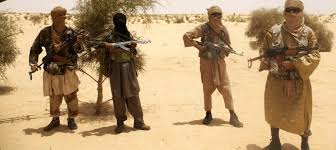
In a troubling escalation of violence in Northwest Nigeria, a recently identified armed group calling itself Mamudawa launched a series of coordinated attacks on villages in the Shanga Local Government Area of Kebbi State, resulting in confirmed fatalities, widespread destruction of property, and the displacement of numerous residents. The assaults, which occurred over Sunday and Monday, have left communities reeling and amplified fears about the persistence of insecurity in the region.
Local authorities and eyewitnesses report that the attackers emerged from the Wawa Forest, a dense woodland area straddling the border with Niger State, and moved through parts of the Gebbe District, targeting small settlements in an apparent effort to sow terror and assert control. Villages such as Kalkami, Tungar Bori, and Kawara were among the locations hit during the raids.
The Kebbi State Police Command confirmed that the assaults were carried out by members of the Mamudawa group, describing them as a violent organisation taking advantage of the challenging wetland terrain to confront civilians and security forces alike. Superintendent Bashir Usman, spokesperson for the state police, stated that multiple buildings were set alight, and firefights erupted as security personnel responded to distress calls.
At least four civilians have been confirmed killed, though authorities have cautioned that the death toll may rise as more information becomes available and as security teams reach hard-to-access locations. Some residents and local leaders have expressed fears that losses could be higher given the intensity of the attacks and difficulties in obtaining real-time casualty figures from isolated villages.
The assault on Kawara village on Monday was particularly severe, with reports indicating that the entire settlement was set ablaze as assailants intensified their operations. Survivors described fleeing into nearby forests or heading toward larger towns in search of safety as gunfire and smoke filled the air.
Community leaders in Shanga LGA, including the Vice Chairman Adamu Hamza Gebbe and the District Head of Gebbe, Alhaji Haruna Usman, corroborated that the attacks forced widespread displacement. Many residents who escaped the violence are now seeking refuge in neighboring towns like Gungu, while others remain hidden in forests to avoid further confrontations.
Several security challenges compound the situation in Kebbi State. In recent months, Shanga and surrounding areas have endured recurrent raids by armed groups variously described in local reports as bandits, cattle rustlers, kidnappers, and, more recently, factions of Islamist militants. These groups have been known to engage in kidnappings for ransom, cattle theft, and attacks on isolated communities along Nigeria’s porous borders with Niger and Benin.
The appearance of Mamudawa is part of a broader pattern of evolving armed groups in northwest Nigeria, which has seen the rise of several militant organisations in recent years. Some of these factions have deep links to cross-border criminal networks and extremist cells, with historical precedents like the Lakurawa group, a militant organisation previously documented in Kebbi and Sokoto states that carried out deadly incursions before being confronted by security forces.
Unlike some of the better-known groups, the specific origins, structure, and motivations of Mamudawa remain unclear. Analysts caution that ambiguous and fluid alliances between bandits, militants, and local insurgent cells can complicate efforts by authorities to classify and track such entities. Security experts suggest that unstable border regions, economic marginalisation, and weak governance create fertile ground for armed actors to form, recruit, and sustain operations.
The impact of the latest attacks has been devastating for residents. Beyond the confirmed deaths, homes, huts, and other structures have been razed, leaving many families without shelter. Local reports describe scenes of uprooted communities scrambling for survival as they flee into forests or seek refuge in neighboring towns. The destruction of property and livelihoods has heightened humanitarian concerns for the displaced, many of whom lack access to basic necessities such as food, clean water, and medical care.
Security forces, including the Kebbi State Police Command and joint patrol units, have reportedly been deployed to the affected areas to prevent further incursions and restore a semblance of safety. However, the effectiveness of these efforts remains constrained by logistical challenges, limited resources, and the complexity of the terrain where such groups operate.
The Nigerian government and state authorities have not yet issued detailed public statements about Mamudawa or a specific strategy for addressing the group’s emergence. The spate of violence underscores broader national concerns about internal security and the ongoing struggle to protect vulnerable rural populations from armed groups that exploit regional weaknesses.
Local civil society organisations and traditional leaders are calling for urgent intervention and humanitarian assistance for affected communities. They stress the need for improved intelligence gathering, strengthened security presence in frontier regions, and coordinated efforts between federal, state, and local authorities to prevent further loss of life and displacement.
As investigations continue and more facts emerge, the full toll of the Mamudawa attacks may take time to clarify. For now, families in the Gebbe District remain in mourning, grappling with the trauma of sudden violence, uncertainty about the fate of missing relatives, and anxiety about what further dangers may lie ahead in a region struggling with entrenched insecurity.
📩 Stone Reporters News | 🌍 stonereportersnews.com
✉️ info@stonereportersnews.com | 📘 Facebook: Stone Reporters News | 🐦 X (Twitter): @StoneReportNew | 📸 Instagram: @stonereportersnews
Add comment
Comments