

Reported by: Ijeoma G | Edited by: Gabriel Osa
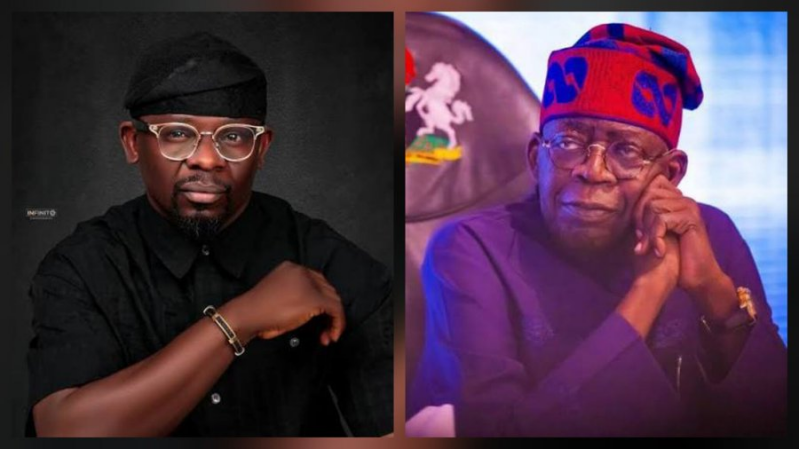
LAGOS — Nigerian political commentator and public affairs analyst Ife Salako has intensified criticism of President Bola Ahmed Tinubu’s leadership, arguing that Nigeria’s democratic system has enabled what he describes as poor governance and impunity that would be intolerable in more stringent political systems like that of China. In a series of posts on social media, Salako claimed that under China’s political and legal framework, a figure such as Tinubu — widely criticised by opponents for alleged corruption and governance failures — would “most likely be in jail,” and urged Nigerians to demand better leadership.
Salako’s comments, which have circulated widely on platforms including X (formerly Twitter) and reposted in various online forums, form part of a broader critique of the Tinubu administration’s record on economic management, rule of law and public accountability. He contrasted the strict, one‑party political model of China, where dissent and political misconduct can lead to legal consequences, with Nigeria’s pluralistic but fractious democratic system, which Salako argues has allowed entrenched political elites to avoid accountability.
“China’s system of government can never produce someone like Tinubu as president,” Salako wrote in one post. “As a matter of fact, he would most likely be in jail, at least. We need a system that rewards competence, integrity and service to the people, not one that rewards patronage and political survival.”
Salako’s remarks tap into a recurring theme among certain critics of the Tinubu government: the perception that political elites operate above the law, benefiting from systemic weaknesses and a lack of strong institutional checks. Opponents have often highlighted persistent challenges in Nigeria, including corruption, insecurity, economic hardship and alleged weak enforcement of anti‑graft measures, as evidence of governance shortcomings. These frustrations are compounded by comparisons with other political systems — whether authoritarian, technocratic or hybrid regimes—that enforce discipline and legal accountability more rigorously.
However, his invocation of China’s system also underscores deep national debates over political legitimacy, governance models and societal values. China’s one‑party rule and strong state apparatus have been credited by supporters for rapid economic growth and infrastructure development over the past four decades, but also criticised internationally for restrictions on civil liberties, lack of political pluralism and limited freedom of expression. In contrast, Nigeria’s democratic framework — though frequently challenged by political instability, weak institutions and corruption — guarantees political competition, freedom of speech, and periodic elections, features absent in China’s political system.
Political analysts suggest that Salako’s comments resonate with a segment of Nigerians and citizens in the diaspora who feel disillusioned with the pace of reforms and quality of leadership in the country. For many, public frustration with governance is tied not only to policy outcomes but to perceptions of opacity in public office, selective enforcement of laws, and the persistence of elite privilege.
Critics of Tinubu’s administration have pointed to controversial policy decisions, ongoing insecurity in parts of the country, and economic pressures as signs of leadership deficits. While some Nigerians credit the president’s economic reforms for attracting foreign investment and boosting revenue in key sectors, others argue that ordinary citizens are yet to feel tangible benefits.
Supporters of the Tinubu government dismiss comparisons with China as unrealistic and inappropriate given the vast differences in political context, legal culture and societal values between the two nations. They contend that the hallmark of democratic governance is not uniformity with other systems but responsiveness to citizens through institutions, fair elections, and a balance of powers that protects rights while promoting accountability.
In Nigeria, the independence of the judiciary and the prosecutorial system remains a focal point in debates over accountability. While activists and opposition figures regularly call for legal actions against sitting leaders over alleged misconduct, enforcement is often constrained by political realities and institutional weaknesses. Efforts to strengthen anti‑corruption bodies and judicial independence have yielded mixed results, with some high‑profile convictions offset by persistent allegations of impunity at senior levels of government.
Salako’s critique also comes at a time when discourse around leadership quality and national direction is intensifying ahead of the next general elections. With many Nigerians of voting age expressing frustration over economic hardships — including inflation, unemployment, and public service deficiencies — voices like Salako’s reflect a broader yearning for transformative leadership that prioritises the rule of law, accountability and equitable development.
Meanwhile, proponents of the current administration maintain that democratic systems inherently allow for disagreement and critique without resorting to punitive measures against political leaders. They argue that progress in democratic societies is best pursued through institutional reforms, vibrant civil society engagement, and active electoral participation rather than through comparisons with non‑democratic regimes.
As these debates continue to unfold across social and traditional media platforms, the core question at the heart of Salako’s critique — what kind of governance model can best serve Nigeria’s diverse population — remains contested. Advocates of democratic reform stress that effective leadership should be subject to transparent scrutiny and accountable to the electorate, while critics of authoritarian models caution against trade‑offs that sacrifice civil liberties for the sake of order and control.
Salako’s comments have also sparked discussion about the role of social media in shaping political narratives in Nigeria, where platforms like X, Facebook, and Instagram are used by politicians, commentators and citizens alike to express views and mobilise public opinion. These digital spaces have become central battlegrounds for political discourse, amplifying both support and dissent in ways that influence public understanding and political engagement.
The broader implications of comparing Nigeria’s democratic system with China’s political model are multifaceted, touching on governance philosophies, cultural contexts, and the practical realities of enforcing accountability in countries with differing legal and institutional capacities. Whether such comparisons lead to substantive reforms or simply fuel rhetorical debate remains to be seen, as Nigerians continue to grapple with long‑standing challenges and aspirations for a more responsive and effective government.
📩 Stone Reporters News | 🌍 stonereportersnews.com
✉️ info@stonereportersnews.com | 📘 Facebook: Stone Reporters | 🐦 X (Twitter): @StoneReportNew | 📸 Instagram: @stonereportersnews
Add comment
Comments