

Reported by: Oahimire Omone Precious | Edited by: Carmen Diego
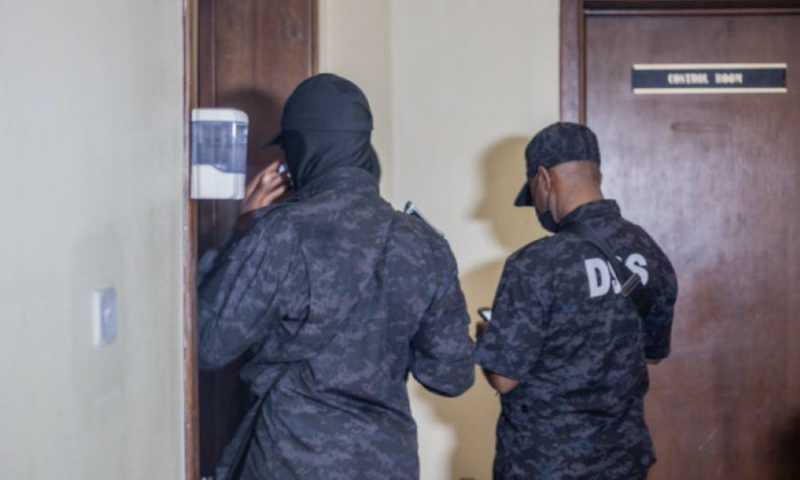
The Department of State Services (DSS) has publicly refuted claims that it held former Kaduna State governor *Nasir El-Rufai in its custody, even as legal proceedings in his high-profile case have been rescheduled. A Federal High Court in *Abuja adjourned the arraignment initially set for February 25 to April 23, after El-Rufai failed to appear in court during Wednesday’s session amid competing custody claims between security agencies. The complex legal dispute highlights deepening tensions over the charges, which allege unlawful interception of communications linked to national security. Stone Reporters recall that the case arises from comments El-Rufai made during a televised interview in February, which the DSS interpreted as an admission of involvement in intercepting the telephone communications of the National Security Adviser (NSA), Nuhu Ribadu — an allegation he has vehemently denied.
The three-count charge filed by the DSS accuses El-Rufai of violating provisions of the Cybercrimes (Prohibition, Prevention, etc.) Amendment Act, 2024, and the Nigerian Communications Act, 2003. Prosecutors contend that on February 13, during an appearance on a live broadcast of Arise TV’s Prime Time Programme in Abuja, he acknowledged awareness of unlawful phone interception and linked himself with individuals allegedly involved in such activity without reporting it to authorities — conduct the DSS says undermines national security and public safety.
However, El-Rufai has strongly challenged the basis of the prosecution. Ahead of the February 25 arraignment date, his legal team filed a motion asking the court to quash the charges on multiple grounds. In filings dated February 17, he described the DSS’s charge as legally defective and “an abuse of court process.” The motion argues that the offence alleged — based on statements made during a public interview — does not constitute a criminal act under Nigerian law because there was no evidence of actual interception, such as intercepted data, technical records, or specific devices used. His lawyers also contend that the prosecution violates constitutional protections, including the presumption of innocence, freedom from self-incrimination, and freedom of expression and association. Among the 17 grounds cited, they claim the charges cite offences that are not clearly defined by law, lack a prima facie case, and include duplicative or vague allegations that cannot support a criminal conviction.
A particularly striking part of El-Rufai’s legal filing is a demand for ₦2 billion in costs against the DSS, alleging what he terms a deliberate misuse of the criminal justice system to harass, embarrass, and publicly victimise him. Defence counsel framed the case as politically motivated and noted that criminalising statements made on live television — absent objective proof of intercepted communications — sets a dangerous precedent.
At the short court session on Wednesday, El-Rufai was not in court. Prosecuting counsel informed the judge that the defendant was still in the custody of the Independent Corrupt Practices and Other Related Offences Commission (ICPC), which has been investigating him on a separate corruption matter. The charge sheet filed by the DSS was served on him while he was detained by the ICPC, a development that defence lawyers said complicated his appearance for arraignment. The DSS’s statement denying custodial control was intended to clarify that its agents never physically held El-Rufai, even as the ICPC continued its own inquiry.
Legal observers note that there are at least two parallel investigations involving El-Rufai: the DSS’s cybercrime and national security charge, and an ongoing corruption probe reportedly centred on alleged mismanagement of public funds during his tenure as governor. A recent report indicated that the Economic and Financial Crimes Commission (EFCC) had earlier detained him for questioning in connection with a separate N432 billion corruption inquiry. That detention preceded his transfer to the ICPC, illustrating the multi-agency legal scrutiny the former governor now faces.
The court’s decision to postpone arraignment underscores the procedural difficulties in advancing such a case when the defendant’s location and service of the charge are contested. The new date of April 23 will be critical: if El-Rufai appears and is formally arraigned, he will be required to enter a plea before trial proceedings can begin. Should he plead not guilty, as his defence signals, the court will then set a trial timetable. Justice Joyce Abdulmalik, who is presiding over the matter, has indicated that the next hearing will involve careful examination of both the constitutional challenges and procedural issues raised by the defence.
Beyond the courtroom, the case has sparked broader public debate in Nigeria about surveillance laws, civil liberties, and the powers of national security agencies. Critics of the prosecution argue that the DSS’s interpretation of El-Rufai’s televised remarks amounts to criminalising political speech and exceeds the agency’s statutory mandate. Supporters of the charge argue that claims touching on intercepted communications must be vigorously investigated, particularly when they involve the office of the NSA. A related report noted that the House of Representatives has yet to pass comprehensive legislation to regulate electronic surveillance and communications privacy, a shortfall that some analysts say complicates enforcement and oversight of such matters.
The involvement of multiple federal agencies — DSS, ICPC, and EFCC — further underscores the intersecting legal and political dimensions of the case. While the DSS pursuit focuses on alleged violations of cybercrime and communications statutes, the corruption inquiries by ICPC and EFCC touch on financial governance and accountability. Observers say the progression of both matters will likely influence Nigeria’s political landscape, especially as El-Rufai remains a significant figure within the African Democratic Congress (ADC) and national political circles.
As April 23 approaches, attention will centre on whether the court accepts El-Rufai’s arguments to strike out the charges before arraignment or compels him to face serious allegations that have national security implications. The outcome may set a legal precedent for how statements made in public forums are treated in Nigerian law and how intelligence agencies deploy the criminal justice system in matters involving high-profile political actors.
📩 Stone Reporters News | 🌍 stonereportersnews.com
✉️ info@stonereportersnews.com | 📘 Facebook: Stone Reporters | 🐦 X (Twitter): @StoneReportNew | 📸 Instagram: @StoneReportersNews
Add comment
Comments