

Reported by: Oahimire Omone Precious | Edited by: Carmen Diego
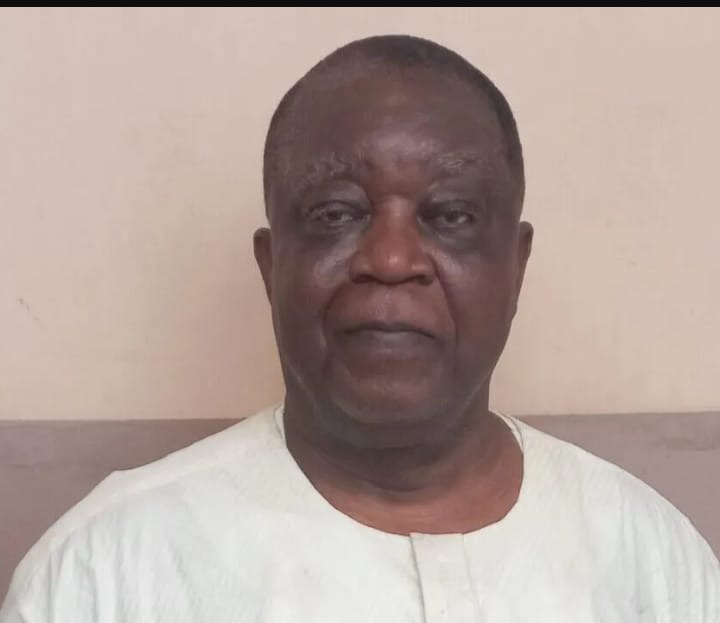
The Economic and Financial Crimes Commission (Economic and Financial Crimes Commission) has arraigned the former Managing Director of the Nigerian Railway Corporation, Fidet Okhiria Edetanle, before the Special Offences Court, Ikeja in Lagos State over allegations of fraud involving more than ₦165 million and $385,000.
The anti-graft agency filed a seven-count charge against Edetanle, accusing him of abuse of office, money laundering, and unlawful enrichment while serving in a leadership position within the Nigerian Railway Corporation. The case forms part of broader corruption investigations targeting public sector financial management in Nigeria.
During Thursday’s court proceedings, the defendant pleaded not guilty to all seven counts read before him. The plea triggered immediate procedural arguments between prosecution and defence counsel over the next steps in the trial process. Prosecuting counsel Abba Muhammad, SAN, requested that the court fix a trial date and also urged the judge to remand the defendant in a correctional facility pending further hearings.
The prosecution argued that keeping the defendant in custody was necessary to prevent possible interference with witnesses and to ensure the integrity of the forthcoming trial. The counsel maintained that the seriousness of the alleged offences and the scale of the financial transactions under scrutiny justified the request for remand.
On the other side, defence counsel Adebowale Kamoru informed the court that he had only just received the charge sheet. He therefore requested a short adjournment to enable the preparation and filing of a formal bail application on behalf of his client. The defence argued that adequate time was required to respond properly to the prosecution’s allegations and to assemble legal materials supporting the bail request.
After hearing submissions from both parties, the trial judge, Rahman Oshodi, ruled that the defendant should be remanded in a maximum security correctional facility pending determination of the anticipated bail application. The judge emphasized the need to maintain judicial order while respecting the defendant’s constitutional right to seek bail under Nigerian criminal procedure law.
The court subsequently adjourned the matter to May 13, 14, and 15 for the commencement of substantive trial proceedings. The three-day trial window is expected to allow the prosecution to present documentary and testimonial evidence supporting the charges, while the defence will have the opportunity to challenge the allegations.
Details contained in the charge sheet alleged that Edetanle abused the authority of his office by allegedly diverting public funds and engaging in transactions considered inconsistent with financial regulations governing public institutions in Nigeria. The prosecution further accused him of converting state-related financial resources for personal enrichment through complex monetary movements across domestic and foreign accounts.
Although the specific factual basis of each count was not fully disclosed in open court, sources familiar with the investigation indicated that the alleged fraud scheme involved multiple financial transfers spanning several operational phases. Investigators reportedly tracked suspicious payments linked to the defendant during his tenure in the railway corporation.
The Economic and Financial Crimes Commission has intensified prosecutions of high-profile corruption cases in recent years as part of its mandate to combat financial crime within the public and private sectors. The agency argues that such prosecutions are necessary to strengthen institutional accountability and restore public confidence in government financial administration.
Corruption remains a persistent governance challenge in Nigeria, where successive administrations have launched anti-corruption campaigns with varying levels of enforcement success. Analysts note that prosecutions involving former public executives often attract significant public attention because they raise broader questions about transparency in public procurement, asset management, and contract supervision.
The Nigerian Railway Corporation, which oversees rail transportation operations across major routes in the country, has been the subject of modernization initiatives aimed at improving passenger and cargo movement efficiency. However, governance experts have repeatedly called for stronger oversight mechanisms within state-owned enterprises to minimize financial misconduct risks.
Legal observers following the case have suggested that the forthcoming trial may focus heavily on forensic accounting evidence, bank transaction records, and documentary audit trails. In modern financial crime litigation in Nigeria, prosecutors often rely on electronic banking data and international financial cooperation mechanisms to establish cross-border money movement patterns.
The remand order issued by the court does not represent a determination of guilt. Under Nigerian law, defendants are presumed innocent until proven otherwise in a court of competent jurisdiction. The bail application process will provide the defence with an opportunity to argue for conditional release pending the outcome of trial proceedings.
Public reaction to the arraignment has been mixed, with some civil society groups welcoming the prosecution as evidence of strengthened anti-corruption enforcement. Others caution that corruption trials involving senior former officials must be conducted transparently and expeditiously to avoid prolonged pre-trial detention and to ensure judicial fairness.
Security arrangements were reportedly tightened within the courtroom environment during the hearing, reflecting the high public interest surrounding the case. Court officials maintained controlled access to the proceedings as journalists and observers sought entry to monitor developments.
If the trial proceeds as scheduled, the May hearing dates are expected to mark the beginning of detailed examination of evidence by both prosecution and defence teams. Legal experts say the outcome of the case could contribute to ongoing discourse on public sector accountability and financial governance standards within the Nigerian administrative system.
The EFCC has stated that investigations remain open and that additional witnesses may be presented if further information becomes available during the trial process. Authorities have urged the public to allow the judicial process to run its full course without speculation or interference.
As the legal battle unfolds, attention is likely to remain focused on the courtroom proceedings in Ikeja. The case represents another significant corruption trial within Nigeria’s broader anti-graft enforcement landscape, highlighting the continuing institutional struggle to curb financial misconduct in public service.
📩 Stone Reporters News | 🌍 stonereportersnews.com
✉️ info@stonereportersnews.com | 📘 Facebook: Stone Reporters | 🐦 X (Twitter): @StoneReportNew | 📸 Instagram: @StoneReportersNews
Add comment
Comments