

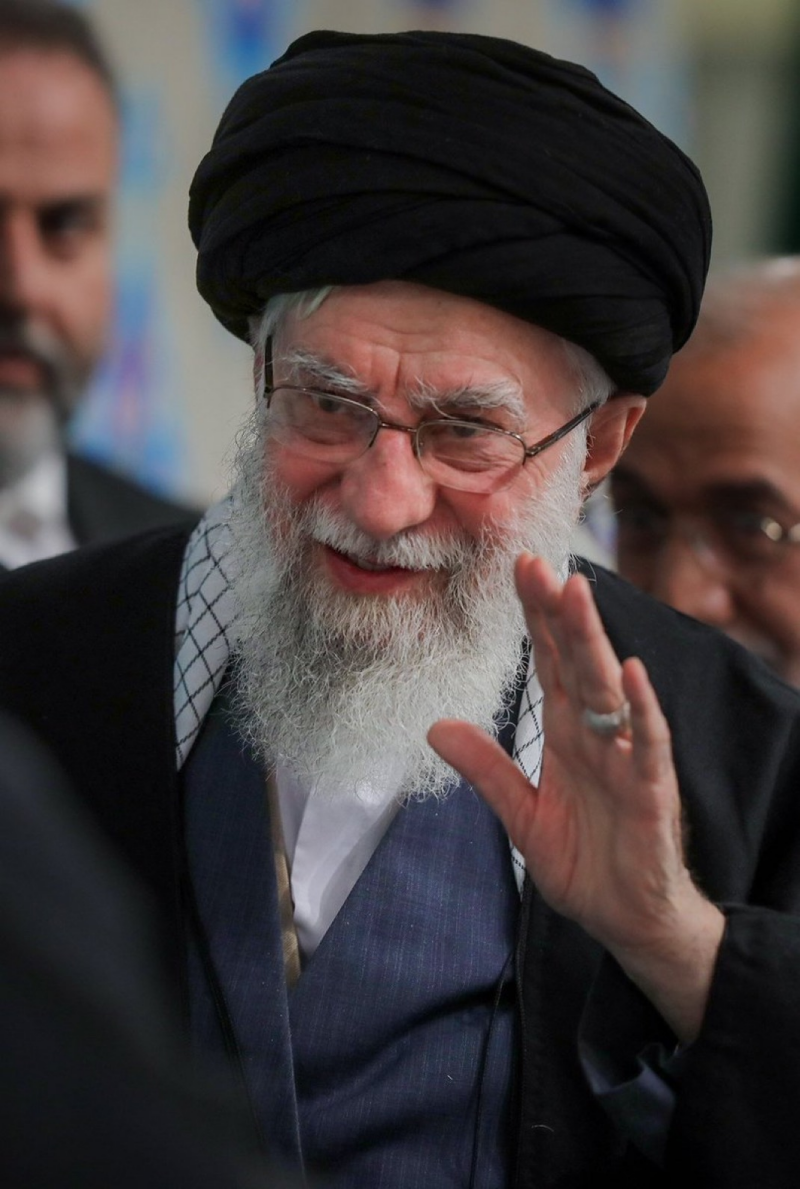
In a dramatic and highly consequential escalation of hostilities in the Middle East, Iran’s Supreme Leader Ayatollah Ali Khamenei has been confirmed dead, according to multiple state and international news organisations and official announcements following coordinated air strikes by the United States and Israel. The development comes amid one of the most significant military actions in decades involving Iran, raising profound geopolitical, regional and domestic implications.
The strikes began in the early hours of Saturday, 28 February 2026, when the Israeli Defence Forces and the United States launched a joint military operation against strategic targets in Iran, including military command infrastructure, nuclear-linked facilities and leadership compounds. The coordinated offensive was described by Israeli and U.S. officials as aimed at degrading Iran’s ability to wage war, curtail its missile and nuclear programs, and dismantle parts of its political-military leadership.
Israeli Prime Minister Benjamin Netanyahu indicated there were “many signs” suggesting Khamenei was “no longer alive,” and Israeli media sources reported that the Islamic Republic’s supreme leader’s body had been recovered after a strike damaged his compound in Tehran. U.S. President Donald Trump publicly confirmed Khamenei’s death shortly thereafter.
Later on 1 March 2026, Iranian state television acknowledged the death of Khamenei, announcing a 40-day period of national mourning and referring to the attack as a historic loss for the country. The official confirmation followed conflicting earlier reports, including statements by Iran’s foreign minister asserting the leader was alive “as far as I know.”
According to state and independent reporting, the strike targeted Khamenei’s office and residential compound in Tehran and was part of a broader wave of missile and aerial bombardments carried out across multiple provinces. Iranian media and health authorities reported civilian casualties in the wider operation, including significant losses at a school in Hormozgan province and broader impacts affecting at least 24 provinces. Dozens of other senior Iranian officials, including military commanders and advisers, are also believed to have been killed in the strikes.
Some international outlets reported upwards of 40 Iranian leadership figures killed, including top commanders of the Islamic Revolutionary Guard Corps (IRGC), senior defence officials and security advisers close to Khamenei. These reports, while based on statements from U.S. and Israeli officials, have been corroborated in part by subsequent Iranian media acknowledgements of associated losses.
Iran described the strikes as unprovoked and illegal, and responded with ballistic missile and drone attacks on Israeli territory and U.S. military bases across the Middle East, including in Bahrain, the United Arab Emirates, Kuwait and Qatar, according to several reports. These reprisal strikes triggered casualties and infrastructure damage in multiple cities and led to widespread airspace restrictions throughout the region.
Iran’s government, military leadership and senior clerics have vowed “severe punishment” and sustained retaliation. Tehran’s Revolutionary Guards issued statements framing the destruction as an assault on the Islamic Republic itself and promising what they termed the most intense counteroffensive.
Internationally, the United Nations Security Council convened emergency meetings, with world leaders urging restraint amid fears that the conflict could expand beyond current combat zones. Several allies of the United States expressed concern over the scale and ramifications of military action, emphasising diplomatic de-escalation even as some Western leaders backed the strikes as a strategic necessity.
Ayatollah Ali Khamenei, aged 86, was Iran’s second supreme leader, succeeding Ayatollah Ruhollah Khomeini in 1989. He had absolute authority over Iran’s political, military, judicial and media institutions, and was a central figure in shaping Iranian foreign and domestic policy for over three decades. Known for his staunch anti-Western rhetoric and support for militant proxies such as Hezbollah and other allied factions, Khamenei’s leadership was marked by both domestic repression of dissent and aggressive regional posturing.
Khamenei’s death represents an unprecedented geopolitical rupture. Experts warn that Iran now faces a leadership vacuum with no clear successor. Under Iran’s constitution, the Assembly of Experts, a clerical council, is tasked with selecting a new supreme leader, but analysts say this process could unfold amid internal power struggles, especially between conservative hardline factions and elements within the IRGC and political elite.
The regional security landscape has drastically changed. Tensions between Iran, Israel and the United States — already high due to proxy conflicts, nuclear negotiations, and historic antagonisms — now heighten fears of a wider war that could draw in neighbouring states and non-state actors. Global energy markets reacted with sharp volatility, and major capitals issued travel advisories and emergency diplomatic outreach to contain the crisis.
At the onset of the strikes, Iranian officials repeatedly denied Khamenei’s death, calling external claims “psychological warfare” and asserting that he remained secure and in command. No verifiable public appearance of Khamenei emerged after the strikes, deepening ambiguity until state media confirmation. This has led to intense speculation, mixed accounts, and ongoing international analysis of the situation.
This remains a rapidly evolving and highly consequential international crisis, with implications for Middle Eastern security, global diplomatic relations, and internal Iranian governance. Efforts to de-escalate, civilian protections, and regional stability remain at the forefront of global discussion as developments continue to unfold.
📩 Stone Reporters News | 🌍 stonereportersnews.com
✉️ info@stonereportersnews.com | 📘 Facebook: Stone Reporters | 🐦 X (Twitter): @StoneReportNew | 📸 Instagram: @stonereportersnews
Add comment
Comments