

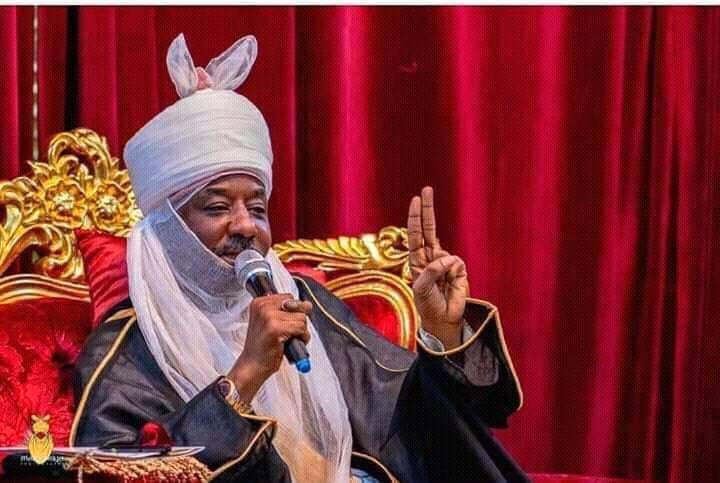
Sanusi Lamido Sanusi, the Emir of Kano and a former Governor of the Central Bank of Nigeria, has publicly questioned the Nigerian government’s continued reliance on borrowing following the removal of fuel subsidies, urging authorities to demonstrate clearer improvements in public finances and economic outcomes.
In a statement that has drawn attention across policy and economic circles, Sanusi said: “If you’re not paying subsidy and you have the money, why are we still borrowing? Citizens should begin to see stronger public finances and practical benefits across the economy.” His remarks focus on the fiscal direction of the country after a major policy shift that ended decades of fuel subsidy payments.
Nigeria officially removed fuel subsidies in 2023, a decision that eliminated a significant expenditure item from the federal budget. The policy had historically consumed a large share of government revenues, with authorities arguing that its removal would free up funds for development priorities and reduce fiscal pressure. The move was also aligned with longstanding recommendations from international financial institutions advocating subsidy reform.
Following the subsidy removal, government revenues increased due to the cessation of subsidy payments. At the same time, Nigeria has continued to finance budget deficits through borrowing, both domestically and externally. Official fiscal documents and public statements from government authorities confirm that borrowing remains part of the country’s budgetary strategy.
Sanusi’s comments directly address this development, questioning the rationale for continued debt accumulation in the context of increased fiscal space. His position centers on the expectation that the removal of subsidies should translate into improved government finances and visible economic benefits.
Nigeria’s public debt has risen over the years, according to official data released by government agencies. Borrowing has been used to support budget implementation, infrastructure projects, and other government expenditures. Authorities have maintained that such borrowing is within approved limits and forms part of broader fiscal planning.
Government officials have also stated that subsidy removal was intended to redirect resources toward key sectors, including infrastructure, social services, and economic development. The policy shift was accompanied by announcements of measures aimed at mitigating the impact of higher fuel prices on citizens, including targeted support programs.
Sanusi did not provide additional details or policy prescriptions in the statement but emphasized the need for outcomes that are visible in the broader economy. His remarks did not include specific allegations or claims beyond the question of fiscal management and borrowing practices.
The issue of borrowing in Nigeria is governed by established budgetary and legislative processes. Each year, the federal government presents a budget that outlines projected revenues, expenditures, and financing plans, including borrowing requirements. These plans are subject to approval by the National Assembly.
Available public records show that borrowing continues to be included in these fiscal plans. Government explanations for this approach have consistently referenced the need to bridge funding gaps between revenue and expenditure, as well as to support long-term development goals.
Sanusi’s intervention adds to ongoing public discussion about how savings from subsidy removal are being utilized. The policy itself marked a significant shift in Nigeria’s economic management, ending a system that had been in place for decades. The immediate fiscal effect of the removal was a reduction in government spending previously allocated to subsidy payments.
The broader economic environment in Nigeria has undergone several changes since the policy was implemented. These include adjustments in fuel pricing and other fiscal and monetary reforms. Government authorities have stated that these measures are part of efforts to stabilize the economy and improve efficiency.
Sanusi, who served as Central Bank Governor from 2009 to 2014, has previously spoken on issues related to fiscal discipline and economic governance. His latest remarks continue that pattern, focusing specifically on the relationship between subsidy removal, government revenues, and borrowing.
There has been no official response from the federal government specifically addressing Sanusi’s statement at the time of reporting. However, government positions on borrowing and fiscal policy remain outlined in budget documents and public communications from relevant ministries and agencies.
The discussion raised by Sanusi centers on a measurable issue: the coexistence of increased fiscal space following subsidy removal and continued borrowing to finance government activities. His statement does not dispute the existence of borrowing but questions its necessity under current conditions.
As Nigeria continues to implement its fiscal policies, the relationship between revenue, expenditure, and borrowing remains a key element of economic management. Public data on these indicators is regularly published by government institutions, providing a basis for ongoing analysis and debate.
Sanusi’s remarks highlight the expectation that fiscal changes should produce observable outcomes. His statement frames the issue in terms of public finance strength and economic impact, without extending into projections or unverified claims.
The matter remains part of Nigeria’s broader economic conversation, with attention focused on how fiscal policies are executed and how their results are reflected in official data and public services. The government’s borrowing strategy, alongside revenue developments following subsidy removal, continues to be documented through official channels.
📩 Stone Reporters News | 🌍 stonereportersnews.com
✉️ info@stonereportersnews.com | 📘 Facebook: Stone Reporters News | 🐦 X (Twitter): @StoneReportNew | 📸 Instagram: @stonereportersnews
Add comment
Comments