

Reported By Mary Udezue | Edited by: Gabriel Osa
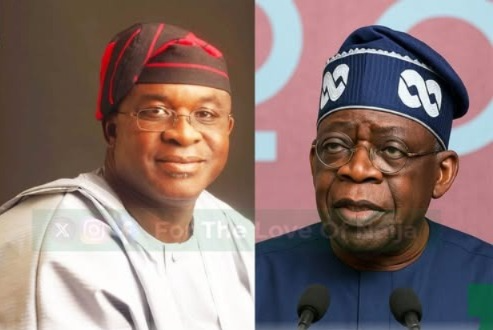
ABUJA, Nigeria — A coalition of prominent opposition leaders, including former Senate President David Mark, has publicly raised concerns about what they describe as the alleged use of federal power by President Bola Tinubu and the ruling All Progressives Congress (APC) to weaken political rivals and undermine Nigeria’s multi-party democracy ahead of the 2027 general election. The assertions come amid broader efforts by opposition figures to consolidate forces and present an alternative to the incumbent administration, though official confirmation of specific claims continues to evolve.
In a joint statement issued in December 2025, opposition leaders accused the Tinubu administration of politicising federal institutions, including anti-corruption agencies and security services, and alleged that these bodies have been deployed to intimidate and apply pressure on opposition governors and political actors. The statement warned that such tactics, if left unchecked, could erode democratic competition, pushing the country toward a one-party reality in advance of the 2027 polls.
The communiqué was signed by several senior opposition figures, including former Vice President Atiku Abubakar, ex-governor and politician Peter Obi, former Governor John Odigie-Oyegun, and other elite political actors. David Mark, identified as the National Chairman of the opposition coalition’s adopted platform — the African Democratic Congress (ADC) — was among the signatories asserting that the federal government’s actions risk distorting Nigeria’s democratic landscape.
Although widely circulated on social media and attributed to Mark, specific warnings alleging that the President is actively using state resources to subdue the opposition have not been issued in a detailed formal press release directly from Mark’s office at the time of reporting. Several social media posts and unofficial pages have referenced messages framing the developments in stark language, saying that ongoing efforts by the administration would not guarantee an APC victory in 2027. These posts reflect sentiments expressed at opposition gatherings but remain unverified by official channels.
Opposition leaders have pointed to defections of elected officials to the APC and the aggressive investigations carried out by agencies such as the Economic and Financial Crimes Commission (EFCC) and Independent Corrupt Practices and Other Related Offences Commission (ICPC) as evidence of perceived selective enforcement that could be politically motivated. They argue that pressure on opposition administrations and figures to change party allegiance undermines voter choice and weakens institutional trust.
These assertions have been met with pushback from ruling party supporters. In March 2026, the APC’s Abia State chapter condemned the statements attributed to Mark and other coalition leaders, rejecting the notion that federal agencies are being wielded for political gains and maintaining that the government’s anti-corruption efforts are legitimate and non-partisan. Responding to the allegations, party officials said such claims were politically motivated and that President Tinubu’s administration remains committed to democratic norms.
The dynamics within Nigeria’s opposition landscape are shifting. Former Vice President Atiku Abubakar, Peter Obi, Rotimi Amaechi, and Rauf Aregbesola are among the leaders who have gravitated toward a coalition structure anchored around the ADC platform. Reports from mid-2025 confirm that Mark formally resigned from the Peoples Democratic Party (PDP) and assumed interim leadership of the ADC as part of a broader strategy to unify opposition forces.
Political analysts note that the coalition aims to present a credible challenge to the APC in 2027 by bringing together diverse opposition elements under a common banner. Opposition figures have highlighted not only alleged political intimidation but also dissatisfaction with policy direction, economic pressures, and controversial legislative developments, including debates around the recently amended Electoral Act.
On the broader context, opposition leaders have expressed frustration with structural hurdles they describe as impeding competitive politics, calling for reforms to ensure transparency, fairness, and equal treatment for all political parties. Their demands includes enhanced independence for anti-corruption agencies, judicial fairness, and protections against the misuse of state power for political ends.
While the coalition’s statements have resonated with segments of the public concerned about political space, the presidency and APC spokespersons have consistently rejected claims of state oppression, framing them instead as routine political contention in a vibrant democracy.
As political activity accelerates ahead of the 2027 general election, the narrative around alleged federal overreach and the health of Nigeria’s multiparty system is expected to remain central to public debate. The interplay between opposition assertions and government rebuttals reflects the deepening contest for political legitimacy, influence, and voter support in Africa’s most populous nation.
📩 Stone Reporters News | 🌍 stonereportersnews.com
✉️ info@stonereportersnews.com | 📘 Facebook: Stone Reporters | 🐦 X (Twitter): @StoneReportNew | 📸 Instagram: @stonereportersnews
Add comment
Comments