

Reported By Mary Udezue | Edited by: Gabriel Osa
Two of the eight people abducted in a violent raid in Sokoto State, north-west Nigeria, have given birth to a baby boy and a baby girl while still being held by armed bandits, raising deep humanitarian concerns for the victims and their families. The births occurred this week, about seven weeks after the family members were kidnapped from Takatsaba village in Sabon Birni Local Government Area in what relatives and community sources describe as a brutal attack by criminal militias commonly referred to as “bandits.”
The victims were part of a single large household targeted during a raid some weeks ago. According to a relative who spoke on condition of anonymity, five women and three men were taken, including two pregnant women whose pregnancies were already advanced at the time of the kidnapping. During the attack, an elderly man from the compound was reportedly killed, leaving some of the family’s children orphaned and deepening the trauma experienced by the community.
Local sources say the kidnappers demanded a ransom of ten million naira (roughly equivalent to several tens of thousands of U.S. dollars), a sum the family has struggled to raise despite already paying more than eight million naira. The relative said three of the victims, including a nursing mother, managed to escape and made their way to Zurmi town in neighbouring Zamfara State where they are now receiving medical care. That leaves five individuals still unaccounted for: three young men and two women, among whom are the mothers of the newborns.
The confirmation of the births came from the same family source, describing the conditions in captivity as dire and medically unsafe. The women reportedly delivered without access to trained birth attendants, sterile environments or appropriate post-natal care. Such circumstances significantly increase the risk of infection, postpartum complications and infant mortality. Family members living in neighbouring communities have appealed urgently for assistance, describing the situation as a humanitarian crisis unfolding in real time.
The Sokoto State Police Command’s public relations officer, DSP Ahmad Rufai, was contacted about the incident but said the police were unaware of the kidnapping because “residents did not report it to us.” That statement has frustrated community leaders and relatives who say they have made multiple efforts to engage security agencies for help.
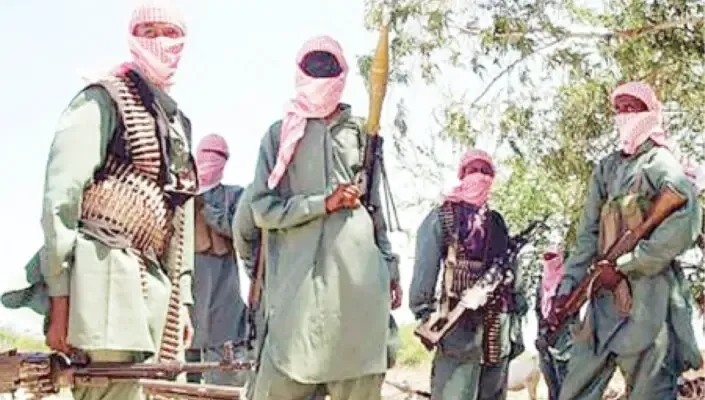
Analysts and local security experts describe Takatsaba village and other parts of Sabon Birni as frequent targets for armed bandit gangs that operate with relative impunity across the north-west region, often crossing state borders and exploiting porous terrain. These criminal groups are notorious for mass abductions, ransom demands, cattle rustling and attacks on rural settlements. Some of the most feared bandit leaders, such as Bello Turji and others, have established networks that span Sokoto, Katsina State and Zamfara State, although it is not confirmed which specific group is holding the Takatsaba captives.
The broader phenomenon of banditry in Sokoto State has involved numerous deadly raids over the past several years, some of them turning into high-casualty events. Villages in Sabon Birni LGA have suffered recurring attacks, including incidents in which residents were killed or abducted in large numbers, contributing to ongoing insecurity in the region.
The kidnapping of the Takatsaba family underscores a pattern of abductions for ransom that has become a central security challenge in northern Nigeria. Rural communities often lack adequate policing or rapid response, leaving residents vulnerable to sudden incursions by heavily armed gangs who exploit the absence of sustained government protection. In many instances, families are forced to negotiate or pay large sums to secure the release of captives, a practice that critics argue fuels further criminal activity.
In this case, relatives of the victims have been mobilising support from across surrounding communities to raise the funds demanded by the kidnappers. But achieving the full ransom has proved difficult, prolonging the captivity of those remaining, including the mothers of the newborns. Amid the desperate efforts to generate resources, there is public outrage that the birth of the infants has added a devastating human dimension to what was already a deeply traumatic event for the family.
The community’s plea has not been limited to financial contributions; local leaders have called on the federal and state governments to intensify security operations in Sabon Birni and its environs. They argue that without strengthened military and police presence, families will continue to be at risk and bandits will remain emboldened to conduct large-scale abductions. They specifically want a coordinated deployment of security personnel to rural areas most affected by bandit attacks, not just to pursue kidnappers after raids, but to prevent such incursions altogether.
The broader Nigerian government, under President Bola Tinubu, has been challenged by a string of violent abductions in recent months in multiple states, ranging from school kidnappings to mass family abductions. Some of those incidents have drawn international media attention and prompted debates over the effectiveness and responsiveness of national security strategies. However, local families affected by this most recent incident say they feel overlooked and abandoned by the official apparatus.
Human rights and civil society advocates in Nigeria have described the situation as a crisis that goes beyond isolated criminal acts. They argue that the repeated abductions reflect systemic weaknesses in governance, poverty-driven desperation among would-be bandits, and a failure of long-term policy to address the root causes of insecurity. They also warn that when kidnappings result in vulnerable populations—such as pregnant women—giving birth in captivity, the stakes escalate, and the pressure on authorities to act effectively increases accordingly.
As this story continues to develop, residents of Sokoto and rights groups are urging the government to not only secure the immediate release of the captives but also to implement more sustainable security measures that protect rural communities from recurrent violence. The health and survival of the newborns and their mothers remain central concerns as families and neighbours await news of a safe rescue.
📩 Stone Reporters News | 🌍 stonereportersnews.com
✉️ info@stonereportersnews.com | 📘 Facebook: Stone Reporters | 🐦 X (Twitter): @StoneReportNew | 📸 Instagram: @stonereportersnews
Add comment
Comments