

Reported By Mary Udezue | Edited by: Gabriel Osa
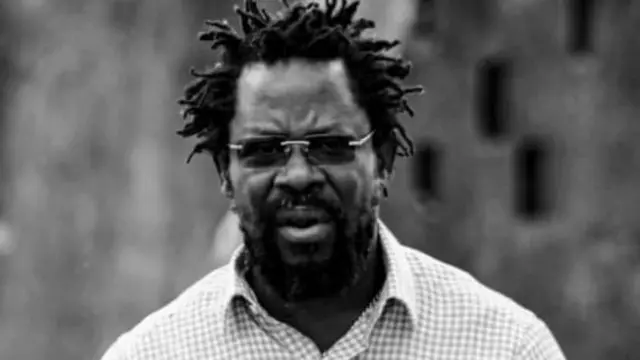
Public attention has recently returned to the activities and legal history of Nigerian lawyer and activist Dele Farotimi following renewed online discussions about his commentary on Nigeria’s governance and justice institutions. Verified reporting indicates that while specific interview claims circulating on social media cannot be independently authenticated, Farotimi’s broader public record shows consistent criticism of institutional failures within the country’s legal and political systems.
Farotimi is widely known as an outspoken advocate on governance accountability and judicial reform in Nigeria. His prominence in national discourse increased after the publication of his controversial book titled Nigeria and Its Criminal Justice System, which attracted significant legal and political controversy. The book was interpreted by critics as containing allegations of corruption and professional misconduct within segments of the Nigerian legal establishment, although supporters described it as a civil liberties critique of institutional weaknesses.
The legal dispute surrounding the publication led to criminal defamation proceedings against Farotimi in 2024. According to multiple verified media reports, he was arrested in Lagos before being transferred to legal custody in Ekiti State, where charges were filed relating to alleged defamatory content and cybercrime-related offences. Prosecutors argued that some statements contained in his book and public commentary could constitute criminal defamation under Nigerian law, while defence arguments framed the prosecution as an infringement on freedom of expression.
Farotimi’s detention generated widespread public debate across social and civil rights circles. Advocacy organisations questioned the use of criminal law in defamation matters, arguing that civil remedies are typically more consistent with democratic free speech protections. Supporters of the prosecution maintained that reputational protection and legal accountability must be preserved within Nigeria’s judicial framework.
During court proceedings, bail applications were contested between defence counsel and prosecuting authorities. Reports indicated that bail conditions were set at substantial financial thresholds, including a fifty million naira bond ordered by a federal court and additional conditions imposed by a magistrate court. These conditions required, among other restrictions, the surrender of travel documentation and limitations on public media commentary while the legal matter remained active.
Farotimi was eventually released after meeting the court’s bail requirements in late 2024. Following his release, he publicly reaffirmed his commitment to continuing his advocacy work while remaining within the boundaries of legal restrictions imposed by the court. His release was welcomed by civil society organisations and supporters who viewed the case as emblematic of broader challenges facing freedom of expression in Nigeria.
Verified information about the specific interview attributed to Farotimi on the programme titled State of Affairs hosted by Edmund Obilo could not be located in established media archives or documented broadcast transcripts. There is currently no confirmed evidence from major Nigerian news organisations that the interview occurred in the exact form described in viral social media posts.
However, Farotimi has previously expressed strong criticism of systemic governance failures, including concerns about judicial efficiency, prison conditions and institutional accountability. Some of his public commentary aligns thematically with the statements circulating online, particularly regarding the social consequences of structural inequality and administrative neglect, but the precise wording attributed to him has not been verified by independent journalistic sources.
Farotimi’s reference to prison conditions during his detention has been a subject of public interest. He has spoken generally about experiences within correctional facilities in Ekiti State, describing overcrowding and resource limitations affecting inmates. Human rights organisations monitoring Nigeria’s correctional system have also documented similar concerns, including congestion, healthcare shortages and high proportions of pre-trial detainees within facilities managed by the Nigerian Correctional Service.
National statistics indicate that many Nigerian correctional centres operate beyond their designed capacity. Legal analysts have linked this condition to systemic judicial delays, limited access to legal representation for defendants, and procedural inefficiencies that prolong detention periods before trial. Reform advocates argue that expanding non-custodial sentencing alternatives and accelerating case adjudication could reduce overcrowding.
Public reaction to Farotimi’s public persona remains divided. Supporters describe him as a courageous voice challenging entrenched interests within Nigeria’s legal and political architecture. They argue that aggressive public critique is sometimes necessary to stimulate institutional reform and encourage transparency in governance.
Critics, however, contend that some of Farotimi’s rhetoric risks promoting excessive pessimism about national institutions. They maintain that while Nigeria faces governance challenges, broad characterisations of the country as inherently dysfunctional may overlook ongoing reform efforts and the contributions of individuals working within public service structures.
Civil liberties discussions surrounding the case have also drawn attention to Nigeria’s defamation and cybercrime statutes. Legal scholars note that criminal defamation provisions have increasingly been debated in democratic societies because such laws can potentially be used to suppress dissenting speech if applied broadly. Reform advocates suggest that civil liability mechanisms may provide a more balanced framework for addressing reputational harm.
The Farotimi controversy reflects a broader tension within Nigeria’s public sphere between state authority, legal accountability and freedom of expression. Political analysts say cases involving high-profile critics often become symbolic battlegrounds for competing visions of governance, civic responsibility and institutional legitimacy.
As of current verified reporting, there is no authenticated transcript confirming the viral interview narrative that described Nigeria as “very ugly” or included the specific dialogue sequence circulating online. Authorities, media organisations and broadcast archives have not published evidence supporting those exact quotations.
The broader significance of Farotimi’s public profile continues to lie in the national conversation surrounding justice reform, political accountability and the limits of state authority in regulating speech. Observers anticipate that debates sparked by his activism and legal history will remain relevant as Nigeria navigates ongoing challenges in governance transparency, institutional reform and democratic expression.
📩 Stone Reporters News | 🌍 stonereportersnews.com
✉️ info@stonereportersnews.com | 📘 Facebook: Stone Reporters | 🐦 X (Twitter): @StoneReportNew | 📸 Instagram: @stonereportersnews
Add comment
Comments