

Reported by: Ijeoma G | Edited by: Gabriel Osa
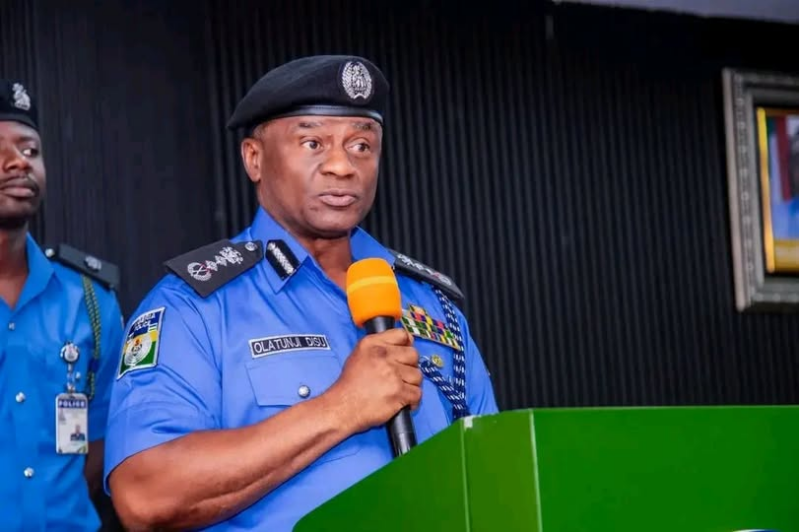
Nigeria’s newly appointed Inspector-General of Police, Tunji Disu, has issued a firm directive to officers of the Nigeria Police Force, warning that any form of political bias during elections will attract severe disciplinary consequences, including possible criminal prosecution. The warning came during his first high-level engagement with senior police officers after assuming office as the country’s 23rd police chief, a transition that signals a new phase in the leadership of Nigeria’s primary law-enforcement institution.
Disu’s remarks focused heavily on the approaching 2027 general elections, which are expected to be among the most politically consequential in Nigeria’s recent democratic history. Addressing senior commanders, he emphasized that the credibility of the electoral process would depend largely on how professionally and impartially the police perform their duties as the lead security agency responsible for election operations nationwide. He stressed that the Nigeria Police Force must maintain strict neutrality throughout the electoral cycle and enforce the law without fear, favour, or political influence.
The new police chief stated unequivocally that partisanship, misconduct, or abuse of power by officers during election duties will not be tolerated. According to him, any officer who compromises the neutrality of the force by supporting political actors, manipulating electoral procedures, or intimidating voters will face swift disciplinary action. Such penalties could include internal sanctions, dismissal from service, and prosecution in court where the violation amounts to a criminal offense.
Disu’s statement was widely interpreted as an attempt to reinforce public confidence in the police ahead of future elections. Security agencies in Nigeria have historically faced scrutiny over their role in electoral processes, with domestic observers and international monitors frequently raising concerns about alleged bias, voter intimidation, and misuse of security forces during political contests. By issuing the warning early in his tenure, the new police chief appears to be setting clear expectations for conduct within the ranks of the force.
The warning also reflects the strategic role the Nigeria Police Force plays in the country’s electoral security framework. As the lead agency responsible for election security, the police coordinate the deployment of officers to polling units, protect electoral materials, guard collation centres, and respond to incidents of violence or disruption. This responsibility places the institution at the centre of Nigeria’s democratic process, making its neutrality essential to ensuring credible elections.
Disu assumed office after President Bola Ahmed Tinubu accepted the resignation of his predecessor, Kayode Egbetokun. The resignation was formally announced by the presidency, which stated that Egbetokun stepped down citing pressing family considerations. Following the resignation, President Tinubu approved the appointment of Disu to take over leadership of the force with immediate effect, pending confirmation through the statutory process involving the Nigeria Police Council and the Senate.
The leadership change has drawn significant attention because of the timing and the experience of the new police chief. Disu, a career officer with more than three decades in policing, has previously held several strategic operational positions within the Nigeria Police Force. Before his appointment, he served as a senior officer overseeing investigative operations and had earlier commanded specialized units such as the Intelligence Response Team and the Lagos Rapid Response Squad.
Born in Lagos in 1966, Disu joined the Nigeria Police Force in 1992 and gradually rose through the ranks through assignments that focused on intelligence, counter-crime operations, and rapid tactical responses. His professional record includes service as Commissioner of Police in the Federal Capital Territory and Rivers State, positions that exposed him to both urban security management and complex political environments. Analysts say his background in intelligence-driven policing may influence his leadership style as Inspector-General.
His appointment also came under unusual circumstances because he was approaching the statutory retirement age for police officers. Under Nigeria’s Police Act, officers normally retire upon reaching 60 years of age or completing 35 years in service. However, recent amendments to the law introduced a fixed four-year tenure for any officer appointed as Inspector-General of Police, effectively allowing Disu to serve beyond the normal retirement limit once confirmed.
In his initial remarks as police chief, Disu highlighted the broader responsibilities of the Nigeria Police Force beyond election security. He urged officers to uphold professionalism, discipline, and public accountability while performing their duties. He also warned commanders to ensure that operational guidelines and ethical standards are strictly enforced across all commands and formations within the force.
The new police chief’s emphasis on neutrality aligns with ongoing national discussions about strengthening democratic institutions in Nigeria. Civil society organizations and election monitoring groups have consistently advocated reforms that would insulate security agencies from political influence. These groups argue that impartial law enforcement during elections is essential for preventing violence and ensuring that voters can participate freely without intimidation.
Political analysts note that preparations for national elections in Nigeria often begin years in advance, involving security planning, voter education, and logistical coordination among multiple agencies. With the 2027 elections still several years away, Disu’s early directive signals an effort to establish clear operational expectations for the police long before the electoral season intensifies.
Beyond election security, the new Inspector-General faces broader challenges including combating violent crime, addressing internal corruption within the force, improving police-community relations, and strengthening operational capacity across Nigeria’s 36 states and the Federal Capital Territory. The Nigeria Police Force is one of the largest law-enforcement institutions in Africa, with hundreds of thousands of personnel deployed nationwide.
Stone Reporters note that the credibility of Nigeria’s future elections will depend not only on the work of the electoral commission but also on the conduct of security agencies tasked with protecting the process. Disu’s warning to officers highlights the critical role the police will play in safeguarding democratic stability as the country moves closer to another electoral cycle.
For now, the new police chief has placed the institution on notice: neutrality, professionalism, and strict adherence to the law will define the operational standards of the Nigeria Police Force under his leadership. Whether those principles translate into measurable reforms on the ground will likely become clearer as preparations for the 2027 elections gradually unfold across the country.
📩 Stone Reporters News | 🌍 stonereportersnews.com
✉️ info@stonereportersnews.com | 📘 Facebook: Stone Reporters | 🐦 X (Twitter): @StoneReportNew | 📸 Instagram: @stonereportersnews
Add comment
Comments