

Reported by: Ijeoma G | Edited by: Gabriel Osa
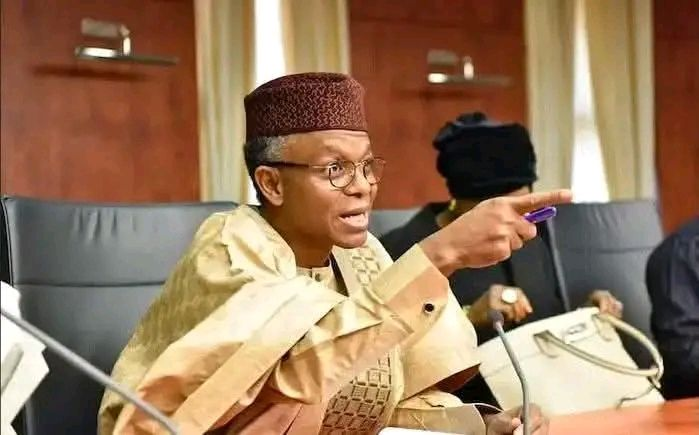
Nigeria’s former Kaduna State governor, Nasir Ahmad El-Rufai, has publicly challenged the legitimacy of an ongoing corruption investigation by the Independent Corrupt Practices and Other Related Offences Commission (ICPC), declaring that the probe is politically motivated and insisting that he will only respond to allegations before a court of law.
The controversy centres on an extensive investigation into alleged financial misconduct during El-Rufai’s tenure as governor of Kaduna State between 2015 and 2023. The anti-corruption commission launched the probe following petitions accusing the former governor and officials of his administration of financial irregularities involving public funds, procurement procedures, loans obtained by the state government and transfers from government accounts.
The ICPC confirmed that El-Rufai has been in its custody since February 19, 2026, after he was released by the Economic and Financial Crimes Commission (EFCC), which had earlier questioned him over related allegations. The transfer from one anti-graft agency to another intensified public attention on the case and highlighted the scale of the investigations surrounding the former governor’s administration.
According to documents filed before the Federal Capital Territory High Court in Abuja, El-Rufai wrote two statements to ICPC investigators on February 19 and 20 while in custody. In those statements, prepared in the presence of his lawyer Ubong Akpan, he declined to answer questions from investigators, stating that he was exercising his constitutional right to remain silent.
In the same statements, he argued that the investigation was politically driven and connected to his affiliation with the African Democratic Congress, a party he described as the only surviving opposition platform in Nigeria. He maintained that the appropriate forum to determine the validity of the allegations against him was a court of law rather than an investigative interrogation.
“I will address any allegations against me only in court,” he said in one of the written statements submitted to investigators.
The legal dispute intensified after ICPC operatives executed a search warrant at El-Rufai’s residence located at 12 Mambilla Street in the Asokoro district of Abuja on February 19. The search was carried out while the former governor remained in custody and was witnessed by members of his family, including his wife Hadiza and his son Mohammed.
According to the anti-corruption agency, the operation was part of its investigation into alleged corruption during his administration and resulted in the seizure of electronic devices and documents from the residence. The commission later stated that some of the materials recovered were considered sensitive security documents, while other equipment allegedly had the capability to intercept communications.
The commission further claimed that the former governor declined to grant consent for forensic examination of some of the electronic devices recovered during the search.
El-Rufai’s legal team strongly criticised the search, describing it as unlawful and a violation of his fundamental rights. His lawyer argued that the operation did not follow proper legal procedures and therefore should be declared invalid by the court.
As a result, the former governor filed a lawsuit at the Federal Capital Territory High Court challenging the legality of the search and the circumstances surrounding his detention. In the suit, he asked the court to declare the actions of the anti-graft agencies unconstitutional and demanded compensation reportedly amounting to one billion naira for alleged violations of his rights.
The ICPC has rejected those claims and insists that its actions are lawful and consistent with its statutory mandate to investigate corruption and abuse of office. In its counter-affidavit filed before the court, the commission explained that it received formal petitions accusing the former governor and some officials of his administration of financial misconduct during the eight years he governed Kaduna State.
The commission said the petition prompted preliminary investigations that included obtaining financial records from banks and government institutions, reviewing loan agreements and examining transactions involving government accounts.
One aspect of the investigation reportedly involves scrutiny of Kaduna State’s borrowing profile and the management of domestic and foreign loans obtained during El-Rufai’s administration. Investigators have also examined transactions linked to a government revenue account where debit card withdrawals reportedly totalled more than ₦721 million.
The corruption probe is also connected to earlier allegations raised by lawmakers and activists accusing the former governor’s administration of financial improprieties involving hundreds of billions of naira in public funds.
In addition to the corruption investigation, El-Rufai has also faced scrutiny over separate allegations relating to the interception of communications belonging to Nigeria’s National Security Adviser, Nuhu Ribadu. The allegations were linked to cybercrime provisions under Nigerian law and were cited as part of the broader legal disputes surrounding the former governor.
The unfolding investigation has triggered political reactions in Kaduna and beyond. Some youth groups and political supporters have staged demonstrations calling for El-Rufai’s release and accusing authorities of targeting opposition figures.
However, the ICPC maintains that the detention is lawful and necessary to conclude the investigation before any charges are formally filed. The agency has stated that once the investigation is completed and sufficient evidence is established, the former governor will be arraigned before a competent court where the allegations can be tested legally.
Stone Reporters note that the case has become one of the most politically sensitive corruption investigations in Nigeria in recent years. El-Rufai remains a prominent figure in national politics, having served as Minister of the Federal Capital Territory under former President Olusegun Obasanjo before his two-term tenure as governor of Kaduna State.
His administration was widely known for aggressive reforms in education, infrastructure and civil service restructuring, but it also attracted criticism from political opponents and labour groups over governance decisions.
As legal proceedings continue in Abuja, the case is expected to determine both the legality of the search carried out at El-Rufai’s residence and the future direction of the corruption investigation. For now, the former governor has made his position clear: he considers the probe politically motivated and insists that any allegations against him must ultimately be decided by the courts.
📩 Stone Reporters News | 🌍 stonereportersnews.com
✉️ info@stonereportersnews.com | 📘 Facebook: Stone Reporters | 🐦 X (Twitter): @StoneReportNew | 📸 Instagram: @stonereportersnews
Add comment
Comments