

Reported by: Ijeoma G | Edited by: Gabriel Osa
Two months into 2026, international concern has grown sharply over militant violence in Nigeria that human rights advocates and foreign lawmakers describe as religiously motivated, with members of the U.S. Congress urging the Nigerian government under President Bola Tinubu to do more to protect Christian communities amid statements and attacks attributed to extremists linked to Islamic State West Africa Province (ISWAP).
The debate intensified after reports emerged that ISWAP and allied militant factions carried out a series of deadly assaults targeting largely Christian rural communities in Adamawa State and other parts of northern and central Nigeria in late 2025. In several incidents, militants are alleged to have burned homes, killed dozens of civilians, and issued ultimatums demanding that Christians either convert to Islam, pay a so-called jizyah tax, or face death — an ultimatum widely shared on social media and reported by security analysts.
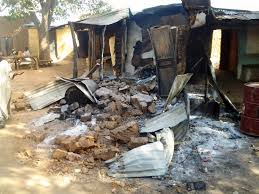
The incidents culminated in coordinated militant attacks over the Christmas and New Year period that killed scores of villagers in rural settlements such as Timboa, Mondag and Higa in Adamawa State. In one of those attacks, ISWAP fighters are said to have entered a predominantly Christian village, torched about 50 homes and publicly communicated that residents who refused conversion or jizyah payment were “legitimate targets,” declaring they would “spare their blood” only if such demands were met.
In early March 2026, Representative Riley M. Moore, a U.S. lawmaker from West Virginia, publicly condemned the violence and specifically highlighted the “convert or die” messaging attributed to the militants. In posts on social media platform X, Moore described the statements and attacks as clear evidence that Christians in Nigeria are being targeted for their faith and urged the Nigerian government to increase efforts to protect vulnerable communities. He said that “ISIS-West Africa is slaughtering Christians and telling other Christians they must convert or die,” and stressed that increased American support to Nigeria should be tied to stronger protective action by Abuja.
Moore’s criticisms reflect broader discussions within the U.S. government over how to respond to violence against religious minorities in Nigeria. In late 2025, he introduced a resolution in the U.S. House of Representatives condemning the ongoing persecution of Christians in Nigeria and supporting formal U.S. diplomatic measures following the designation of Nigeria as a “Country of Particular Concern” for religious freedom violations. The resolution called for coordinated action to defend religious freedom and protect faithful communities challenged by extremist violence.
Other U.S. lawmakers, including Representative Chris Smith, have previously taken similar positions, urging stronger measures to address attacks attributed not only to jihadist insurgents but also to other armed militant and militia groups operating in Nigeria’s Middle Belt and northern regions. A congressional hearing in November 2025 heard testimonies from researchers and rights advocates who called for bilateral efforts to improve protection for civilians, highlighting debates over whether U.S. assistance should be conditioned on improved security outcomes for at-risk communities.
The emerging narrative around religiously linked violence has also gained traction among international advocacy groups that track religious freedom and persecution worldwide. Open Doors’ World Watch List, for example, ranked Nigeria among the countries where Christians face severe challenges, reflecting years of attacks on villages, places of worship and farming communities across multiple states — though such assessments aggregate violence caused by a range of armed groups, not all of which are motivated purely by religion.
Nigerian officials have consistently pushed back against characterisations that the country is failing to protect Christians specifically, insisting that insecurity is multi-faceted and affects all communities, including Muslims and Christians alike. Abuja has argued that insurgency, banditry, communal conflict and other criminal violence reflect overlapping security threats that require comprehensive responses rather than framing them solely as religious persecution.
Security analysts note, however, that there can be distinct tactical motivations for some extremist groups such as ISWAP or affiliates that adopt ideological frameworks aimed at undermining communities perceived as hostile or resistant to their influence. These dynamics have complicated Nigeria’s counter-insurgency efforts, which combine military operations, intelligence gathering and community engagement.
U.S. diplomatic pressure and public statements by members of Congress have added an international dimension to Nigeria’s internal security debate. Advocates of stronger action argue that targeted violence against any group — whether religious or otherwise — demands accountability and effective protection of civilians, while critics of external commentary caution that nuanced understanding of Nigeria’s complex security landscape is essential to avoid inflaming existing tensions.
For communities in northeastern and central Nigeria affected by militant attacks, the ongoing international focus highlights both the severity of the threats they face and the challenges of balancing domestic sovereignty with international concern. Whether the U.S. and Nigerian governments will deepen cooperation on strategies to protect vulnerable communities, or how future diplomatic engagement will evolve, remains a subject of active discussion among policymakers and analysts.
📩 Stone Reporters News | 🌍 stonereportersnews.com
✉️ info@stonereportersnews.com | 📘 Facebook: Stone Reporters | 🐦 X (Twitter): @StoneReportNew | 📸 Instagram: @stonereportersnews
Add comment
Comments