

Reported by: Ijeoma G | Edited by: Gabriel Osa
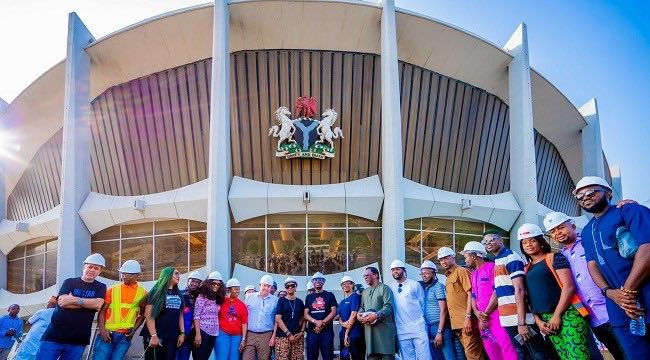
The Economic and Financial Crimes Commission (EFCC) has officially handed over ₦279 million in recovered public funds to the management of the Wole Soyinka Centre for Culture and the Creative Arts in Lagos, marking a significant restitution to an institution for which funds were previously misappropriated. The transfer formed part of the anti-graft agency’s ongoing efforts to ensure that stolen public resources are returned to their rightful owners and used for public benefit.
The ceremony took place on Friday, March 6, 2026, at the EFCC’s Lagos Zonal Directorate 2 in Ikoyi, where the recovered money was formally handed over to representatives of the Centre, formerly known as the National Theatre. The restitution follows a long-running case that began with a 2009 petition filed by Kabir Yusuf, the former General Manager and Chief Executive Officer of the National Theatre, against individuals accused of diverting funds allocated to the institution.
According to EFCC statements, the petition alleged that a contract valued at more than ₦299 million had been awarded through the Ministry of Tourism, Culture and National Orientation to a contractor for the construction of gates, sand filling and reclamation works at the Theatre. Investigations by the EFCC revealed that an acting General Manager authorised payments far in excess of the contract sum, with only a small portion of the work executed. The commission subsequently secured a court order and recovered ₦279 million from the defendant on behalf of the complainant.
At the handover event, EFCC Executive Chairman Ola Olukoyede was represented by Bawa Usman Kaltungo, Acting Zonal Director of the Lagos command. In his remarks, Kaltungo emphasised the commission’s determination to ensure that funds recovered from corruption are redirected to their proper purposes. He warned that the EFCC would monitor the utilisation of the returned funds and periodically evaluate progress on projects funded with the restitution. “We cannot recover this money for you and then have it used for purposes other than what it is meant for,” he stated, underscoring the agency’s commitment to accountability and transparency in public spending.
The representative noted that the EFCC would conduct periodic visits to oversee the progress of work financed with the restored resources, effectively placing an ongoing oversight mechanism on how the funds are spent. This approach aligns with broader efforts by the commission to reinforce public confidence in anti-corruption interventions and demonstrate that recovered assets can be tracked to their eventual, purposeful use.
Receiving the funds on behalf of the Centre, Jatto Kabiru, Head of Finance and Accounts, expressed gratitude to the EFCC for what he described as a significant recovery that would support the Centre’s ongoing mission. He assured officials that the money would be used judiciously to advance cultural, artistic and educational initiatives, positioning the Centre as a vibrant hub for Nigeria’s arts community. Kabiru’s remarks reflected the determination of the Centre’s leadership to maximise the impact of the restitution on programmes that nurture local talent and promote Nigeria’s cultural heritage.
The Centre, which underwent an extensive N68 billion restoration led by the Central Bank of Nigeria through the Bankers’ Committee, reopened in 2024 to bolster Nigeria’s cultural and creative economy. It serves as a flagship institution for the arts, hosting performances, exhibitions, training workshops and public engagements that showcase Nigerian creativity. The return of funds recovered from corruption bolsters its financial base at a time when cultural institutions seek sustainable support to expand programming and enhance creative ecosystems.
The case underlying the restitution is part of a broader pattern of EFCC actions targeting the recovery of misappropriated public finances originating from various levels of government and public agencies. In recent years, the anti-graft agency has pursued multiple high-profile recoveries and handed them over to affected institutions, including educational bodies, public agencies and private individuals victimised by fraud. Observers say such restitutions help strengthen institutional confidence and demonstrate the value of persistent anti-corruption enforcement.
Civil society groups and anti-corruption advocates have welcomed the development, arguing that the restitution of misappropriated public funds to cultural and educational institutions enhances community trust and reinforces the rule of law. They note that recovered funds, when properly managed, can significantly support programmes that foster social development, creative sector growth and public engagement.
While the EFCC continues to pursue other cases involving alleged corruption and financial misconduct, the transfer of ₦279 million to the Wole Soyinka Centre for Culture and the Creative Arts stands as a high-profile example of restitutive justice that channels the outcomes of anti-graft efforts into tangible community benefit.
📩 Stone Reporters News | 🌍 stonereportersnews.com
✉️ info@stonereportersnews.com | 📘 Facebook: Stone Reporters | 🐦 X (Twitter): @StoneReportNew | 📸 Instagram: @stonereportersnews
Add comment
Comments