

Reported By Mary Udezue | Edited by: Gabriel Osa
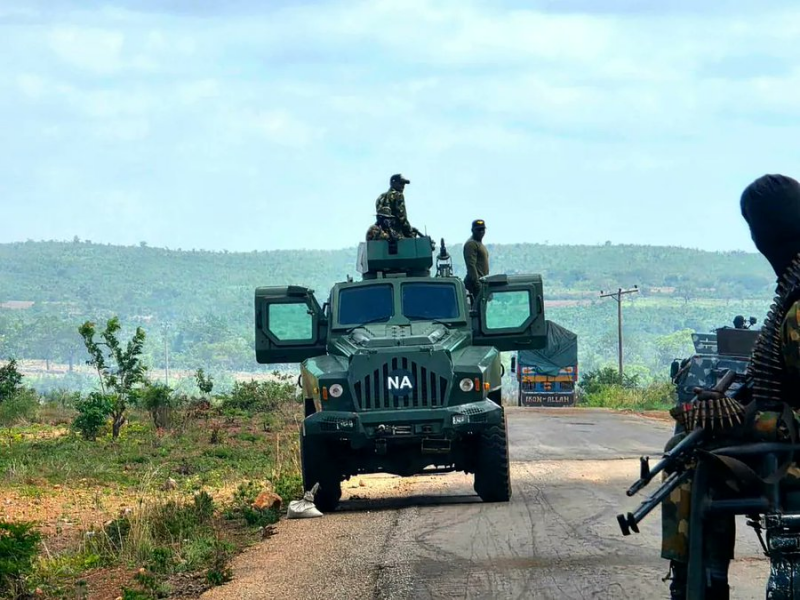
In a major security development in north-western Nigeria, troops of the Nigerian Army engaged and killed at least 45 suspected armed bandits during a fierce gunfight in Katsina State on March 6, 2026. The operation, which followed credible intelligence about the movement of a large bandit group in the Danmusa area, also saw the tragic deaths of three Nigerian soldiers, including a commissioned officer.
The confrontation occurred after a contingent of bandits — riding on motorcycles and heavily armed with rifles — was tracked moving through rural corridors linking Musawa and Danmusa Local Government Areas. Security officials said the criminals were believed to be planning attacks on communities after a failed cattle rustling attempt in Alhazawa Village in Musawa LGA the previous day. Local vigilantes and repentant former bandits had reportedly repelled that earlier raid, killed several attackers and recovered stolen livestock.
Military units assigned to the region’s counter-banditry operations intercepted the larger armed group as it advanced toward Danmusa, prompting a prolonged gun battle between the troops and the bandits. The military, using coordinated combat tactics and superior firepower, was able to repel the attackers and neutralise dozens of them during the intense exchange of fire. Security sources confirmed that, by the end of the operation, 45 suspects were killed.
Among those killed were two senior commanders within the criminal network: Kachallah Alti and another top figure identified by intelligence as Damale. Alti was described by security analysts as a second-in-command under notorious bandit leader Adamu Alieru. Alieru — a long-sought extremist and bandit boss — has for years been linked to kidnappings, cattle rustling, and coordinated attacks across Katsina, Zamfara and neighbouring states. Alti’s operational role reportedly included coordinating high-profile raids and logistics for the criminal network.
Babandai Alieru, another member of the Alieru faction, was also reported killed during the battle, which the Defence Headquarters later described as a significant blow to the organisation’s command structure. Intelligence officials said the deaths of Alti and associates may disrupt bandit operations in the short term, though other factions remain active across the region.
Despite the tactical victory, the engagement came at a heavy cost for the Nigerian military. Credible sources confirmed that three soldiers lost their lives in the battle, including Captain Paul Hassan, who was killed while directing troops during the engagement. Two other soldiers — unnamed in official briefings — also died in the line of duty during the gunfight. The deaths underscore the risks faced by security forces operating in difficult terrain against highly mobile and well-armed criminal groups.
Katsina state authorities mourned the fallen soldiers, describing them as heroes whose sacrifice helped prevent a wider assault on vulnerable rural communities. The state government extended condolences to the families of the deceased soldiers and pledged continued support for security operations across the region.
The North-West region of Nigeria has for more than a decade been gripped by an entrenched banditry crisis involving armed groups that carry out kidnappings, cattle rustling, extortion and violent raids on villages. These criminals often exploit dense forests, poor infrastructure and limited security presence to avoid detection, enabling them to strike and withdraw rapidly. Communities in Katsina, Zamfara, Sokoto and Niger states have frequently reported mass kidnappings, killings and property destruction.
The Nigerian military has responded with intelligence-led operations, joint patrols with police and civil defence agencies, air surveillance missions and coordinated assaults on forest hideouts believed to shelter criminal groups. The recent clash in the Danmusa axis was widely viewed by security analysts as part of a broader strategy to dismantle the leadership and operational capacity of bandit networks rather than merely engage in reactive counterattacks.
Katsina’s Commissioner for Internal Security and Home Affairs described the operation as a reflection of the government’s commitment to protecting lives and property. He emphasised that youth recruitment into criminality and the proliferation of illicit firearms remain among the key challenges in the fight against banditry. Authorities reiterated that sustained pressure, community intelligence and coordinated inter-agency operations are essential to reducing violence in the region.
Local residents in Katsina expressed cautious optimism following reports of the military’s success. Many rural dwellers said they hoped the operation’s outcome would deter future attacks and restore a degree of normalcy to communities that have suffered prolonged insecurity. However, some also voiced concern about the possibility of retaliatory strikes by surviving bandit elements regrouping in neighbouring forests, a pattern observed in previous military engagements.
Security experts note that the loss of high-ranking bandit commanders can temporarily disrupt coordination within criminal networks, but that long-term stability requires addressing underlying social and economic grievances that drive bandit recruitment. They argue that community empowerment, improved rural infrastructure, job creation and stronger policing structures are necessary complements to military interventions.
Following the gun battle, Nigerian troops reportedly intensified patrols in and around Danmusa, Musawa and adjacent areas to prevent surviving bandits from reorganising and launching new attacks. Intelligence units are also actively tracking movements of known criminal figures, while security agencies continue to encourage community cooperation in providing timely, actionable information.
The Defence Headquarters and the Nigerian Army are expected to release additional operational details in the coming days as investigations into the encounter are finalised. Meanwhile, the military’s emphasis on proactive strikes against criminal leadership networks marks a continued shift toward offensive counter-banditry strategies.
📩 Stone Reporters News | 🌍 stonereportersnews.com
✉️ info@stonereportersnews.com | 📘 Facebook: Stone Reporters | 🐦 X (Twitter): @StoneReportNew | 📸 Instagram: @stonereportersnews
Add comment
Comments