

Reported by: Ijeoma G | Edited by: Oravbiere Osayomore Promise.
ABUJA, Nigeria — Isapa Community in Ekiti Local Government Area, Kwara State was the scene of mounting insecurity last November and again in the months that followed, as armed criminal gangs — widely referred to locally as bandits — carried out a series of violent incursions that shook the rural Middle Belt region and highlighted a broader spike in violent crime across the state. What began as a sudden attempt to abduct residents in late 2025 has evolved into a cycle of raids, kidnappings, ransom demands, and community resistance that continues to shape life in Isapa and surrounding settlements.
On the evening of Monday, November 25, 2025, gunmen on motorcycles stormed Isapa, a farming community near Eruku in Kwara State. Eyewitness accounts and multiple local reports confirmed that the attackers shot sporadically, moving from street to street as residents fled in panic. By the end of that assault, at least 11 people had been abducted, including women, children, and a pregnant woman, according to official and community sources. Seven members of a single family were reportedly among those taken during the raid. The incident came only 48 hours after another bandit attack in neighbouring Eruku, where church worshippers had been abducted in a violent church raid, reflecting an alarming frequency of such events in the region.
The victims captured in Isapa included toddlers, nursing mothers, and young adults, underscoring the indiscriminate nature of the violence. Residents described the attack as one of the worst in recent memory, leaving families fearful of future incursions and disrupting social life in the area. Security officials said patrols were launched immediately and forested areas linking Isapa, Eruku, and neighbouring villages were being combed to locate the abducted residents.
This was not an isolated incident. Just days after the initial Isapa raid, the abductors issued a one-week ultimatum to the community, demanding a N300 million ransom for the release of the ten people taken during the attack. The kidnappers threatened that failure to comply could lead to further violence or harm against the captives and the broader community. Such demands are consistent with patterns of banditry across parts of Nigeria, where criminal gangs often use kidnappings to extract ransom payments from families or communities.
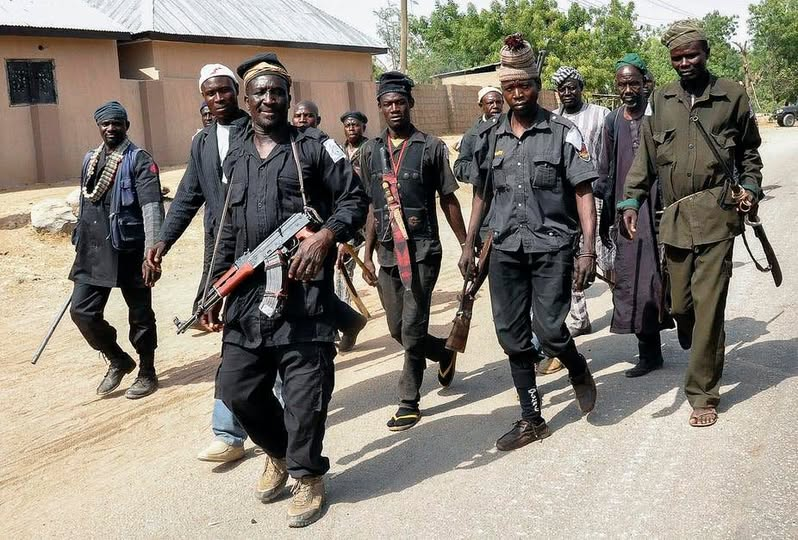
Complicating the situation further, local news reports from the same period detailed another bandit raid on Isapa where attackers intended to abduct residents but were reportedly repelled by local vigilance groups before they could seize anyone. In that engagement, gunfire erupted between the gunmen and community defenders — described in local accounts as vigilantes or local hunters — who were on standby and sounded a distress call to state authorities. Soldiers stationed in nearby Eruku were mobilised in response, but by the time they arrived, the attackers had already retreated into surrounding bushland. Community representatives expressed relief that no residents were taken in that particular clash.
The juxtaposition of these events — successful abductions in one instance and a foiled raid in another — highlights the unpredictable security environment in rural Kwara. Residents and local leaders continue to rely heavily on informal community defence arrangements, often comprised of volunteers or traditional hunters, in the absence of a persistent formal security presence.
The crisis in Isapa unfolded against a backdrop of escalating violence across Kwara State more broadly. Political leaders from the Peoples Democratic Party (PDP) reported that 507 people had been killed and 377 abducted by suspected bandits in the state within a ten-month period through late 2025, illustrating the scale of the security challenge facing the region. These figures included both rural civilians and travellers, and they sparked urgent calls for government action.
Higher-level security operations in the state have seen sporadic breakthroughs and setbacks. Local authorities have been conducting joint patrols with vigilante units, and last month, police announced the arrest of a suspected bandit recruit in Kaiama Local Government Area, signalling ongoing efforts to disrupt recruitment networks feeding criminal groups active in the region. The suspect is reported to have been en route to join a group believed to be affiliated with larger extremist factions before his capture.
Yet incidents continue to occur. In early 2026, other parts of Kwara — particularly the southern senatorial district — recorded fresh kidnappings and increased patrol activity, suggesting that while some operations have succeeded in rescuing captives, the overall threat persists.
Local leaders and security analysts say the problem is multifaceted. The forested and remote terrain around Ekiti Local Government Area provides cover that criminal groups exploit to plan and launch attacks. When victims are taken, their families and communities find themselves under pressure to meet ransom demands that can reach hundreds of millions of naira — a crippling burden for rural populations. Besides financial extortion, the psychological toll of repeated attacks has fostered fear and eroded community cohesion in some areas.
Security experts note that while community defence groups have helped in certain instances — such as repelling raids — they are not a substitute for a sustained, coordinated response by state and federal security agencies. Efforts so far have included increased patrols, enhanced surveillance, and the deployment of troops to hotspots. Still, many residents argue that more comprehensive strategies are needed to dismantle the criminal networks operating in Kwara and neighbouring states.
For the people of Isapa, the human cost of these security failures has been starkly visible. Families continue to wait for news of loved ones taken in late 2025, while others reinforce their homes and livelihoods against the threat of future attacks. Community vigils and local defence patrols have become a part of everyday life, reflecting a new normal in a state long considered relatively peaceful compared with Nigeria’s more notorious conflict zones.
As Kwara enters 2026, the overall pattern of violent crime in the state — from kidnappings to massacres and ransom demands — highlights an escalating security crisis that authorities at all levels are striving to address. For residents of Isapa and other affected communities, the hope remains that greater coordination and sustained security interventions will finally bring lasting protection and a return to normalcy.
📩 Stone Reporters News | 🌍 stonereportersnews.com
✉️ info@stonereportersnews.com | 📘 Facebook: Stone Reporters News | 🐦 X (Twitter): @StoneReportNew | 📸 Instagram: @stonereportersnews
Add comment
Comments