

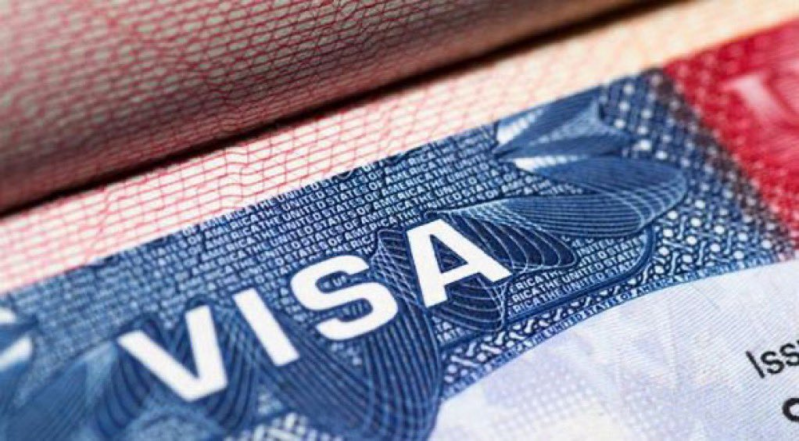
US Begins Enforcing Visa Bans on Individuals Involved in Religious Persecution
The United States has formally begun enforcing visa restrictions targeting individuals accused of involvement in religious persecution, marking a significant escalation in Washington’s efforts to promote global religious freedom and impose consequences on violators.
The policy, first announced in December 2025 by US Secretary of State Marco Rubio, is now actively being implemented, according to confirmation from senior US officials. The move allows the US government to deny entry to foreign nationals found to have “directed, authorised, funded, significantly supported, or carried out” violations of religious freedom.
Mark Walker, the US Principal Advisor for Global Religious Freedom, disclosed that enforcement is already underway, stressing that individuals linked to persecution will face strict scrutiny and exclusion from entering the United States. He made clear that the policy is not symbolic but operational, stating that those responsible for such violations “are not welcome in America.”
The visa ban framework is rooted in existing US immigration law, particularly provisions within the Immigration and Nationality Act, which allow the government to declare individuals inadmissible on grounds tied to human rights abuses and security concerns. The current enforcement expands the use of these powers specifically to address violations of religious liberty, a priority area in US foreign policy.
Stone Reporters note that this development comes amid growing international concern over rising cases of religious persecution in several regions, including parts of Africa, the Middle East, and Asia. Reports from advocacy groups and global watchdogs have consistently highlighted attacks on religious minorities, restrictions on worship, and targeted violence by both state and non-state actors.
While the US government has not publicly released a comprehensive list of individuals affected by the visa bans, officials indicated that enforcement will apply globally and not be limited to any single country. However, separate reporting suggests that Nigeria has featured prominently in discussions around the policy, given longstanding concerns about violence affecting religious communities in parts of the country.
The visa restriction policy operates alongside broader US immigration controls introduced in recent months, including expanded screening measures and travel restrictions affecting multiple countries. In January 2026, the US implemented sweeping visa limitations on nationals from dozens of countries as part of wider security and immigration reforms, reflecting a broader tightening of entry requirements.
Unlike those broader nationality-based restrictions, however, the religious persecution visa bans are targeted at individuals rather than entire populations. This distinction is seen by analysts as an attempt to directly penalise alleged perpetrators without imposing blanket sanctions on countries or communities.
Supporters of the policy argue that it sends a strong message that violations of religious freedom carry international consequences. Legislative efforts in Washington have also sought to reinforce the approach. Proposed laws, such as the “Banning Perpetrators of Religious Persecution Act,” aim to formalise and expand visa restrictions against individuals linked to religious oppression, including both government officials and non-state actors.
Proponents within the US political system have pointed to cases of violence against religious minorities globally as justification for the move, arguing that the United States should not serve as a destination for individuals implicated in such acts. They maintain that visa bans are a non-military tool that can exert pressure while avoiding direct intervention.
However, the policy is also likely to attract scrutiny and debate internationally. Critics of similar visa restriction measures in the past have argued that such actions can be politically selective, difficult to verify in terms of evidence, and potentially harmful to diplomatic relations. There are also concerns about transparency, particularly if the identities of sanctioned individuals are not publicly disclosed.
In practice, enforcement will depend heavily on intelligence gathering, diplomatic reporting, and inter-agency coordination within the US government. Determining responsibility for religious persecution—especially in complex conflict environments—can be challenging, and the credibility of the policy will hinge on the accuracy and fairness of those determinations.
The move aligns with a broader trend in US foreign policy that increasingly uses visa bans and targeted sanctions to address human rights issues. Similar mechanisms have been applied in cases involving corruption, election interference, and other forms of abuse, reflecting a strategy that prioritises individual accountability.
For affected individuals, the implications are immediate and significant. Visa denial not only prevents travel to the United States but can also carry reputational consequences, as such restrictions often signal international censure. In some cases, visa bans may be accompanied by additional sanctions, including asset freezes or travel restrictions imposed by allied countries.
The enforcement of these visa bans is expected to continue in phases, with officials indicating that more individuals could be subjected to restrictions as investigations and reviews progress. The US State Department has also suggested that scrutiny will be ongoing, meaning that new cases of alleged religious persecution could trigger further action.
As the policy takes effect, attention is likely to focus on how broadly it is applied, which countries or individuals are most affected, and whether it leads to measurable changes in behaviour by those accused of religious rights violations. For now, the United States has signalled a clear intent: participation in or support for religious persecution will carry consequences that extend beyond national borders.
📩 Stone Reporters News | 🌍 stonereportersnews.com
✉️ info@stonereportersnews.com | 📘 Facebook: Stone Reporters News | 🐦 X (Twitter): @StoneReportNew | 📸 Instagram: @stonereportersnews
Reported by: Ijeoma G | Edited by: Gabriel Osa
Add comment
Comments