

Atiku Condemns Fresh Terror Attacks, Backs International Pressure as Nigeria’s Security Crisis Deepens
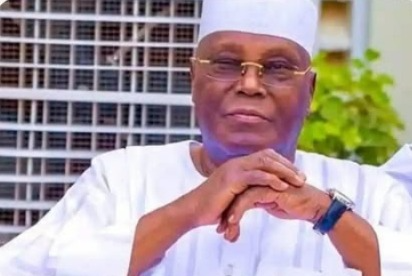
Former Nigerian Vice President Atiku Abubakar has sharply condemned the renewed wave of terrorist violence in Nigeria, warning that the country is sliding into a more dangerous phase of insecurity and arguing that the federal government’s response has fallen short of what the moment demands. His latest intervention came amid fresh attacks in the northeast and wider concern over Nigeria’s deteriorating security climate, with Atiku framing the violence as evidence that the state is losing ground against insurgents and other armed groups. In recent statements, he has said the resurgence of attacks risks eroding public confidence in government and has urged an urgent review of national security strategy.
Atiku’s position has been shaped by a series of recent incidents that have intensified alarm across the country. On April 9, Brigadier General Oseni Omoh Braimah and other soldiers were killed when suspected insurgents attacked a military base in Benisheikh, Borno State, according to the Associated Press and official Nigerian statements. That assault followed renewed concern about the strength and persistence of jihadist groups operating in northern Nigeria, especially Boko Haram and Islamic State West Africa Province, even after years of military campaigns intended to degrade them.
Weeks earlier, Atiku had reacted to the March 17 Maiduguri bombings with one of his most direct critiques yet of the Tinubu administration’s handling of insecurity. In that statement, reported by Punch, he said he was “very sad” about the latest terrorist attacks in Borno and warned that the resurgence of terrorism could undermine citizens’ confidence in the government’s ability to protect them. He said the increased killing of soldiers and civilians was reviving memories of the period when Boko Haram was at its most active and argued that Nigerians wanted results rather than official rhetoric. He also said the government should review its strategies, while commending the sacrifices of frontline troops.
The political significance of Atiku’s latest comments lies not only in his criticism of the government, but also in the way he has situated Nigeria’s crisis within a broader international context. A search result pointing to a post on his official Facebook page indicates that Atiku argued the pattern of attacks “validates foreign voices, including President Trump,” who have pressed Nigeria to confront terrorism more decisively. Because the full post could not be independently opened through the browsing tool, that wording should be treated cautiously. But taken together with other recent statements and reporting, the available record indicates that Atiku has been broadly supportive of stronger international pressure and external backing for Nigeria’s counterterrorism efforts, especially where such pressure is framed as a response to the state’s inability to halt repeated killings.
That argument has gained traction at a moment of rising foreign scrutiny. Reuters reported on April 9 that the United States expanded its Nigeria travel warning and authorised the departure of non-emergency U.S. government employees and family members from Abuja because of worsening security conditions. The move did not amount to a declaration that Abuja itself was under immediate attack, but it underscored the extent to which Nigeria’s insecurity is now shaping international risk calculations. Atiku’s camp has linked such developments to what it describes as drift at the centre of government, arguing that outside alarm reflects a crisis already visible to ordinary Nigerians.
The reference to Donald Trump is also rooted in a wider debate that has been building for months over foreign responses to killings in Nigeria. Reports from late 2025 showed that Trump issued unusually hard-edged rhetoric on terrorism in Nigeria and the wider violence affecting Christian and Muslim communities, while some Nigerian opposition figures and activists argued that international warnings should not be dismissed merely because they are politically uncomfortable. Reuters also reported in November 2025 that Nigerian officials welcomed U.S. assistance against Islamist insurgents, even as the politics around that assistance remained sensitive. Atiku’s stance appears to sit within that space: critical of the Tinubu government, but receptive to external pressure or support if it translates into stronger action against armed groups.
The backdrop to all this is a security emergency that remains multi-layered. Nigeria was ranked the fourth most affected country in the 2026 Global Terrorism Index, with the Institute for Economics and Peace’s report showing that terrorism deaths in Nigeria rose sharply in 2025. The rise was tied not only to Boko Haram and ISWAP, but also to expanding militant activity in the wider Sahel belt and the growing complexity of violence involving criminal armed groups, local militias and insurgent factions. That ranking has become a political flashpoint because it cuts against official claims of steady progress and reinforces opposition criticism that the government is reacting to attacks rather than preventing them.
At the same time, the Nigerian state has been trying to demonstrate institutional resolve. The Associated Press reported on April 11 that a court in Abuja convicted more than 300 terrorism suspects in a mass trial over four days, with 386 convictions secured out of 508 cases presented. The attorney general said the proceedings reflected the government’s determination to bring terrorists to justice. That judicial push is significant, because one long-running criticism of Nigeria’s counterterrorism framework has been the gap between arrests, detentions and final convictions. Yet the timing also highlights the contradiction Atiku is pointing to: even as the state is prosecuting suspects in large numbers, fresh attacks continue to occur.
Atiku’s broader case is that insecurity has moved beyond being a routine policy failure and now threatens the legitimacy of governance itself. In another recent statement, relayed by Vanguard, his media office said Nigeria was grappling with worsening insecurity, rising terrorist attacks and growing international concern, and described what it saw as presidential detachment as alarming and indefensible. That language reflects a strategy of tying every fresh security incident to a wider opposition narrative: that the Tinubu administration is too politically preoccupied and insufficiently focused on protecting lives.
Whether that critique changes policy is another matter. The presidency has continued to insist that the government remains committed to defeating terrorism, while military and intelligence agencies have stepped up operations and prosecutions. But Atiku’s latest intervention is politically potent because it merges three lines of pressure into one argument: that the attacks are worsening, that public confidence is eroding, and that even foreign actors now see Nigeria’s insecurity as too serious to ignore. In that sense, his condemnation of terrorism is also an indictment of the state’s present capacity to stop it.
📩 Stone Reporters News | 🌍 stonereportersnews.com
✉️ info@stonereportersnews.com | 📘 Facebook: Stone Reporters News | 🐦 X (Twitter): @StoneReportNew | 📸 Instagram: @stonereportersnews
Reported by: L. Imafidon | Edited by: Gabriel Osa
Add comment
Comments