

Reported by: Ijeoma G | Edited by: Oravbiere Osayomore Promise.
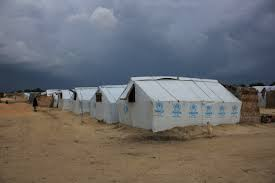
Maiduguri, Nigeria — A religious advocacy group has raised concerns over what it describes as the neglect of more than 5,400 internally displaced Christians in Borno State, northeastern Nigeria, alleging disparities in humanitarian assistance within one of the country’s longest-running displacement crises.
The group made the allegation during recent engagements with civil society stakeholders and humanitarian observers, insisting that affected families continue to experience unequal access to food aid, shelter, healthcare, and reintegration support despite ongoing relief operations across the state. It argued that while large-scale humanitarian interventions are active in Borno, some displaced populations remain underrepresented in official distribution systems.
Borno State remains the epicentre of Nigeria’s insurgency-driven displacement crisis, which has lasted for more than a decade and been driven primarily by the Boko Haram conflict and its splinter groups. The violence has devastated rural communities, particularly in southern Borno, where many farming settlements were destroyed in repeated attacks. The crisis has displaced millions over time, with many still living in formal camps, informal settlements, or host communities.
Humanitarian operations in the state are widely regarded as among the most complex in West Africa. Relief efforts are coordinated through government emergency agencies, international organisations, and local partners working under extremely difficult security conditions. These operations typically involve food distribution, shelter provision, healthcare delivery, water and sanitation support, and protection services for vulnerable groups.
The advocacy group alleged that within this broader humanitarian framework, Christian IDPs face structural disadvantages in accessing aid. It claimed that inconsistencies in registration processes, camp recognition, and distribution mechanisms have left some communities outside formal assistance channels. It also alleged that certain displacement sites hosting Christian populations are less frequently reached during aid distribution cycles.
These claims come amid longstanding debates within Nigeria’s humanitarian sector about equity, access, and coverage gaps in conflict-affected areas. Aid agencies have previously acknowledged that insecurity, difficult terrain, and damaged infrastructure often limit their ability to reach all displaced populations consistently, particularly in remote locations.
The displacement crisis in Borno originated from the Boko Haram insurgency, which has targeted both Muslim and Christian communities over the years. Entire villages have been destroyed, forcing mass migration into urban centres such as Maiduguri, which has hosted multiple waves of displaced populations since the peak of the conflict.
Humanitarian actors have also faced challenges related to camp management and resettlement policies. In recent years, authorities have pursued strategies aimed at closing or consolidating some camps in Maiduguri to encourage returns and reduce long-term dependence on aid. While officials describe this approach as part of recovery efforts, critics argue that it has in some cases increased hardship for vulnerable families who lack safe return options.
The group called for urgent reforms to humanitarian distribution systems, urging authorities and international partners to strengthen monitoring and ensure equitable access to relief materials for all displaced persons regardless of religious or ethnic background. It also demanded greater transparency in beneficiary selection and improved oversight of distribution processes across all displacement sites.
Humanitarian organisations generally maintain that assistance in Borno is based on vulnerability assessments rather than identity or affiliation. However, they also acknowledge that operational constraints in active conflict zones can create gaps in coverage and differences in access between locations, especially where security conditions prevent regular monitoring or delivery.
Observers say the broader displacement situation in northeastern Nigeria remains highly fluid, with many families moving between camps, host communities, and informal settlements depending on security developments and availability of aid. This mobility has made it difficult to maintain accurate records of displaced populations and ensure uniform access to assistance.
Civil society organisations have repeatedly urged stronger coordination between government agencies, humanitarian partners, and local leaders to improve fairness and efficiency in aid distribution. They have also called for independent monitoring mechanisms to address concerns of exclusion and to strengthen accountability within humanitarian operations.
Beyond material needs, protection issues remain a major concern in displacement settings across Borno State. Women, children, and minority groups often face heightened risks in overcrowded camps and informal settlements, while access to education, healthcare, and psychosocial support remains limited for many displaced families.
The latest allegations add to ongoing debates about humanitarian governance in northeastern Nigeria, where questions about equity, transparency, and long-term resettlement continue to shape discussions among stakeholders. Despite years of sustained intervention by both national and international actors, the crisis remains unresolved, with millions still dependent on humanitarian aid.
Stakeholders continue to emphasize that durable solutions will require more than emergency relief, pointing to the need for security stabilization, reconstruction of destroyed communities, and inclusive reintegration policies that address the needs of all affected populations.
As displacement persists, pressure is mounting on authorities and humanitarian actors to ensure that no group is left behind in relief efforts. The advocacy group maintains that addressing perceived inequalities is essential to restoring confidence in humanitarian systems and improving the effectiveness of aid delivery in one of Nigeria’s most affected regions.
📩 Stone Reporters News | 🌍 stonereportersnews.com
✉️ info@stonereportersnews.com | 📘 Facebook: Stone Reporters News | 🐦 X (Twitter): @StoneReportNew | 📸 Instagram: @stonereportersnews
Add comment
Comments