

Reported by: Ijeoma G | Edited by: Oravbiere Osayomore Promise.
A serene churchyard in Ibadan, Oyo State, has drawn renewed historical attention after the discovery and documentation of Commonwealth war graves belonging to World War II soldiers, revealing an unexpected Nigerian connection to one of the most consequential global conflicts in modern history.
The revelation gained public attention after educator Gbénró Adégbolá shared his experience during a visit to the grave of his late mother, Honourable Justice Atinuke Omobonike Ige. While paying his respects at the churchyard, Adégbolá reportedly noticed marked graves belonging to two young Commonwealth pilots who died during the Second World War, turning what was intended as a private family visit into a moment of historical reflection.
The graves are located within adjoining church burial grounds in Ibadan and are believed to belong to two Royal Air Force personnel, Lieutenant Pieter “Fritz” De J. Fritz and Lieutenant B.R. Dimmock. Both men were involved in military aviation operations during World War II, a period when West Africa, including Nigeria, served as a strategic logistical and training corridor for Allied forces.
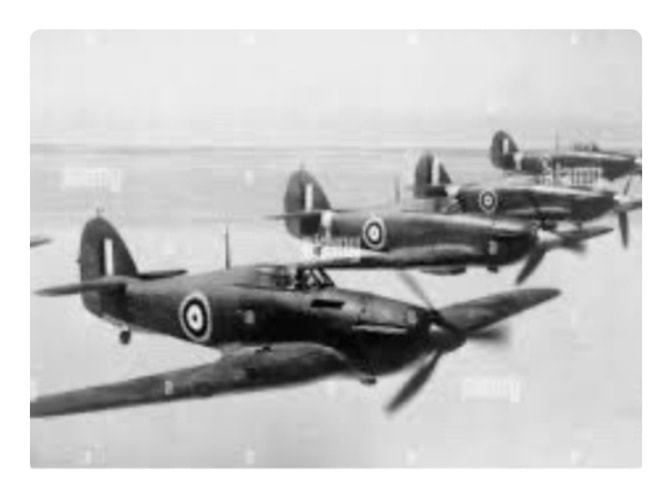
Historical accounts indicate that on May 7, 1941, the two pilots were flying Tomahawk aircraft in formation when they encountered severe tropical weather conditions near Ibadan. The storm reportedly proved fatal, resulting in the crash of both aircraft and the deaths of the pilots. Their burial sites were later established in different parts of the city, reflecting the religious affiliations recorded at the time. One was interred at the Anglican CMS burial ground, while the other was laid to rest at a Catholic seminary cemetery in Oke Are.
The presence of these graves underscores Nigeria’s lesser-known but significant role during World War II, when British colonial territories across Africa were integrated into military supply routes, training programs, and aviation pathways supporting Allied operations across multiple theatres of war. Although combat did not occur on Nigerian soil, the country’s airspace and infrastructure were used extensively for military logistics and training exercises.
Over time, the graves of these foreign servicemen became part of the quiet landscape of Ibadan’s religious and family burial grounds, coexisting alongside local graves without widespread public recognition. According to accounts shared by Adégbolá, the discovery highlighted how global history can remain embedded in local spaces, often unnoticed for generations.
The educator also noted efforts to preserve and restore the graves, one of which had deteriorated significantly before being renovated and re-engraved in granite. The restoration has ensured the long-term legibility of the inscriptions, with conservation work reportedly extending the durability of the memorial for several decades.
The renewed attention to these burial sites has sparked interest among historians and heritage observers, who see them as important reminders of Nigeria’s indirect participation in global wartime events. Commonwealth war graves across West Africa are maintained under international preservation agreements, reflecting the shared historical legacy of former colonial territories and Allied military cooperation during the war.
Historians note that many such graves exist quietly across Nigeria and other West African countries, often within churchyards, military cemeteries, and colonial-era burial grounds. These sites frequently go unnoticed by the public despite their historical significance, serving as silent markers of global conflict far from the European and Pacific battlefronts typically associated with World War II.
In Ibadan, the proximity of the war graves to local family burial plots has further deepened public reflection on the intersection of personal and global history. The juxtaposition of young foreign pilots who died in wartime with local families who passed away decades later has been described by observers as a powerful symbol of shared human memory across time and geography.
The story has also prompted renewed discussions about historical preservation in Nigeria, particularly regarding the maintenance of colonial-era monuments, war graves, and heritage sites. Experts have emphasized the importance of documenting and protecting such locations, as they offer valuable insights into Nigeria’s role in broader international historical narratives.
Adégbolá’s reflections have resonated with many who see the churchyard as more than a burial ground, but as a living archive of interconnected histories. His observation that the site represents a meeting point between memory and global events has been widely shared as a reminder of how history often exists in everyday spaces.
As interest grows, heritage advocates have called for greater awareness and educational efforts to highlight Nigeria’s contributions and experiences during World War II, including the presence of military personnel, support infrastructure, and the enduring physical traces left behind in various parts of the country.
The Ibadan churchyard, now quietly acknowledged as a site of historical significance, stands as a reminder that global events are often preserved not only in archives and museums but also in ordinary community spaces where past and present continue to coexist.
📩 Stone Reporters News | 🌍 stonereportersnews.com
✉️ info@stonereportersnews.com | 📘 Facebook: Stone Reporters News | 🐦 X (Twitter): @StoneReportNew | 📸 Instagram: @stonereportersnews
Add comment
Comments