

Reported by: Ijeoma G | Edited by: Carmen Diego
Nigeria’s Supreme Council for Sharia in Nigeria has rejected as false and misleading viral claims that it directed Muslims to embark on organised prayers for the removal of the Chairman of the Independent National Electoral Commission, Professor Joash Ojo Amupitan, in a development that has added a new layer to the escalating political storm around the country’s electoral umpire. The council said the reports were fabricated, came from anonymous and unofficial sources, and were designed to drag the religious body into partisan political conflict.
In a statement issued in Kaduna on Monday by its Secretary-General, Malam Nafi’u Baba Ahmad, the council said it never at any time issued a directive, statement or call asking Muslims to specifically pray for the removal of the INEC chairman. It described the circulating messages as deliberate misinformation intended to create unnecessary tension and misrepresent the organisation’s position. The group urged the public, especially the Muslim community and the media, to rely only on its recognised official channels for authentic communication.
That denial, however, did not amount to support for Amupitan. On the contrary, the council used the same statement to reaffirm an earlier and separate position that the INEC chairman should either resign or be removed from office. The group said its stance was not based on partisan politics or sectarian mobilisation but on what it called serious concerns over actions and legal positions it believes demonstrate prejudice against Islam and Muslims. In effect, the council drew a distinction between a fabricated prayer directive and its own established public argument that Amupitan is unfit to remain in office.
That distinction is central to understanding the controversy. The viral claim suggested the council had launched a religious campaign around prayer as a political weapon. The council says that is false. But it is equally clear that it is not neutral in the broader argument over Amupitan’s future. Its statement preserved the substance of its criticism while rejecting the method falsely attributed to it. That has made the episode less a simple case of debunking misinformation and more a sign of how rapidly the battle over the INEC chairman is spreading into religious, political and civic spaces.
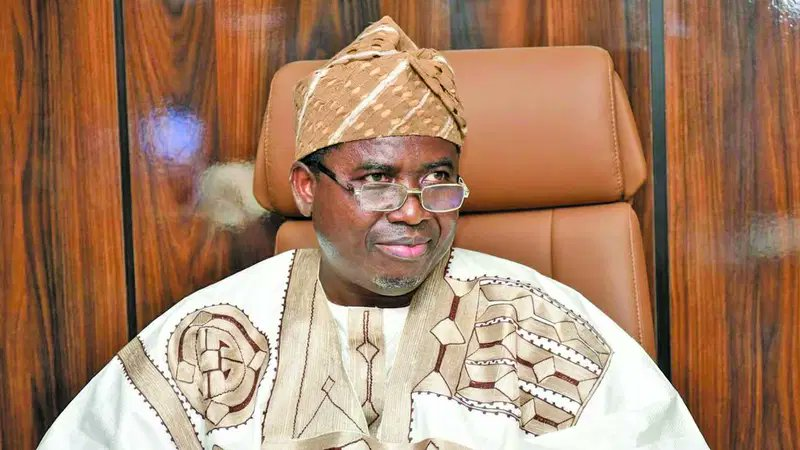
The wider context is important. Amupitan is not a rumoured or proposed chairman; he is the current head of INEC. The commission’s own official profile states that he was sworn in on October 23, 2025 after nomination by President Bola Tinubu and Senate confirmation, succeeding Mahmood Yakubu. That means the controversy is not about who may take over INEC, but about an already serving chairman facing coordinated criticism from several directions less than a year into office.
The latest dispute appears tied to a broader campaign questioning Amupitan’s neutrality. In recent days, ADC lawmakers, public figures and activists have intensified calls for his removal, alleging partisan conduct ahead of the 2027 general elections. The Guardian reported that the House of Representatives caucus of the African Democratic Congress demanded his prosecution and removal, accusing him of bias, linking him to alleged partisan activity on X, and also accusing INEC of interfering in the ADC’s internal leadership dispute. The same report noted that the Sharia Council denied mobilising Muslims against him, showing how the religious-body denial emerged in the middle of a much wider political offensive.
INEC, for its part, has rejected those allegations. In a recent statement reported by Premium Times, the commission said Amupitan does not own or operate any personal X account and has never engaged in partisan commentary or political leaning in either public or private capacity. INEC said cybercriminals and impersonators had been using fake social media accounts in the chairman’s name to spread misinformation and even defraud members of the public. It added that security agencies and cyber-intelligence units were being engaged to identify and prosecute those responsible for the impersonation.
That official rebuttal matters because it frames the present uproar as partly a misinformation war. The Sharia Council’s complaint aligns with that pattern in one important respect: both the council and INEC say fabricated or unofficial social media content is being used to provoke outrage and shape political perception. Yet the two are not on the same side of the substantive dispute. INEC says the chairman is being falsely smeared. The Sharia Council says a specific viral prayer campaign is fake, but still insists Amupitan should go.
What seems to be driving this convergence is a growing attempt by various actors to turn Amupitan into a central political issue before the 2027 cycle fully begins. The ADC’s conflict with INEC is already intense because of the commission’s role in the party’s leadership dispute. Civic groups and political voices have also been weighing in, while INEC has been forced to answer claims about alleged partisan social media posts. In that atmosphere, the false attribution of a prayer directive to the Sharia Council appears to have been potent because it suggested religious mobilisation was joining the anti-Amupitan campaign in an organised form. The council’s denial was therefore both a factual correction and an effort at reputational self-protection.
The council’s wording also reveals the care with which it is trying to position itself. It described itself as a reputable religious organisation committed to justice, equity, moral rectitude and peaceful coexistence. At the same time, it refused to abandon its criticism of the INEC chairman. This balancing act allows it to reject being cast as a partisan mobiliser while continuing to influence a politically charged debate over the credibility of Nigeria’s electoral system.
What this leaves Nigeria with is a controversy operating on two levels at once. On one level, there is a clear misinformation story: the Sharia Council says it did not issue a prayer directive, and that claim should be treated as false. On another level, there is a deeper institutional conflict: the council, some opposition politicians and other public actors are openly questioning whether Amupitan should remain in office, while INEC says allegations against him are rooted in impersonation, manipulation and false digital traces.
The immediate result is that the denial has not reduced pressure on the INEC chairman. It has only clarified one part of the battlefield. The false prayer campaign may have been disowned, but the demand for Amupitan’s exit remains very much alive. In a country where electoral legitimacy is constantly contested and social media can weaponise both fact and fabrication, that distinction may prove crucial in the weeks ahead.
📩 Stone Reporters News | 🌍 stonereportersnews.com
✉️ info@stonereportersnews.com | 📘 Facebook: Stone Reporters News | 🐦 X (Twitter): @StoneReportNew | 📸 Instagram: @stonereportersnews
Add comment
Comments