

Reported by: Oahimire Omone Precious | Edited by: Oravbiere Osayomore Promise.
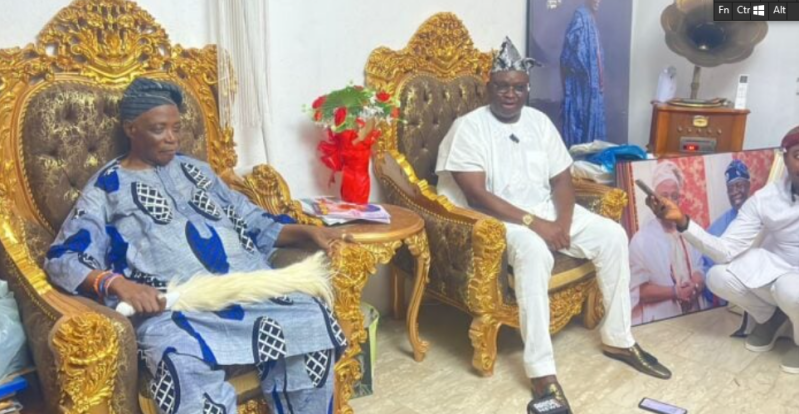
Former Ekiti State Governor, Ayodele Fayose, has visited the Olubadan of Ibadanland, Rashidi Ladoja, at his palace in Ibadan, Oyo State, following controversy sparked by Fayose’s recent claim that there was a plan to remove the traditional ruler.
The visit, which took place on Tuesday, comes days after Fayose publicly alleged that Oyo State Governor Seyi Makinde was plotting to initiate a process that could lead to the removal of the monarch. The allegation, made via social media, generated significant political debate and was quickly dismissed by both the Oyo State Government and the Olubadan-in-Council, who described it as unfounded.
During the palace visit, Fayose said he came to “identify” with the Olubadan amid the controversy surrounding the alleged removal plan. Speaking to journalists afterward, he maintained that his earlier comments were based on information he believed to be credible at the time, insisting that his statements were not made lightly.
Fayose further advised Governor Makinde to exercise caution in the final phase of his tenure, warning against actions that could generate unnecessary political tension or controversy. He suggested that leaders often face increased scrutiny and political friction toward the end of their time in office and urged restraint to avoid escalation.
The former governor’s initial allegation had claimed that the purported removal plan would begin with a formal query from the state government, allegedly linked to the monarch’s absence at a ceremonial event involving high chiefs in Ibadan. However, authorities and traditional council sources have rejected the claim, stressing that there is no process in motion to depose the Olubadan.
The Olubadan stool remains one of the most structured traditional institutions in Nigeria, governed by a clearly defined succession system within the Ibadan chieftaincy hierarchy. Any change in leadership typically follows a long-established rotational process among recognized high chiefs, rather than abrupt political intervention.
In his remarks after the visit, Fayose defended his earlier comments, stating that he has consistently acted on what he described as reliable information. He added that his public interventions are based on either direct knowledge or credible intelligence, and he stood by his decision to raise the issue.
The visit has drawn attention in political and traditional circles, particularly given the sensitivity surrounding chieftaincy matters in Yorubaland, where traditional institutions hold significant cultural and historical importance. Observers note that allegations involving monarchs often generate strong reactions due to the symbolic and communal role they play.
While the Olubadan has not issued a fresh public statement regarding the visit, palace sources have previously dismissed claims of any tension between the state government and the traditional institution, describing such reports as political speculation.
The Oyo State Government has also maintained that it respects traditional institutions and has no intention of interfering with the established process of selecting or removing traditional rulers. Officials have urged the public to disregard unverified claims that could create unnecessary tension.
The development highlights the intersection of politics and traditional authority in Nigeria, where statements by political actors can quickly escalate into public debate, especially when they involve revered cultural institutions.
As it stands, the Olubadan remains firmly in office, with both government and palace authorities reaffirming stability within the Ibadan traditional system, even as political commentary continues to generate discussion in the public space.
📩 Stone Reporters News | 🌍 stonereportersnews.com
✉️ info@stonereportersnews.com
| 📘 Facebook: Stone Reporters News | 🐦 X (Twitter): @StoneReportNew | 📸 Instagram: @stonereportersnews
Add comment
Comments