

Reported by: Ijeoma G | Edited by: Oravbiere Osayomore Promise.
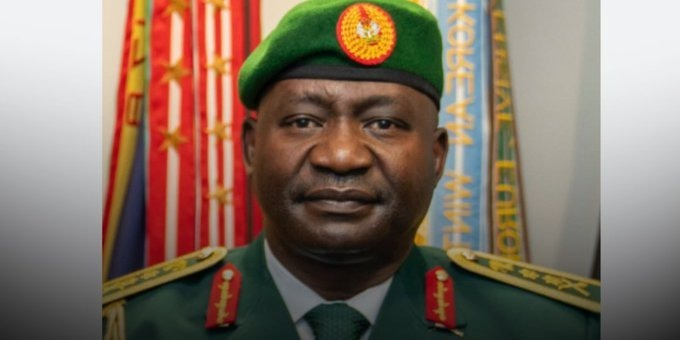
Defence Minister, General Christopher Gwabin Musa, has attributed the recent increase in violent incidents across parts of Nigeria to a combination of extremist ideology, informant networks, and the deployment of improvised explosive devices, while also suggesting that political cycles tend to coincide with heightened insecurity, according to remarks made during a recent public briefing.
He said that extremist groups involved in such incidents are driven by beliefs that encourage participation in violence, including the conviction that death during such acts is rewarded, a mindset he described as a persistent challenge in countering radicalisation within affected regions of the country.
Musa also alleged that some civilians collaborate with armed groups by providing intelligence on troop movements, strength, and deployment patterns, claims which he said have contributed to operational risks faced by security personnel during counter-insurgency operations.
He further explained that many casualties recorded in recent incidents result from improvised explosive devices rather than direct confrontation, noting that such devices have increasingly been used in targeted operations against military personnel and infrastructure.
The minister linked the production and deployment of such devices to the misuse of agricultural inputs such as urea fertiliser, stating that restrictions in parts of the North-East have been introduced to curb access and reduce the capacity for fabrication.
He also stated that insecurity tends to intensify during election periods, arguing that some perpetrators exploit political seasons to create instability and undermine public confidence in government institutions.
The defence chief maintained that the threat landscape involves both domestic and external actors, insisting that some individuals involved in planning and execution of attacks do not have the country’s interests at heart.
He called for strengthened intelligence sharing, improved community vigilance, and continued investment in counter-terrorism operations aimed at reducing the frequency and impact of such incidents nationwide.
The remarks come amid renewed national concern over persistent insecurity affecting several regions, including the North-East, North-West, and parts of the North-Central zone, where armed groups, bandit networks, and extremist cells have continued to operate despite ongoing military operations and strategic interventions by security agencies.
Security analysts have long noted that Nigeria’s insurgency landscape is shaped by a mix of ideological extremism, criminal enterprise, and socio-economic vulnerabilities, which together complicate efforts to establish lasting stability in affected communities.
In recent years, authorities have intensified military campaigns and community-based security initiatives, including intelligence-driven operations and local engagement strategies aimed at disrupting the supply chains of armed groups and improving early warning systems.
However, challenges persist due to difficult terrain, cross-border movements, and limited trust between some communities and security forces, factors that continue to affect the effectiveness of counter-insurgency operations.
General Musa’s comments also reflect ongoing debates within policy and security circles about the role of information networks in conflict zones, particularly the impact of local collaboration, whether voluntary or coerced, on the operational capacity of armed groups.
Experts caution, however, that attributing complex security dynamics solely to civilian involvement risks oversimplifying a multifaceted conflict environment that also includes economic drivers, regional spillovers, and evolving criminal tactics.
Public reactions to the minister’s statement have been mixed, with some security commentators welcoming the emphasis on intelligence and ideological factors, while others stress the need for greater attention to governance, accountability, and civilian protection frameworks.
The discussion also highlights the broader challenge of balancing national security priorities with human rights considerations, particularly in regions where counter-terrorism operations intersect with densely populated civilian areas.
Government officials have reiterated commitments to strengthening the armed forces through improved funding, training, and technological support, including surveillance systems and intelligence-gathering capabilities designed to enhance operational precision.
At the same time, civil society organisations continue to advocate for community resilience programmes and peacebuilding initiatives aimed at reducing recruitment into armed groups and strengthening trust between citizens and security institutions.
Regional cooperation with neighbouring countries has also been identified as a key component in addressing cross-border movement of armed actors and disrupting logistical networks that support illicit operations.
Despite these efforts, officials acknowledge that sustained progress will require long-term investment in governance, education, and economic opportunities, particularly in vulnerable communities where insecurity remains most pronounced.
This has led to renewed calls for comprehensive security reforms that integrate military action with socio-economic development strategies to address the root causes of instability across affected regions.
Policy observers note that statements by senior defence officials often influence public perception and can shape discourse around national security priorities, especially during periods of heightened political sensitivity.
In this context, Musa’s remarks are likely to remain part of ongoing debates about the effectiveness of Nigeria’s counter-terrorism strategy and the role of community engagement in security management.
Observers also point out that linking insecurity trends to political cycles is a recurring theme in public discourse, reflecting broader concerns about governance stability during election periods.
While such assertions remain subject to debate, they underscore the sensitivity of security narratives in Nigeria and the importance of careful communication by public officials.
The defence ministry has not announced any new operational directives in response to the statement, but security sources indicate that ongoing operations in affected regions continue with an emphasis on intelligence-led interventions and community cooperation.
Analysts say that improving trust between civilians and security agencies remains critical, as effective counter-insurgency efforts often depend on timely and accurate information from local communities, while ensuring that such cooperation does not expose civilians to undue risk or retaliation.
Security experts further emphasise the importance of integrating intelligence reform, community policing, and socio-economic development in order to create a more sustainable framework for addressing insecurity in Nigeria, noting that isolated military responses alone may not be sufficient to resolve deeply rooted challenges that span multiple regions and actors. They argue that a coordinated approach involving federal and state authorities, alongside civil society participation, could improve outcomes over time, particularly if supported by consistent policy implementation and accountability mechanisms designed to strengthen institutional effectiveness and public confidence in national security operations.
📩 Stone Reporters News | 🌍 stonereportersnews.com
✉️ info@stonereportersnews.com | 📘 Facebook: Stone Reporters News | 🐦 X (Twitter): @StoneReportNew | 📸 Instagram: @stonereportersnews
Add comment
Comments