

Reported by: Ijeoma G | Edited by: Oravbiere Osayomore Promise.
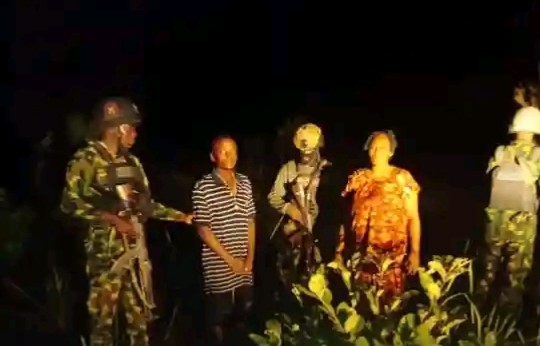
Nigerian Army troops have rescued two kidnapped individuals in Benue State in a coordinated early morning operation, underscoring ongoing efforts by security forces to counter rising cases of abduction and armed violence across the country’s Middle Belt. The rescue, confirmed by military authorities, took place in Kyado, Ukum Local Government Area, a region that has witnessed repeated incidents of insecurity linked to armed groups.
According to official information, the victims—identified as Sylvester Ebuka and Chidinma Chikwentu—were freed at approximately 3:50 a.m. during a targeted military raid carried out by troops of Operation Whirl Stroke, a joint task force responsible for maintaining security across Benue and neighboring states. The mission was described as intelligence-driven, following credible reports on the movement and hideouts of suspected kidnappers operating within the area.
Military sources indicated that troops advanced into the identified location under the cover of darkness, launching a surprise operation aimed at overwhelming the abductors and securing the safe release of the victims. The kidnappers, confronted by the advancing soldiers, reportedly fled the scene, abandoning their captives without engaging in a prolonged firefight. The swift nature of the operation ensured that the victims were recovered without reported injuries.
Following their rescue, the victims were evacuated from the area and handed over to appropriate authorities for medical evaluation and debriefing. While officials did not release detailed information about their condition, standard procedure typically involves psychological assessment and health checks before victims are reunited with their families. Security agencies have not disclosed whether any suspects were apprehended during the operation, but efforts are ongoing to track down those responsible.
The successful rescue highlights the continuing role of Operation Whirl Stroke in addressing insecurity in Nigeria’s Middle Belt. The task force, comprising personnel from the army and other security agencies, has been at the forefront of countering armed banditry, communal violence, and kidnapping in Benue, Nasarawa, and Taraba states. Its operations have included patrols, raids on suspected criminal camps, and rescue missions aimed at freeing abducted individuals.
Benue State has faced persistent security challenges in recent years, with kidnapping for ransom emerging as a major concern for residents. Criminal groups operating in rural and forested areas frequently target travelers, farmers, and villagers, exploiting limited security presence and difficult terrain to carry out their activities. Ukum Local Government Area, in particular, has been identified as a hotspot due to its proximity to remote areas that serve as hideouts for armed groups.
The abduction of the two victims is believed to have occurred days before the rescue, likely along a community route where such attacks have become increasingly common. Kidnappers often intercept vehicles or ambush individuals, taking them into forest camps where they are held while ransom demands are negotiated. These incidents have contributed to widespread fear among residents, many of whom have altered their daily routines to avoid traveling during vulnerable periods.
The broader security landscape in Nigeria continues to pose significant challenges for authorities. In addition to kidnapping in the Middle Belt, the country is dealing with insurgency in the northeast and banditry in the northwest. These overlapping threats have stretched security resources, requiring coordinated efforts across multiple regions. Despite these pressures, the military has maintained that it is making steady progress through sustained operations and improved intelligence gathering.
Recent operations across the country have seen troops neutralize suspected criminals, dismantle camps, and rescue dozens of abducted persons. These efforts are part of a wider strategy aimed at disrupting criminal networks and restoring public confidence. Military officials have emphasized that intelligence from local communities remains critical to the success of such missions, enabling security forces to identify targets and respond swiftly to threats.
In Benue, longstanding tensions over land use between farming communities and herders have further complicated the security situation. While not directly linked to all cases of kidnapping, these conflicts have contributed to an environment of instability that criminal elements exploit. Attacks on villages and clashes over resources have occasionally escalated into broader violence, placing additional strain on already limited security infrastructure.
State authorities have welcomed the latest rescue operation, describing it as a positive development in the ongoing fight against insecurity. Officials have reiterated their commitment to supporting security agencies and called on residents to remain vigilant. They have also encouraged the public to provide timely information that could assist in preventing future incidents.
Community leaders in Ukum and surrounding areas have expressed relief at the safe recovery of the victims but continue to call for stronger and more permanent security measures. Many residents have advocated for increased deployment of security personnel, regular patrols, and the establishment of forward operating bases to deter criminal activities. Others have highlighted the need for improved infrastructure, such as better roads and communication systems, to facilitate faster response times during emergencies.
Security experts have noted that while rescue operations are essential, they address only the immediate consequences of insecurity. Long-term solutions, they argue, must focus on addressing underlying factors such as poverty, unemployment, and the proliferation of small arms. Without tackling these root causes, criminal networks may continue to regenerate despite military successes.
Human rights groups have also emphasized the importance of ensuring that security operations are conducted in accordance with legal standards. While acknowledging the necessity of decisive action against armed groups, they stress the need for transparency and accountability to maintain public trust.
As investigations into the abduction continue, security agencies have intensified efforts to locate and apprehend the fleeing suspects. Authorities have urged members of the public to report any suspicious activities, assuring that such information will be handled confidentially.
The rescue of Sylvester Ebuka and Chidinma Chikwentu offers a measure of relief amid ongoing security concerns in Benue State. For many residents, however, it also serves as a reminder of the persistent threat posed by kidnapping and the urgent need for sustained and comprehensive measures to ensure safety and stability across the region.
📩 Stone Reporters News | 🌍 stonereportersnews.com
✉️ info@stonereportersnews.com | 📘 Facebook: Stone Reporters News | 🐦 X (Twitter): @StoneReportNew | 📸 Instagram: @stonereportersnews
Add comment
Comments