

Published by: Oravbiere Osayomore Promise.
Lagos State authorities have sealed four properties in Ikotun and Ajah following allegations of illegal discharge of untreated wastewater into public spaces, in an enforcement action aimed at strengthening environmental compliance and protecting public health.
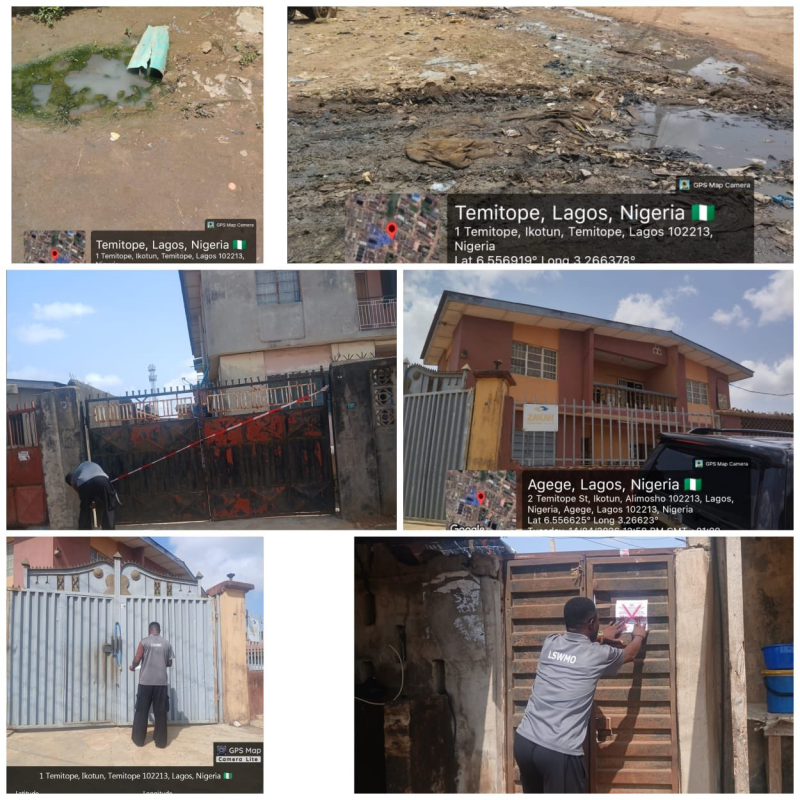
The action was carried out on Wednesday and Thursday by the Lagos State Wastewater Management Office, targeting two residential buildings located at 13 Oritola Street and 1 Temitope Street in the Pipeline area of Ikotun, as well as a public toilet facility and a mechanic workshop along Badore Road in Ajah.
Commissioner for the Environment, Tokunbo Wahab, who disclosed the development, said the enforcement followed public complaints, repeated warnings, and investigations that confirmed violations of environmental regulations.
According to him, the Ikotun properties were found to have been deliberately channeling untreated wastewater through pipes directly onto roads, a practice officials described as a public nuisance and a threat to sanitation and road safety.
He added that the Ajah facilities were sealed for what authorities termed indiscriminate discharge of wastewater into drains and surrounding environments, in contravention of state environmental laws designed to regulate waste management practices.
Officials said the enforcement operation reflects the state government’s continued commitment to addressing improper waste disposal, particularly in densely populated areas where poor sanitation practices contribute to flooding risks, disease spread, and environmental degradation.
The commissioner warned that the state would intensify monitoring and enforcement activities, noting that individuals and organisations found violating wastewater management regulations would face sanctions and possible prosecution under relevant laws.
He further urged residents and property owners to adhere strictly to approved wastewater disposal guidelines, stressing that proper management of domestic and commercial effluent remains essential for maintaining a healthy urban environment.
Environmental officials in Lagos have in recent years increased crackdowns on illegal dumping and poor sanitation practices, as the state continues to grapple with rapid urbanisation, population growth, and infrastructure pressure.
The Lagos State Wastewater Management Office has also been working alongside other environmental agencies to promote compliance through public awareness campaigns, inspections, and enforcement actions across different local government areas.
Residents in affected communities have previously raised concerns about persistent drainage contamination and foul odours linked to improper wastewater disposal, prompting calls for stricter government intervention.
Authorities maintain that enforcement actions are not intended to be punitive alone but are also aimed at encouraging behavioural change among property owners and operators of commercial facilities.
Officials say sustained compliance is necessary to reduce environmental health risks, including waterborne diseases, which often increase during heavy rainfall periods in Lagos due to poor drainage systems.
The latest sealing of properties in Ikotun and Ajah adds to a series of recent environmental enforcement operations carried out by state agencies targeting illegal waste discharge and sanitation violations.
Government representatives have reiterated that Lagos State will continue to prioritise environmental protection measures as part of broader urban management and public health strategies.
They also encouraged residents to report environmental infractions to relevant authorities to support timely intervention and prevent further degradation of community living conditions.
The sealed properties will remain under restriction until the owners comply with required remediation measures and demonstrate adherence to wastewater management standards set by the state.
Officials emphasised that reopening of the affected premises would depend on verified corrective actions and clearance from the appropriate regulatory agency.
The enforcement also reflects growing concern among environmental authorities in Lagos over the increasing strain placed on drainage infrastructure by unregulated waste disposal practices in rapidly expanding urban settlements.
Health officials have repeatedly warned that improper wastewater disposal can contribute to outbreaks of waterborne diseases, especially in densely populated communities where sanitation systems are overstretched.
During heavy rainfall periods in Lagos, blocked or contaminated drainage channels often worsen flooding conditions, increasing the urgency of enforcement actions against illegal discharge practices.
The Lagos State Wastewater Management Office operates under state environmental regulations that empower it to inspect, sanction, and seal premises found to be in violation of wastewater management standards.
Officials say the enforcement strategy combines punitive measures with public education campaigns aimed at encouraging long-term behavioural change among residents and facility operators.
Lagos, one of Africa’s fastest growing cities, continues to experience rapid population expansion that places pressure on housing, sanitation, and waste management systems.
In recent years, state environmental agencies have intensified monitoring efforts, sealing commercial and residential properties linked to illegal dumping and drainage obstruction.
Some residents in Ikotun and Ajah have previously complained about persistent wastewater discharge, citing unpleasant odours and environmental degradation as recurring issues affecting daily life.
Authorities say such operations are intended to serve as deterrents to others who may engage in similar violations of environmental regulations.
The state government has reiterated its commitment to improving sanitation and ensuring compliance with environmental standards across all local government areas.
Officials indicate that similar enforcement exercises are expected to continue across other parts of Lagos as part of a broader environmental compliance drive.
Environmental health experts note that sustained exposure to untreated wastewater can lead to contamination of groundwater and surrounding soil, posing long term risks to communities.
Authorities say continued enforcement will be guided by monitoring data, public complaints, and routine inspections conducted by environmental officers across the state.
They also stress that collaboration between residents and government agencies remains essential in sustaining a cleaner and healthier urban environment in Lagos.
Under existing state laws, violators of environmental sanitation and wastewater management regulations may face fines, sealing of premises, and prosecution depending on the severity of the offence.
Officials reiterate that the ultimate goal of enforcement is to protect public health, preserve infrastructure, and ensure sustainable urban living conditions for all residents.
They emphasise that accountability for environmental compliance is a shared responsibility requiring cooperation from property owners, businesses, and community members across Lagos State.
The agency says sustained enforcement and public engagement will continue as part of long term efforts to improve sanitation and environmental safety in the state.
Monitoring will be sustained across affected communities.
📩 Stone Reporters News | 🌍 stonereportersnews.com
✉️ info@stonereportersnews.com | 📘 Facebook: Stone Reporters News | 🐦 X (Twitter): @StoneReportNew | 📸 Instagram: @stonereportersnews
Add comment
Comments