

Reported by: Ijeoma G | Edited by: Oravbiere Osayomore Promise.
Authorities in Oyo State have intensified enforcement against illegal grazing following a targeted operation that led to the seizure of 13 cows within a residential community in Ibadan, underscoring growing concerns over urban livestock activities and public safety.
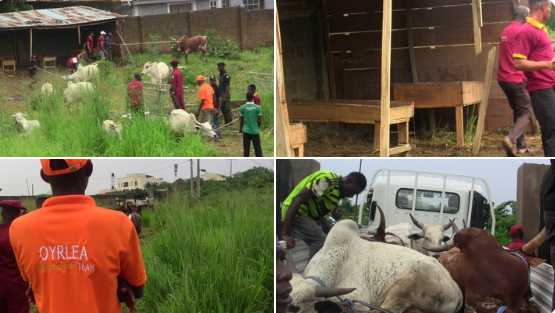
The operation, carried out by the Oyo State Rule of Law Enforcement Authority in collaboration with security operatives, took place at Marvellous Estate in the Akobo Ojurin area of Ibadan after residents lodged multiple complaints about the presence of cattle within the neighborhood. Officials said the action was part of a broader effort to enforce state regulations prohibiting open grazing in designated urban and residential zones.
According to details released by the agency, enforcement officers discovered a number of cattle being kept within the estate under conditions that raised questions about compliance with existing laws. Although handlers reportedly claimed that the animals were confined, officials said their inspection revealed clear signs of open grazing, which is prohibited under Oyo State regulations aimed at maintaining order and environmental safety in residential areas.
At the initial location within the estate, 11 cows were impounded after officers concluded that the animals had been allowed to graze freely, contrary to the claims of their handlers. The agency noted that evidence gathered during the inspection indicated that the cattle had access to open spaces within the estate, potentially posing risks to residents and property.
The enforcement operation continued as officers exited the estate, leading to the interception of another group of cattle found grazing openly along public pathways. Two additional cows were seized at that point, bringing the total number of impounded animals to 13. Officials described the discovery as further confirmation of ongoing violations of the state’s anti-open grazing provisions.
In a formal directive issued after the operation, the agency instructed the owners of the impounded cattle to report to its office within seven days. They are required to pay stipulated fines into government accounts and comply with procedures outlined by the state for handling such violations. Authorities warned that failure to comply within the specified timeframe could attract additional penalties in line with the law.
Speaking on the development, the Chairperson of the enforcement authority, Hon. Justice Aderonke Adekemi Aderemi (Rtd.), emphasized the agency’s commitment to maintaining law and order across the state. She reiterated a zero-tolerance stance on activities that threaten the safety, peace, and environmental stability of communities, particularly in urban areas where such practices are explicitly restricted.
She noted that the agency’s intervention was prompted by petitions from residents who expressed concern over the movement and grazing of cattle within the estate. According to her, such activities not only violate state regulations but also raise broader issues related to sanitation, security, and the preservation of residential infrastructure.
Illegal grazing has become an increasingly sensitive issue in several parts of Nigeria, particularly in states that have introduced legislation to regulate or prohibit open grazing. In Oyo State, authorities have repeatedly stressed that livestock owners must adopt modern ranching or controlled rearing methods that align with legal and environmental standards.
Residents of affected communities often cite damage to property, traffic obstruction, and fears of conflict as key reasons for opposing the presence of grazing cattle in residential areas. In response, state governments have sought to enforce stricter controls while encouraging alternative livestock management practices.
The latest enforcement action in Ibadan reflects a continuation of these efforts, with authorities signaling their readiness to respond to complaints and ensure compliance with established laws. Officials indicated that similar operations could be carried out in other parts of the state where violations are reported.
While the agency did not disclose the identities of the cattle owners, it stressed that enforcement measures are applied uniformly, regardless of status or affiliation. The focus, it said, remains on upholding the rule of law and safeguarding the interests of the broader public.
The incident also highlights the role of community engagement in prompting enforcement actions. Authorities acknowledged that the operation was initiated following petitions from residents, underscoring the importance of public participation in identifying and addressing violations.
As the deadline for compliance approaches, attention will likely turn to how the affected cattle owners respond to the directive. Observers note that adherence to the enforcement process will be a key test of the effectiveness of the state’s regulatory framework.
For now, officials maintain that the impoundment serves both as a corrective measure and a deterrent to others who may be engaging in similar practices. The agency reiterated its commitment to sustained monitoring and enforcement, warning that any further breaches would be met with appropriate legal action.
The Oyo State Rule of Law Enforcement Authority affirmed that it will continue to collaborate with security agencies and local communities to ensure that regulations governing land use and public safety are respected. It urged residents to remain vigilant and report any infractions, assuring them that their concerns would be addressed promptly.
The development adds to ongoing national conversations about balancing traditional livestock practices with modern urban realities, as authorities across Nigeria navigate the complexities of regulation, enforcement, and community relations.
📩 Stone Reporters News | 🌍 stonereportersnews.com
✉️ info@stonereportersnews.com | 📘 Facebook: Stone Reporters News | 🐦 X (Twitter): @StoneReportNew | 📸 Instagram: @stonereportersnews
Add comment
Comments