

Reported by: Ijeoma G | Edited by: Oravbiere Osayomore Promise.
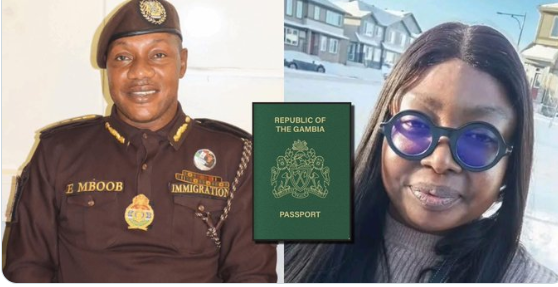
A Nigerian national based in Canada, identified as Nnenna Oketa, has been arrested by the Canada Border Services Agency following the discovery of multiple foreign passports allegedly concealed in her luggage, in a case that is drawing attention to growing concerns over identity fraud and transnational document trafficking.
According to preliminary information released by border authorities, the suspect was apprehended after officials uncovered five Gambian passports hidden inside pairs of sandals. The unusual method of concealment reportedly triggered suspicion during routine screening procedures, leading to a more thorough inspection of her belongings.
Officials familiar with the case disclosed that each of the passports contained the same photograph of a man, but bore different names and personal details. Investigators believe this pattern is indicative of a coordinated attempt to create multiple identities for a single individual, a tactic commonly associated with immigration fraud, human trafficking networks, or organized transnational crime.
The Canada Border Services Agency, which is responsible for border enforcement and immigration control, has not publicly released full details of the arrest, but sources indicate that the discovery was made at a Canadian port of entry during a standard customs and immigration check. Authorities have not confirmed whether the suspect was arriving in or departing from the country at the time.
The use of altered or fraudulently obtained passports is a serious offence under Canadian law, particularly when linked to efforts to circumvent immigration controls or facilitate illegal movement across borders. Legal experts note that possession of multiple passports under suspicious circumstances may lead to charges ranging from document fraud to involvement in broader criminal conspiracies, depending on the outcome of investigations.
In this case, the presence of five passports all linked to a single photograph has raised questions about the intended use of the documents. Security analysts suggest that such materials could be used to enable repeated travel under different identities, assist individuals in evading law enforcement, or support illegal migration schemes.
The concealment of the passports inside footwear also points to a deliberate attempt to evade detection. Border officials are trained to identify unusual packing methods and behavioral indicators that may signal smuggling activity, and such tactics are often associated with efforts to bypass standard security checks.
Authorities are expected to conduct a detailed forensic examination of the recovered passports to determine their authenticity and origin. This process typically involves verifying serial numbers, security features, and issuing authorities, as well as cross-checking information against international databases. Investigators will also seek to identify the individual whose photograph appears on the documents and determine whether he is linked to any ongoing investigations.
The arrest has also prompted inquiries into possible connections with networks operating between West Africa and North America. While no official link has been confirmed, experts note that the trafficking of fraudulent travel documents often involves multiple actors across different countries, including intermediaries who facilitate procurement, transport, and use of such materials.
Nigerian diplomatic authorities in Canada may become involved in the case, particularly if consular assistance is requested by the suspect. Under international law, foreign nationals have the right to seek support from their country’s embassy or consulate when facing legal proceedings abroad.
As of the time of reporting, no formal charges have been publicly announced, and the suspect is presumed innocent pending the outcome of investigations and any subsequent legal process. The Canada Border Services Agency is expected to provide further updates as the case develops.
The incident comes amid heightened global attention on border security and identity verification, with governments increasingly investing in advanced technologies to detect fraudulent documents and prevent unauthorized movement. Despite these measures, authorities acknowledge that criminal networks continue to adapt their methods, exploiting vulnerabilities in systems and procedures.
For Canada, which maintains one of the world’s most robust immigration and border control frameworks, cases such as this underscore the ongoing challenge of balancing openness with security. The country processes millions of travelers annually, making vigilance and intelligence-sharing critical components of its enforcement strategy.
The case involving Nnenna Oketa is likely to be closely monitored as investigators work to establish the full scope of the alleged offence and any potential links to wider criminal activity. For now, the arrest serves as a reminder of the complex and evolving nature of cross-border crime, as well as the role of frontline border officers in detecting and disrupting such activities.
📩 Stone Reporters News | 🌍 stonereportersnews.com
✉️ info@stonereportersnews.com | 📘 Facebook: Stone Reporters News | 🐦 X (Twitter): @StoneReportNew | 📸 Instagram: @stonereportersnews
Add comment
Comments