

Published by: Oravbiere Osayomore Promise.
A fresh political dispute has emerged within Nigeria’s opposition landscape following sharp criticism by veteran journalist and Arise Television anchor Reuben Abati of former Vice President Atiku Abubakar over comments made about former President Goodluck Jonathan, underscoring growing divisions as political actors reposition ahead of the 2027 general elections.
The controversy was triggered by remarks attributed to Atiku Abubakar during a media interview earlier in the week, in which he described Goodluck Jonathan as a “decent” but “inexperienced” leader. Atiku suggested that some of the difficulties faced during Jonathan’s administration stemmed from what he characterized as insufficient leadership preparation.
While the comment appeared measured on the surface, it quickly drew backlash from supporters of the former president, many of whom viewed the characterization as dismissive and disrespectful. Critics argued that Jonathan’s tenure, which lasted from 2010 to 2015, included significant achievements and challenges that could not be reduced to a question of inexperience.
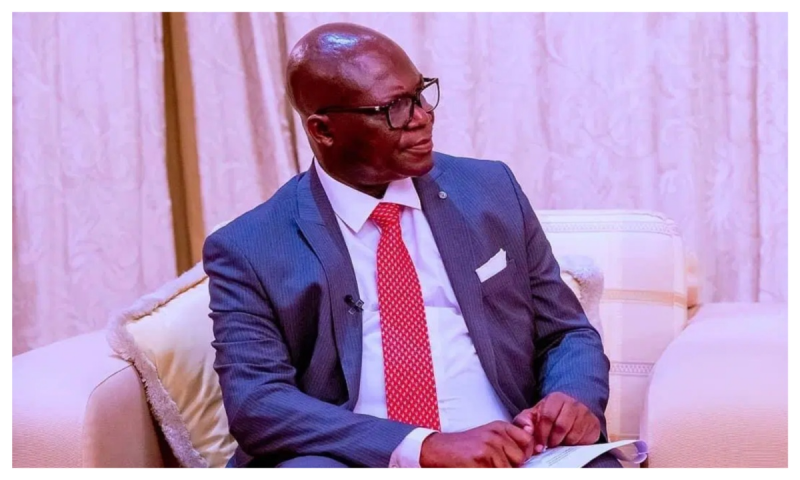
Reuben Abati, who served as Special Adviser on Media and Publicity to Jonathan during his presidency, responded forcefully during a live broadcast of the Arise Television Morning Show. In his remarks, Abati accused Atiku of adopting a tone that was both condescending and inappropriate, particularly given Jonathan’s record as a former head of state.
Abati did not hold back in his critique, framing the issue as one of respect and political decorum. He pointed out that Jonathan had attained the highest office in the country, a feat that Atiku, despite multiple attempts over several decades, has yet to achieve.
According to Abati, “He said Atiku’s comments were condescending and very rude. Jonathan was president of this country, a position that Atiku didn’t even get to. He is still aspiring to get there 30 years after his initial aspiration. He is aspiring to become what the former president has already achieved.”
The exchange highlights longstanding rivalries and sensitivities among Nigeria’s political elite, particularly within opposition circles where alliances have often been fluid and shaped by electoral calculations. Both Atiku and Jonathan remain influential figures, and their perceived standing continues to resonate with different segments of the political class and the electorate.
Atiku Abubakar, a former vice president from 1999 to 2007, has been a consistent contender in Nigeria’s presidential elections, having run multiple times under different political platforms. His political career spans decades, and he remains one of the most recognizable figures in Nigerian politics. However, his repeated bids for the presidency have yet to yield success, a fact that critics frequently invoke.
Goodluck Jonathan, on the other hand, assumed the presidency in 2010 following the death of President Umaru Musa Yar’Adua and subsequently won election in 2011. His administration was marked by a mix of economic growth in certain sectors and persistent challenges, including security concerns related to the Boko Haram insurgency and public criticism over governance issues. He conceded defeat in the 2015 election, a move widely regarded as a significant moment for Nigeria’s democratic process.
Abati’s intervention is notable not only because of his prior role within the Jonathan administration but also due to his current position as a prominent media figure. His comments reflect how media personalities with political experience continue to shape public discourse, especially on issues involving legacy, leadership, and accountability.
The dispute also comes at a time when opposition figures are exploring potential alliances and strategies to challenge the ruling government in 2027. Political observers have noted that internal disagreements, such as this one, could complicate efforts to build a unified front, particularly if they deepen personal and ideological divisions among key actors.
Supporters of Jonathan have rallied to his defense in the wake of Atiku’s remarks, emphasizing his achievements and arguing that his leadership should be evaluated within the broader context of Nigeria’s complex political and socio-economic environment. Some have pointed to reforms in sectors such as agriculture and electoral processes during his tenure, while acknowledging that his administration also faced significant criticisms.
Meanwhile, Atiku’s camp has not issued an extensive rebuttal to Abati’s comments as of the time of reporting, though allies have suggested that his original statement was intended as an objective assessment rather than a personal attack. They argue that evaluating past administrations is a legitimate part of political discourse, especially as the country prepares for another electoral cycle.
The exchange underscores the enduring importance of narrative and perception in Nigerian politics. How past leaders are remembered and discussed can influence present political alignments and voter attitudes. In this context, statements about former administrations often carry implications beyond historical analysis, shaping contemporary debates and alliances.
As the 2027 elections draw closer, the roles of Atiku Abubakar and Goodluck Jonathan remain subjects of speculation. While Atiku has consistently indicated interest in contesting, Jonathan’s position has been less clear, though his name periodically surfaces in discussions about potential candidates or consensus figures within opposition coalitions.
Reuben Abati’s comments add another layer to these dynamics, reflecting both personal loyalty and broader concerns about respect among political actors. His criticism suggests that tensions within the opposition are not limited to policy differences but also involve questions of tone, recognition, and legacy.
The unfolding debate serves as a reminder of the complex interplay between past and present in Nigerian politics. As political figures seek to define their positions and narratives ahead of 2027, disputes such as this may become more frequent, revealing underlying fractures even as calls for unity persist.
Ultimately, the reaction to Atiku’s remarks and Abati’s rebuttal illustrates how individual statements can quickly escalate into broader political controversies, particularly in a climate where public sentiment is highly engaged and expectations for leadership remain high. Whether this episode will have lasting implications for opposition cohesion remains to be seen, but it has already contributed to the evolving conversation about leadership, experience, and respect in Nigeria’s political arena.
📩 Stone Reporters News | 🌍 stonereportersnews.com
✉️ info@stonereportersnews.com | 📘 Facebook: Stone Reporters News | 🐦 X (Twitter): @Stone ReportNew | 📸 Instagram: @stonereportersnews
Add comment
Comments